Sitharaman backs Virudhunagar Samba chilli for US export push
Synopsis
Union Finance Minister Nirmala Sitharaman praised Virudhunagar's GI-tagged Samba chilli farmers for low-pesticide cultivation during a visit to Tiruchuli, Tamil Nadu on 18 July 2026, and expressed confidence the variety could enter the US market beyond its existing Sri Lanka exports.
Key Takeaways
Union Finance Minister Nirmala Sitharaman visited Tiruchuli, Tamil Nadu on 18 July 2026 and addressed local chilli farmers.
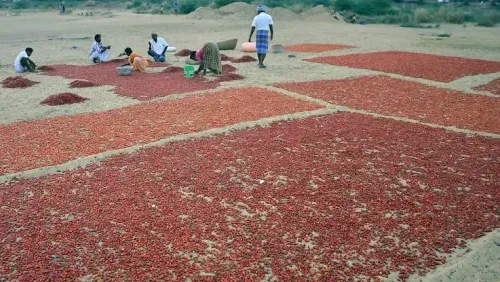
Virudhunagar's Samba chilli holds a Geographical Indication (GI) tag and is noted for its minimal use of pesticides.
The variety is currently exported to Sri Lanka ; Sitharaman expressed confidence it can access the United States market.
India's Agricultural Export Policy, 2018 promotes GI-tagged spices with low residue levels for developed-country markets.
US market access would require regulatory clearance from the US FDA and coordination through APEDA .
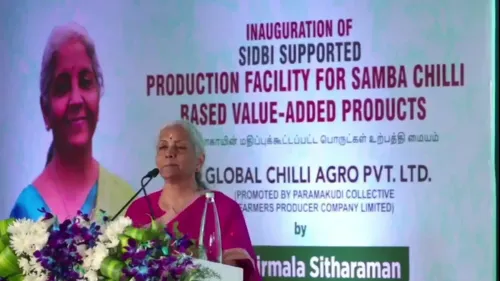
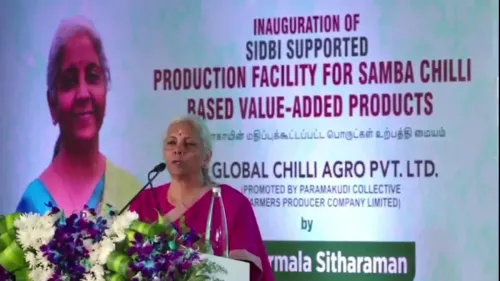
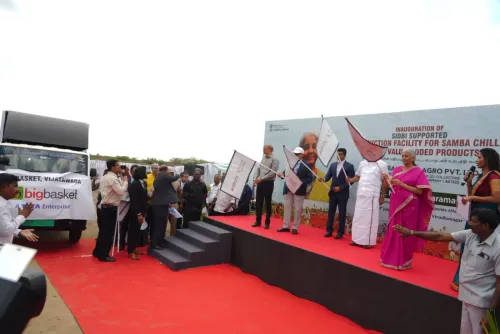
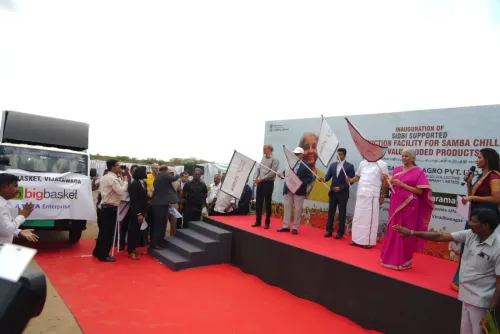
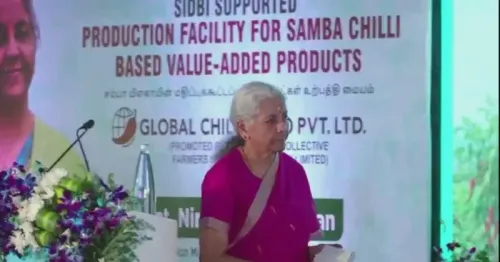
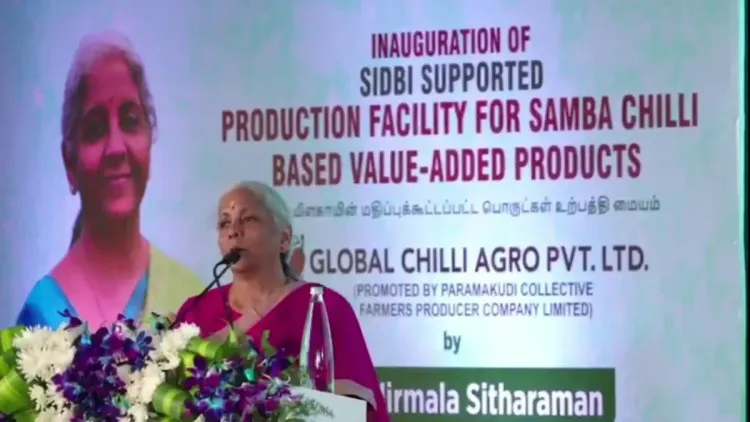
Union Finance Minister Nirmala Sitharaman on Saturday, 18 July 2026, commended farmers of Virudhunagar for their low-pesticide cultivation practices and expressed confidence that the district's GI-tagged Samba chilli could break into new international markets, including the United States. The minister made the remarks during a visit to Tiruchuli, Tamil Nadu.
Context
Virudhunagar, a district in southern Tamil Nadu, has long been associated with spice and chilli cultivation. The Samba chilli variety from the region carries a Geographical Indication (GI) tag, a legal recognition under India's Geographical Indications of Goods (Registration and Protection) Act, 1999, which certifies the product's origin and distinctive qualities. Speaking at Tiruchuli, Sitharaman highlighted that the variety's 'minimal use of pesticides' has made it a preferred choice for export markets where stringent residue standards apply.
The minister stated directly: 'Virudhunagar's GI-tagged Samba chilli has earned recognition for its minimal use of pesticides, making it a preferred choice for export markets.' She added that she was 'confident that their superior quality will open up opportunities in the new international markets, including the United States.'
Policy Backdrop
India's Agricultural Export Policy, 2018 specifically targeted GI-tagged spices for higher export volumes, linking GI status to compliance with Maximum Residue Limits (MRLs) demanded by developed-country regulators such as the US Food and Drug Administration and the European Union. The policy framework was designed to help Indian produce command premium prices in global markets by differentiating it through origin certification and quality assurance.
GI registration has been a consistent tool across successive governments to protect regional agricultural identities and build export competitiveness. Reduced chemical inputs are central to satisfying MRL requirements that the US and EU impose on imported food commodities, making low-pesticide cultivation practices a direct trade enabler rather than merely an environmental choice.
Stakeholders and Impact
Virudhunagar's chilli farmers stand to benefit most directly if new export corridors open. The variety is already being exported to Sri Lanka, a long-standing destination in India's neighbourhood trade network, and Sitharaman's remarks signal an ambition to diversify beyond South Asian buyers. Spice exporters and aggregators in the region would also gain from access to the higher-value US market, where GI-tagged and low-residue produce can attract premium pricing.
For the broader agricultural export ecosystem, the minister's public endorsement draws attention to Tamil Nadu's role in India's spice export map and may encourage similar low-input cultivation practices in other chilli-growing districts seeking international market access.
What's Next
Market access for Indian chilli varieties in the United States depends on regulatory clearances from the US FDA and certifications facilitated by India's Agricultural and Processed Food Products Export Development Authority (APEDA). Any inclusion of GI-tagged produce in ongoing India-US bilateral trade discussions could accelerate the process. Observers will watch for formal announcements from either government on expanded market access or updated phytosanitary agreements covering Indian spices.
Sitharaman's remarks at Tiruchuli signal that agricultural export diversification — anchored in quality certification and reduced chemical use — will remain a talking point as India pursues broader trade agreements with developed economies.
Point of View
The minister signals that India's trade ambitions with Washington extend beyond manufactured goods into farm produce — a politically sensitive but commercially significant frontier. The emphasis on low-pesticide cultivation also serves a dual purpose: it satisfies the narrative of 'natural' and 'safe' Indian food products while aligning with the residue compliance demands that are the real gatekeepers to developed-country shelves. Whether the visit translates into concrete trade outcomes will depend on regulatory progress at APEDA and the pace of India-US agricultural negotiations.
NationPress
18 Jul 2026
Frequently Asked Questions
What is the Virudhunagar Samba chilli and why does it have a GI tag?
The Virudhunagar Samba chilli is a variety of red chilli grown in Virudhunagar district, Tamil Nadu, known for its distinct flavour and low pesticide use. It holds a Geographical Indication tag under India's GI Act of 1999, which certifies its regional origin and unique characteristics, helping it command recognition in export markets.
Why did Nirmala Sitharaman visit Tiruchuli in Tamil Nadu?
Finance Minister Nirmala Sitharaman visited Tiruchuli, Tamil Nadu on 18 July 2026 to meet local farmers and commend their cultivation of the GI-tagged Samba chilli, while encouraging expansion of its export markets beyond Sri Lanka to destinations including the United States.
Is Virudhunagar Samba chilli already being exported?
Yes, Virudhunagar's Samba chilli is already being exported to Sri Lanka. Finance Minister Sitharaman expressed confidence that its quality would open opportunities in new markets, including the United States.
What does a GI tag mean for Indian agricultural exports?
A GI tag legally certifies a product's geographical origin and quality under the Geographical Indications of Goods (Registration and Protection) Act, 1999. For exports, it helps Indian produce differentiate itself in global markets, often enabling premium pricing and easier compliance with food safety standards in importing countries.
What is needed for Indian chillies to enter the US market?
Entry into the US market requires compliance with Maximum Residue Limits set by the US Food and Drug Administration and export certification coordinated through India's Agricultural and Processed Food Products Export Development Authority (APEDA). Inclusion in bilateral India-US trade discussions could also facilitate faster market access.