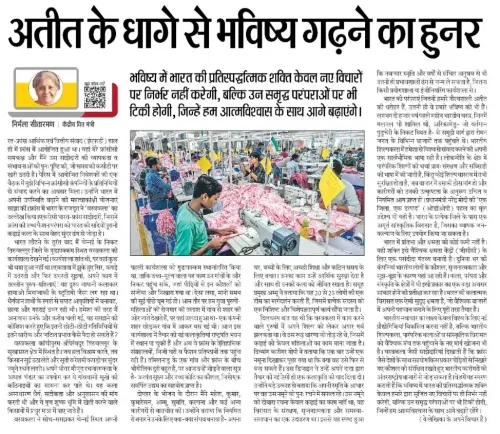
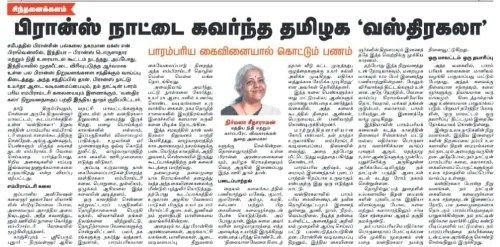
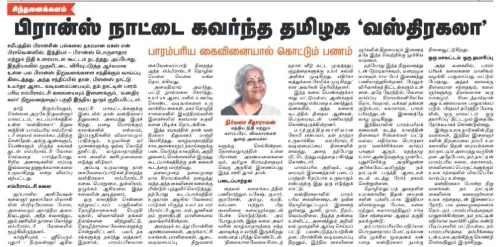
Sitharaman highlights artisan welfare, steady jobs in new column
Synopsis
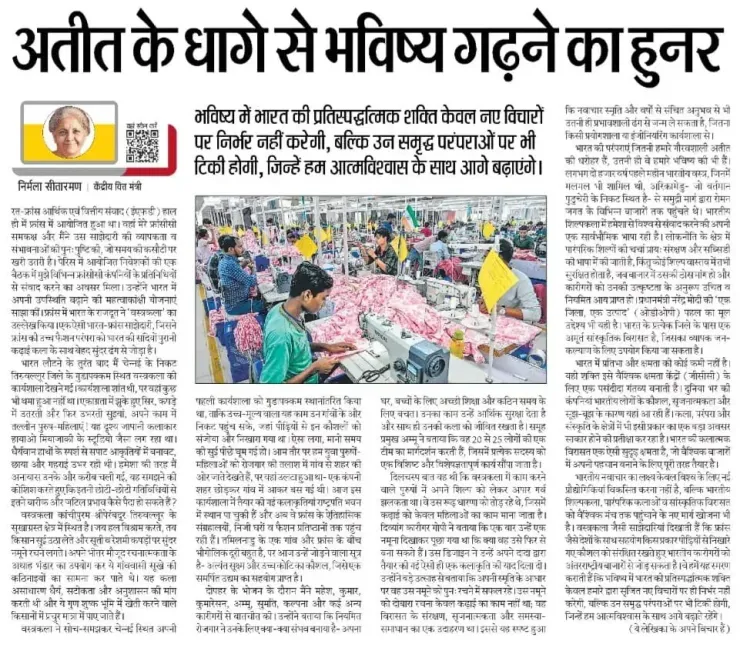
Finance Minister Nirmala Sitharaman shared excerpts from her Hindi column on 20 July 2026, describing conversations with artisans who credited regular employment with enabling home ownership, education for their children, and savings — while keeping traditional crafts alive.
Key Takeaways
Nirmala Sitharaman published a column in a Hindi daily on 20 July 2026 documenting conversations with artisans during a lunch meeting.
Artisans named Mahesh, Kumar, Kumaresan, Ammu, Sumati, and Kalpana described how regular work enabled home ownership, quality education, and savings.
Group leader Ammu said she manages a team of 20 to 25 artisans , each assigned a specialised task.
The minister emphasised that steady employment preserves both the artisans' economic security and their traditional art forms.
The column reflects India's broader policy push to formalise employment in the craft and handloom sector under schemes such as Pradhan Mantri Mudra Yojana .
Budget allocations for artisan credit, skill upgradation, and social security remain a key area to watch in the next Union Budget cycle.
Union Finance Minister Nirmala Sitharaman on Monday, 20 July 2026, shared excerpts from her column published in a Hindi-language daily, describing conversations she had with artisans over lunch — underscoring how regular employment has transformed their lives through home ownership, children's education, and financial savings.
Context
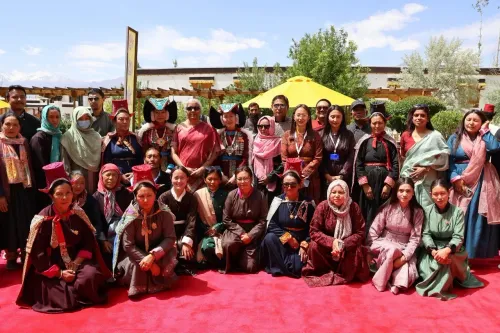
In the column, Sitharaman recounts speaking with artisans named Mahesh, Kumar, Kumaresan, Ammu, Sumati, Kalpana, and several others during a meal. She writes that they shared how consistent work had made tangible differences — enabling them to own homes, afford quality schooling for their children, and build savings buffers for difficult times.
A group leader named Ammu told the minister that she guides a team of 20 to 25 people, with each member assigned a specific and specialised task. The post quotes directly from the column: 'unka kaam unhe aarthik suraksha deta hai aur saath hi unki kala ko jeevit rakhta hai' — 'their work gives them economic security while also keeping their art alive.'
Policy backdrop
India's approach to artisan welfare has long sought to formalise employment in traditional crafts — handloom, handicrafts, and allied sectors — to deliver income stability alongside cultural preservation. The Pradhan Mantri Mudra Yojana, launched in 2015, has been a key instrument, offering collateral-free loans to micro-enterprises including weavers and craftspeople, supporting both self-employment and small-team models of the kind Ammu described.
Policy frameworks across MSME and handloom segments have increasingly integrated skill upgradation, social security provisions, and credit access as a bundled approach to inclusive growth. The structured team model — where each worker holds a specialised role — reflects a formalisation trend the government has actively encouraged in the unorganised sector.
Stakeholders and impact
For artisans, the shift from informal, irregular piece-work to sustained employment has measurable downstream effects: access to formal credit, housing schemes, and the ability to invest in children's education. The minister's column places a human face on these outcomes, moving beyond aggregate statistics to individual testimony.
The broader artisan community — estimated in the millions across India's handloom, handicraft, and traditional manufacturing clusters — stands at the intersection of cultural heritage and economic vulnerability. Policies that stabilise their incomes directly affect rural and semi-urban households, many of which depend on a single craft-based income stream.
What's next
With the next Union Budget cycle approaching, observers will watch for enhanced allocations toward artisan credit schemes, skill development programmes, and social security coverage for unorganised craft workers. Sitharaman's public engagement with artisan voices — and her choice to document it in a widely read Hindi column — signals continued political attention to this constituency. Whether that attention translates into new budgetary commitments or expanded scheme guidelines will be the measure of its policy weight.
Point of View
Ahead of a budget cycle, keeps artisan welfare on the policy agenda without making specific commitments. It is consistent with a pattern of senior ministers using vernacular media to humanise economic policy and broaden the government's narrative beyond macroeconomic metrics.
NationPress
21 Jul 2026
Frequently Asked Questions
What did Nirmala Sitharaman write about artisans in her column?
Sitharaman described conversations with artisans — including Mahesh, Kumar, Kumaresan, Ammu, Sumati, and Kalpana — who explained how regular employment had helped them own homes, educate their children, and save money, while keeping their traditional art forms alive.
Who is Ammu in Nirmala Sitharaman's article?
Ammu is a group leader mentioned in the column who guides a team of 20 to 25 artisans, with each member assigned a specific and specialised task within the craft process.
Which government scheme supports artisans with loans in India?
The Pradhan Mantri Mudra Yojana, launched in 2015, provides collateral-free loans to micro-enterprises including artisans and weavers, supporting both self-employment and small team-based craft operations.
Why is Nirmala Sitharaman writing about artisan welfare?
As Finance Minister, Sitharaman oversees economic policy including MSME and handloom sector schemes. Her column highlights the human impact of formalised employment in traditional crafts, signalling continued policy attention to artisan livelihoods ahead of the next Union Budget.
How does regular employment help Indian artisans?
According to artisans quoted in Sitharaman's column, consistent work enables them to own homes, afford quality education for their children, build savings, and sustain their traditional craft skills over time.