FM Sitharaman flags 5X rise in farmer welfare spend
Synopsis
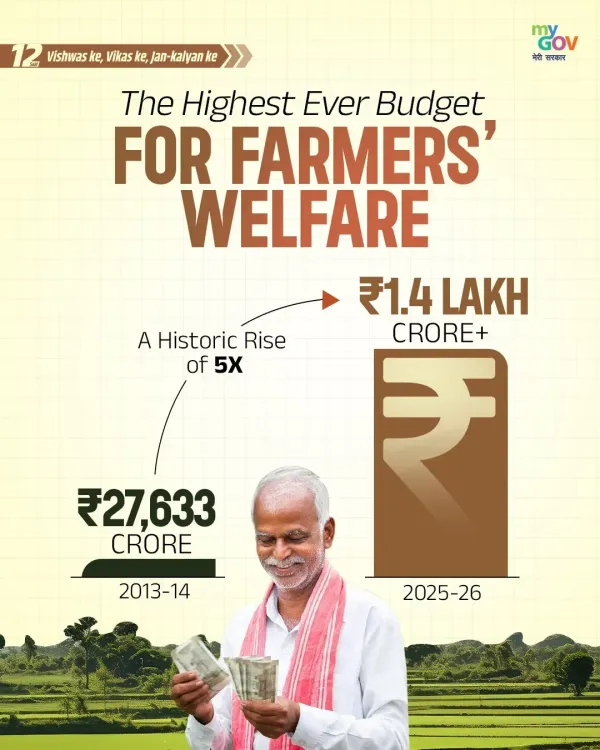
Union Finance Minister Nirmala Sitharaman on 11 June 2026 cited a fivefold rise in central farmer welfare allocation — from ₹27,633 crore to ₹1.4 lakh crore — as the Modi government marks twelve years of its Kisan Samriddhi agenda, anchored by schemes including PM-KISAN.
Key Takeaways
Union Finance Minister Nirmala Sitharaman posted on 11 June 2026 marking 12 years of the Modi government's farmer welfare drive.
Central allocation to farmers' welfare has risen 5X — from ₹27,633 crore to ₹1.4 lakh crore — according to the post.
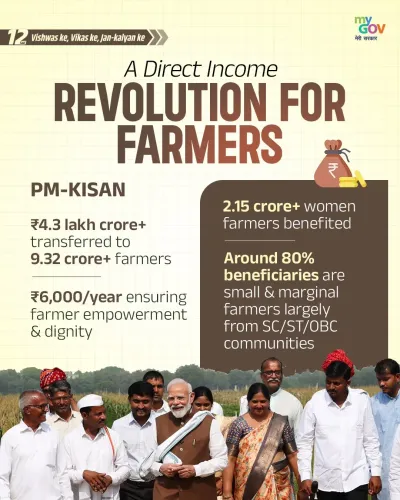
The PM-KISAN scheme, launched in 2019-20 , provides ₹6,000 per year in direct income support to eligible farmer families.
The announcement is part of a coordinated #12YearsOfKisanSamriddhi communication campaign by the ruling party.
Small and marginal farmers are the primary target beneficiaries of the expanded welfare allocation.
Future Union Budget decisions on whether to maintain or revise the ₹1.4 lakh crore figure will be a key policy indicator.
Union Finance Minister Nirmala Sitharaman on Thursday, 11 June 2026 highlighted a fivefold increase in the central government's allocation to farmers' welfare, citing a rise from ₹27,633 crore to ₹1.4 lakh crore under the Modi government. The post, shared on her official X account, was tagged with the hashtag #12YearsOfKisanSamriddhi, marking twelve years of what the ruling dispensation describes as farmer-prosperity initiatives.
Context
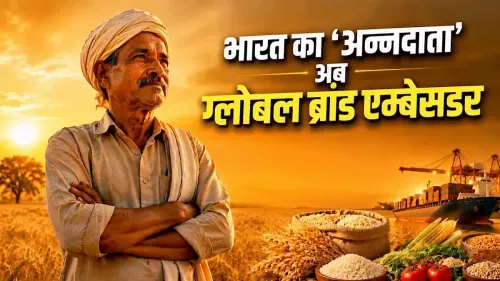
Sitharaman's post states that the Modi government has achieved a 'historic 5X rise in allocation to farmers' welfare' — from ₹27,633 crore to ₹1.4 lakh crore — framing the increase as a sustained commitment to India's Annadatas (food providers). The post coincides with the completion of twelve years of the Bharatiya Janata Party-led central government, which came to power in May 2014. The hashtag signals a coordinated communication effort to mark the anniversary across the party and government's social media presence.
Policy Backdrop
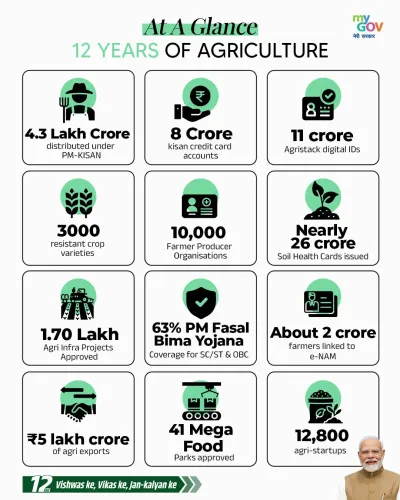
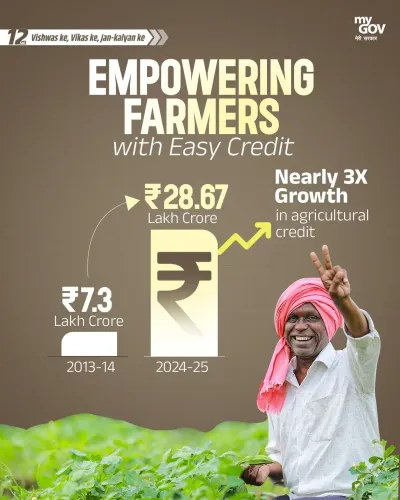
The base figure of ₹27,633 crore corresponds to the agriculture and farmers' welfare allocation at the time the current government assumed office, and successive Union Budgets have progressively raised outlays for the sector. A landmark step in this trajectory was the launch of the PM-KISAN scheme in Budget 2019-20, which provides an annual direct income support of ₹6,000 to eligible landholding farmer families through direct benefit transfers. The Ministry of Agriculture and Farmers Welfare has also expanded crop insurance, agricultural credit, and market-linkage programmes alongside the headline welfare allocation. Together, these measures form the policy architecture the government cites when claiming improved farmer incomes over the decade.
Stakeholders and Impact
The primary beneficiaries of the expanded welfare envelope are small and marginal farmers, who constitute the overwhelming majority of India's agricultural households. Direct benefit transfer schemes such as PM-KISAN are designed to reach these cultivators without intermediaries, reducing leakage and ensuring income support reaches the most vulnerable. A fivefold increase in budgetary allocation, if sustained, would represent a significant expansion of the state's fiscal commitment to rural livelihoods, with downstream effects on rural consumption, credit access, and agricultural productivity.
What's Next
Attention will now turn to the next Union Budget and whether the ₹1.4 lakh crore figure is maintained, revised upward, or restructured across scheme heads. Parliamentary discussions and any cabinet announcements on new components within farmer welfare programmes will be closely watched by agricultural economists and opposition parties alike. The #12YearsOfKisanSamriddhi communication campaign is also likely to intensify in the coming days as the ruling party consolidates its narrative on rural outreach ahead of future electoral cycles.
Point of View
Using the Finance Minister's credibility to anchor a fiscal achievement narrative around agriculture. Highlighting a 5X budgetary increase allows the government to shift the farmer-welfare debate from distress indicators to expenditure metrics — a framing that has grown more prominent as direct benefit transfers have become the administration's signature rural policy tool. The invocation of 'Annadatas' reinforces the emotional and cultural register the ruling party consistently deploys in its outreach to agrarian constituencies. With several state elections on the horizon, the timing of the #12YearsOfKisanSamriddhi campaign underscores how agricultural welfare spending has become as much a political asset as a policy instrument.
NationPress
20 Sept 2026
Frequently Asked Questions
What is the farmer welfare allocation increase announced by Nirmala Sitharaman?
Finance Minister Nirmala Sitharaman cited a fivefold rise in the central government's farmer welfare allocation, from ₹27,633 crore when the Modi government took office to ₹1.4 lakh crore, as highlighted in her 11 June 2026 post.
What is the PM-KISAN scheme and how does it help farmers?
PM-KISAN is a central government scheme launched in Budget 2019-20 that provides ₹6,000 per year in direct income support to eligible landholding farmer families, transferred directly to their bank accounts in three instalments.
What does #12YearsOfKisanSamriddhi mean?
#12YearsOfKisanSamriddhi is a hashtag campaign marking twelve years of the Modi government's farmer-prosperity initiatives since coming to power in May 2014, used to highlight agricultural welfare achievements.
Who are the main beneficiaries of India's farmer welfare schemes?
Small and marginal farmers — who make up the majority of India's agricultural households — are the primary target beneficiaries, with direct benefit transfer schemes designed to reach them without intermediaries.
What should we watch for next on India's farmer welfare policy?
Key things to watch include the next Union Budget's treatment of the ₹1.4 lakh crore allocation, any new scheme components announced by the cabinet, and parliamentary debate on agricultural expenditure.