Sitharaman in Bangkok: India's growth built on inclusion, fiscal discipline
Synopsis
Union Finance Minister Nirmala Sitharaman, speaking in Bangkok on October 16, 2026, attributed India's status as the fastest-growing major economy since COVID-19 to inclusive policies, youth skilling, and a firm commitment to fiscal discipline — framing the combination as deliberate, not accidental.
Key Takeaways
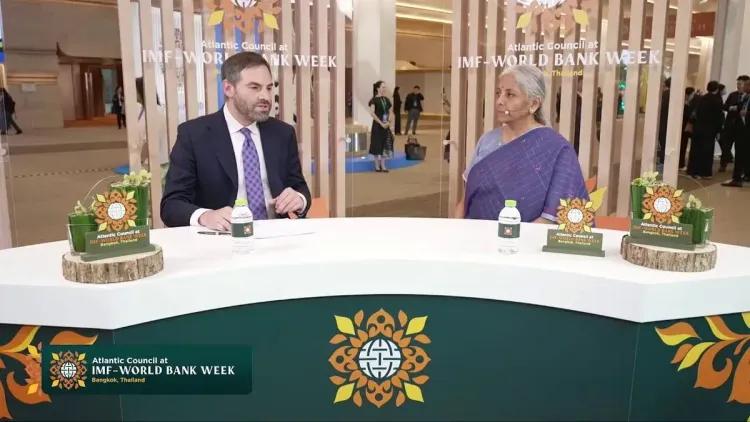
Nirmala Sitharaman spoke in Bangkok, Thailand on October 16, 2026 at an international engagement.
She described India as the fastest-growing major economy over the past four to five years since the COVID-19 pandemic.
She cited inclusion — ensuring access to resources for all — and youth skilling as key drivers of sustained growth.
The Finance Minister stressed that fiscal prudence remains non-negotiable, warning against 'splurging' public money even while protecting the vulnerable.
The remarks connect to India's Skill India Mission (launched 2015) and the Fiscal Responsibility and Budget Management framework reiterated in successive Union Budgets from 2021 onward.
The Bangkok statement was flagged as the first in a series ('1/n'), signalling more policy remarks from the same international engagement.
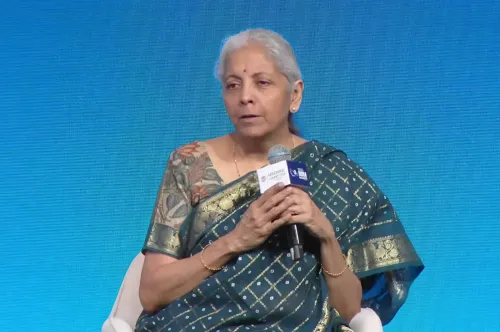
Against every headwind that the post-pandemic world threw at major economies, India kept growing — and Union Finance Minister Nirmala Sitharaman used an international platform in Bangkok, Thailand on Friday, October 16, 2026 to explain precisely why. Speaking abroad, she framed India's sustained outperformance not as luck, but as deliberate policy architecture resting on two pillars: inclusion and fiscal prudence.
The fastest-growing claim, unpacked
Sitharaman stated plainly: 'India, much against all the odds, is able to keep up the growth. In fact, we've been the fastest-growing in the last four or five years since COVID.' The assertion tracks a well-established pattern — India has consistently ranked among the fastest-expanding large economies in the post-COVID-19 period, a stretch that includes global inflation shocks, supply-chain fractures, and geopolitical turbulence that squeezed peers across Asia, Europe, and the Americas. The Finance Minister's framing underlines that the performance is 'consistent with the kind of efforts' being made — a pointed rebuttal to the idea that India's numbers are cyclical or coincidental.
Inclusion and skilling as growth engines
Sitharaman singled out two specific drivers. First, being 'inclusive and making sure everyone has access to resources' — a reference to the wider welfare architecture of targeted subsidies, direct-benefit transfers, and infrastructure buildout that has extended the formal economy's reach. Second, 'access to skilling for the young' — a nod to the Skill India Mission, launched in 2015, which has aimed to expand vocational training and employability across India's large and youthful workforce. Young Indians entering a skilling pipeline are not just a social-equity story; they are a productivity story, and the Finance Minister presented them as such.
Fiscal prudence as a non-negotiable constraint
The sharper edge of her remarks came on the fiscal side. 'We are conscious that we have a responsibility with public money and therefore, have a very clear understanding that we can't be splurging money, even as we have to take care of those who are vulnerable in the economy.' That sentence captures the tension that has defined India's budget calculus since 2021: how to sustain welfare commitments while walking down the fiscal deficit. The Fiscal Responsibility and Budget Management framework, reiterated across successive Union Budgets, has anchored this consolidation drive. Sitharaman's choice to stress this restraint on a global stage signals that fiscal credibility — not just growth optics — is the message India wants multilateral audiences to take away.
Why Bangkok, why now
International addresses by India's Finance Minister serve a dual purpose: engaging multilateral partners on macro-stability, and projecting a coherent economic narrative to global investors and institutions. The Bangkok appearance, flagged as the first in a series of statements ('1/n'), suggests more remarks are forthcoming from the same engagement. The watch points are clear — any specific numbers on the fiscal glide path or skilling outlays that emerge from these exchanges will feed directly into expectations for the next Union Budget.
India's growth story, as Sitharaman told it in Bangkok, is neither a windfall nor a miracle. It is a policy choice — made repeatedly, under pressure, in public money. That is the argument she is taking to the world.
Point of View
Investors, and multilateral institutions. By yoking inclusion to fiscal restraint in the same breath, she pre-empts the standard critique that welfare spending undermines consolidation, presenting them instead as co-equal pillars. This framing has been a recurring motif in Union Budgets since 2021, but delivering it on an international stage sharpens its strategic function. The '1/n' signalling suggests a coordinated communications push, likely timed to coincide with multilateral forums where India's fiscal trajectory is under scrutiny heading into the next budget cycle.
NationPress
16 Oct 2026
Frequently Asked Questions
Why is Nirmala Sitharaman in Bangkok?
Sitharaman is in Bangkok, Thailand for an international engagement where she delivered remarks on India's economic performance. Her statement was flagged as the first in a series, suggesting multiple policy addresses at the same event.
Is India really the fastest-growing major economy since COVID?
Sitharaman claimed India has been the fastest-growing major economy over the past four to five years since the COVID-19 pandemic. This is broadly consistent with widely reported GDP comparisons among large economies in the post-pandemic period, though exact rankings vary by year and measurement methodology.
What is the Skill India Mission?
The Skill India Mission was launched in 2015 to expand vocational training and improve employability among India's youth. Sitharaman cited youth skilling as one of the specific reasons for India's sustained post-COVID economic growth.
What does fiscal prudence mean in India's budget context?
Fiscal prudence refers to controlling the government's fiscal deficit — the gap between spending and revenue. India's Fiscal Responsibility and Budget Management framework sets deficit reduction targets, and Sitharaman has consistently reaffirmed this consolidation path in successive Union Budgets since 2021.
What should we watch for after Sitharaman's Bangkok remarks?
The Bangkok statement is the first in a series ('1/n'), so further remarks from the same engagement are expected. Key things to watch include any specific fiscal deficit targets or skilling expenditure figures she reveals, which would signal the direction of the next Union Budget.