India-US trade talks hit plateau, trade balance favours India: FM Sitharaman
Synopsis
Finance Minister Nirmala Sitharaman has publicly signalled that India-US trade talks may have hit a ceiling — with both sides reaching a ‘plateau’ beyond which further concessions look very difficult. Set against the landmark India-EU deal covering a quarter of global GDP, the remarks offer the clearest official picture yet of where the high-stakes bilateral negotiations stand.
Key Takeaways
Finance Minister Nirmala Sitharaman said India-US trade negotiations may have reached a plateau , with both sides finding further give-and-take ‘very, very difficult.’ The bilateral trade balance currently favours India ; the US is seeking to reduce its trade deficit.
Talks are proceeding under an interim trade agreement framework announced in February 2026 .
Sitharaman cited the India-EU trade deal — covering two billion people and roughly a quarter of global GDP — as a model of India’s negotiating approach.
Under the EU deal, India opened 92.5% of tariff lines and 97% of trade value; the EU opened 99% of trade value and 97% of tariff lines.
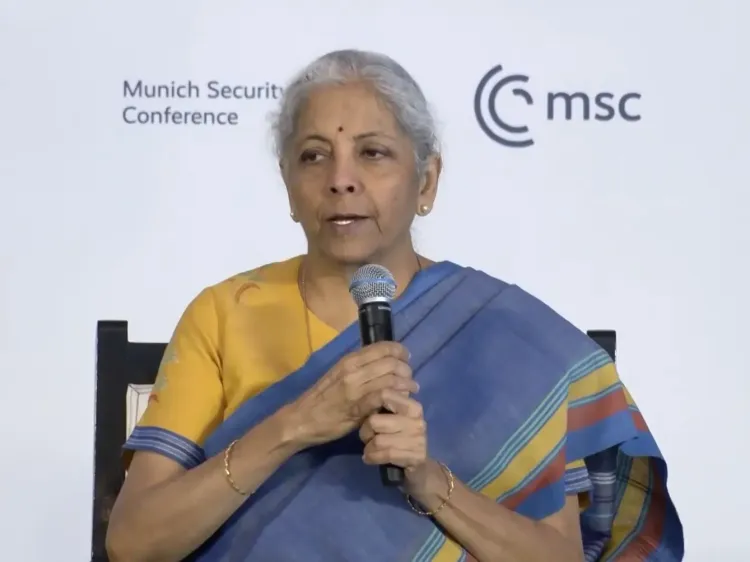
Finance Minister Nirmala Sitharaman said on Monday, 5 October 2026, that India-US trade negotiations are still ongoing but may have reached a plateau, and acknowledged that the bilateral trade balance currently favours India. Her remarks came at the Munich Leaders Meeting 2026 in New Delhi, where she offered the most candid official assessment yet of where the high-stakes trade talks stand.
Key Remarks on the US Trade Negotiations
Sitharaman said the proposed trade agreement had been “hard and very vigorously negotiated.” She added: “The negotiations are still ongoing although we would like to believe both sides have reached a plateau beyond which giving or taking might be very, very difficult.”
She left open the possibility that the two sides could still explore remaining room for movement, but the tone was notably cautious. The minister noted that the United States is actively seeking to reduce its trade deficit with India, reflecting concerns over what Washington views as accumulated losses in the bilateral trade relationship over the years.
Background: The Interim Trade Framework
The current negotiations are being conducted under a framework for an interim trade agreement announced in February 2026. Both countries had committed to working towards finalising the interim pact while simultaneously continuing talks on a broader bilateral trade agreement. This comes amid a wider global push by Washington to rebalance trade relationships with major partners, making India’s surplus a recurring point of friction.
India-EU Deal Cited as a Benchmark
Sitharaman also cited the recently concluded India-European Union trade agreement as an example of India’s negotiating approach. She noted that the deal would cover economies representing approximately two billion people and roughly a quarter of global GDP.
Echoing a phrase used by European Commission President Ursula von der Leyen, the Finance Minister called the agreement “the mother of all deals.” Under the pact, India has opened up 92.5% of its tariff lines and about 97% of trade value, while the EU has opened up approximately 99% of trade value and around 97% of tariff lines.
Sitharaman stressed that India’s market access commitments under the EU deal were selected based on the complementarity of the two economies and the need to ensure India’s competitiveness was not adversely affected.
What This Means for India-US Trade
The Finance Minister’s “plateau” characterisation is significant. It signals that both sides may be nearing the limits of concessions each is willing to make — a dynamic that could delay or reshape the interim agreement. India’s trade surplus with the US has been a persistent irritant in the relationship, with Washington seeking greater market access across goods and services. Notably, the India-EU deal’s scale offers a contrast: a broader, more comprehensive framework that took years of negotiation to close.
What to Watch Next
With both sides reportedly unwilling to give ground easily, the interim pact’s timeline remains uncertain. The next round of technical discussions is expected to test whether the plateau Sitharaman described is permanent or whether new trade-offs can unlock progress. Observers will also watch whether the US responds to the FM’s public framing of the surplus question.
Point of View
American trade negotiators will ask why a comparable offer is off the table. The real question is whether the interim pact — already nine months in the making — can deliver enough to prevent the broader relationship from stalling.
NationPress
5 Oct 2026
Frequently Asked Questions
What did Finance Minister Nirmala Sitharaman say about India-US trade talks?
Sitharaman said the negotiations are continuing but may have reached a plateau, beyond which further concessions from either side would be very difficult. She was speaking at the Munich Leaders Meeting 2026 in New Delhi on 5 October 2026.
Why is the US-India trade balance a point of tension?
The bilateral trade balance currently favours India, meaning India exports more to the US than it imports. The United States is seeking to reduce this trade deficit, reflecting concerns over what Washington views as accumulated losses in the trade relationship over the years.
What is the interim trade agreement framework between India and the US?
The interim trade agreement framework was announced in February 2026. Both countries agreed to work towards finalising an interim pact while continuing talks on a broader bilateral trade deal.
What did Sitharaman say about the India-EU trade deal?
She described it as ‘the mother of all deals,’ echoing a phrase used by European Commission President Ursula von der Leyen. The deal covers about two billion people and a quarter of global GDP, with India opening 92.5% of its tariff lines and 97% of trade value.
What happens next in India-US trade negotiations?
Further technical discussions are expected, though the timeline for an interim agreement remains uncertain. Sitharaman indicated both sides would explore whether any room for further negotiations exists, but cautioned that significant movement would be difficult.