Pralhad Joshi Holds AI-Education Talks With UAE Minister in Dubai
Synopsis
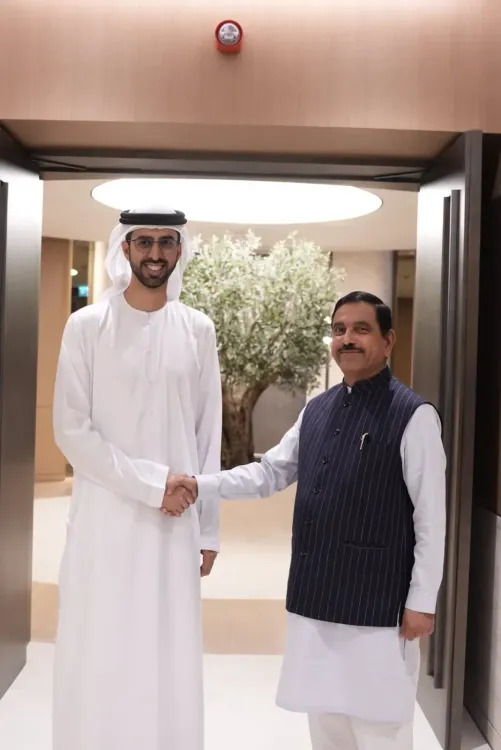
Union Minister Pralhad Joshi met UAE AI Minister Omar Al Olama in Dubai to deepen bilateral cooperation in AI-enabled education, STEM, and joint research. Key proposals include a structured India-UAE AI-education dialogue, IIT Delhi–Abu Dhabi and MBZUAI partnerships, and expanded SPARC collaboration in AI, renewables and space.
Key Takeaways
Pralhad Joshi held bilateral talks with UAE Minister Omar Al Olama in Dubai on November 19, 2026 on AI and education cooperation.
Discussions covered AI-enabled learning, digital public infrastructure, STEM education, teacher capacity building and responsible use of emerging technologies.
The IIT Delhi–Abu Dhabi campus was proposed as a research bridge with MBZUAI for joint AI research.
India's SPARC scheme (launched 2018 ) was placed at the centre of proposed collaboration in AI, climate resilience, renewable energy, advanced manufacturing and space technologies.
Both sides exchanged perspectives on the UAE National AI Literacy Curriculum Framework (K–12) and the National AI Upskilling Programme for Teachers .
Joshi proposed a formal structured India–UAE dialogue on AI in education to translate shared vision into concrete cooperation.
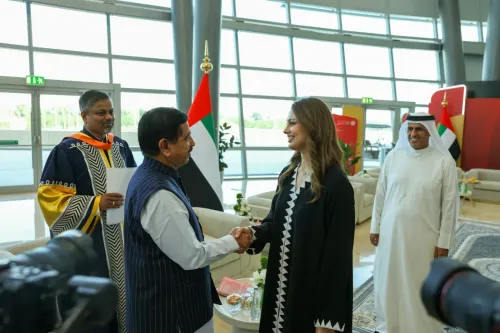
In a meeting that places India's education and technology ambitions squarely on the global stage, Union Minister Pralhad Joshi held bilateral discussions in Dubai on Thursday, November 19, 2026 with H.E. Omar bin Sulaiman Al Olama, the UAE's Minister of State for Artificial Intelligence, Digital Economy and Remote Work Applications — signalling a push to wire together two of the world's most AI-ambitious nations through classrooms and campuses.
From Dubai Talks to AI-Ready Classrooms
The two ministers trained their focus on a sharply practical agenda: AI-enabled learning, digital public infrastructure for education, STEM capacity, teacher training, and what Joshi described as 'the responsible use of emerging technologies in classrooms.' The conversation was not abstract. Both sides arrived with live national frameworks — India's National Education Policy 2020 mandating digital and AI integration, the UAE's own National AI Strategy first unveiled in 2017 and since built out with K–12 and teacher-upskilling layers. Two policy machines, now being asked to mesh.
Joshi specifically flagged the UAE National AI Literacy Curriculum Framework (K–12) and the National AI Upskilling Programme for Teachers as reference points for exchange, signalling that India is as interested in absorbing proven Gulf practice as it is in exporting its own digital-public-goods model.
IIT Delhi–Abu Dhabi and MBZUAI: The Research Bridge
The ministerial conversation zoomed in on two institutional anchors. The first is the IIT Delhi–Abu Dhabi campus, envisioned as a bilateral node for joint AI research. The second is MBZUAI — the Mohamed bin Zayed University of Artificial Intelligence, Abu Dhabi's specialised graduate research university — which Joshi proposed as a collaboration partner. Together, they sketch the outline of a research corridor that neither country has yet formalised.
Underpinning the research agenda is SPARC — India's Scheme for Promotion of Academic and Research Collaboration, launched in 2018 by the Ministry of Education to fund joint projects between Indian institutions and foreign universities. Joshi placed SPARC at the centre of proposed collaboration in areas spanning AI, climate resilience, renewable energy, advanced manufacturing and space technologies. For a minister who also holds the New and Renewable Energy portfolio, the overlap between his two briefs is not incidental.
A Structured Dialogue Mechanism on the Table
The headline proposal out of Dubai is a formal, structured India–UAE dialogue on AI in education — a standing mechanism to convert shared intent into concrete projects. This builds on the Comprehensive Economic Partnership Agreement signed by the two countries in 2022, which already includes technology and services cooperation chapters, and would sit within the broader India–UAE Joint Commission framework.
What would such a dialogue actually deliver? Joshi's framing points to joint curriculum design, shared teacher-training methodology, co-funded SPARC research projects, and potentially the first formal research partnership between an IIT overseas campus and a UAE AI university. The mechanism is proposed; the architecture is yet to be built.
India and the UAE have been methodically stacking bilateral agreements across trade, digital infrastructure and energy. A formal AI-education dialogue would add one more load-bearing column to that structure — and position both countries to shape, not just adopt, the norms of AI in public education. The world is watching which democracies build that framework first.
Point of View
The alignment of his New and Renewable Energy and Consumer Affairs portfolios with the AI-research agenda on the table signals a cross-ministry convergence that the government is keen to project. The proposal for a structured dialogue mechanism is significant: it is harder to shelve than a joint statement and would create a standing accountability track ahead of the next India-UAE Joint Commission. Watch whether MBZUAI and IIT Delhi formalise a research agreement in the months following this meeting — that would be the clearest indicator of whether Dubai produced momentum or just goodwill.
NationPress
19 Nov 2026
Frequently Asked Questions
Why did Pralhad Joshi meet UAE minister Omar Al Olama in Dubai?
Union Minister Pralhad Joshi met UAE Minister of State for AI Omar Al Olama in Dubai on November 19, 2026, to advance India-UAE cooperation in artificial intelligence, education, STEM, and emerging technologies, and to propose a structured bilateral dialogue on AI in education.
What is the role of the IIT Delhi Abu Dhabi campus in India-UAE AI cooperation?
The IIT Delhi–Abu Dhabi campus has been proposed as a research bridge for joint AI projects with MBZUAI (Mohamed bin Zayed University of Artificial Intelligence), Abu Dhabi's specialised AI graduate university, though its exact operational status remains under development.
What is the SPARC scheme and how does it relate to India-UAE talks?
SPARC — the Scheme for Promotion of Academic and Research Collaboration — was launched by India's Ministry of Education in 2018 to fund joint research between Indian and foreign institutions. Joshi proposed expanding SPARC-based collaboration with the UAE in AI, climate resilience, renewable energy, advanced manufacturing and space technologies.
What is the UAE National AI Literacy Curriculum Framework?
The UAE National AI Literacy Curriculum Framework is a K–12 AI education programme developed under the UAE's national AI strategy, which also includes a National AI Upskilling Programme for Teachers. India and the UAE discussed exchanging insights from this framework during the Dubai meeting.
What was the main outcome proposed from Joshi's Dubai bilateral meeting?
The key proposal was a structured India–UAE dialogue specifically on AI in education, designed to create a formal, ongoing mechanism to convert the two countries' shared AI and education priorities into concrete bilateral projects and institutional partnerships.