Sitharaman: India's middle class and PM Modi's stability drive growth
Synopsis
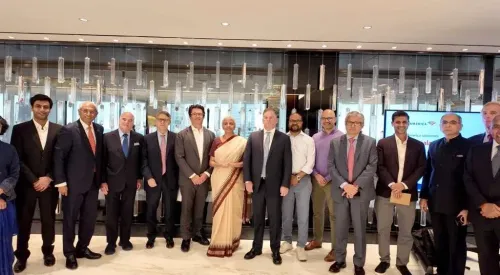
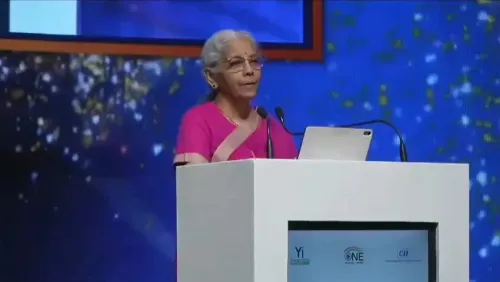
Union Finance Minister Nirmala Sitharaman, at HSBC India's Mumbai event on November 2, 2026, attributed India's economic robustness to middle-class aspirations and purchasing power, and credited PM Modi's third-term government with delivering the stability and policy clarity that businesses need to grow.
Key Takeaways
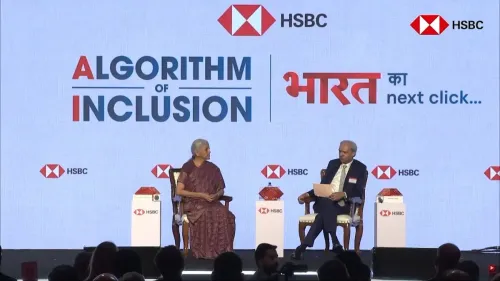
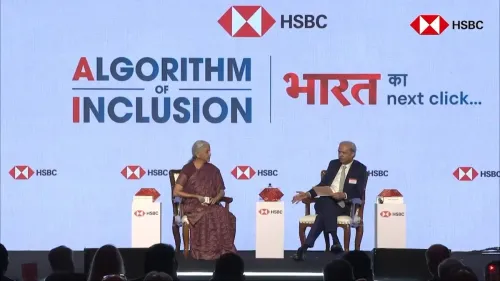
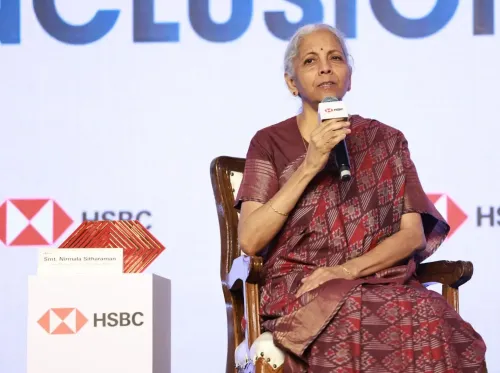
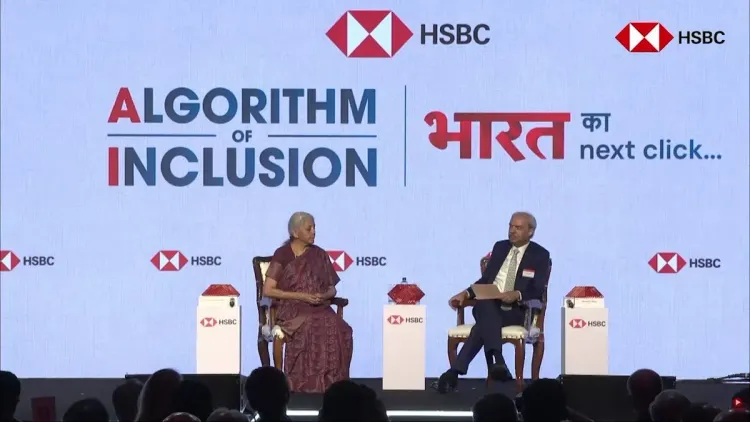
Finance Minister Nirmala Sitharaman spoke at HSBC India's 'Algorithm of Inclusion' event in Mumbai on November 2, 2026 .
She cited Indian people's aspirations, individual effort, a large domestic market, and rising middle-class purchasing power as drivers of economic robustness.
PM Modi's third term (following the 2024 elections) was credited with delivering stability, transparency, and policy clarity for businesses.
The speech reinforces the government's long-standing domestic-demand-led growth narrative.
Policy foundations cited include GST (2017) , Make in India (2014) , and Digital India (2015) as pillars of the current economic architecture.
Upcoming Union Budget sessions and consumption data releases remain key indicators to watch.
At a time when global headwinds are rattling economies from Frankfurt to Beijing, Union Finance Minister Nirmala Sitharaman chose Mumbai on Monday, November 2, 2026 to make a confident case for India's domestic-led economic momentum — and to credit the political continuity of Prime Minister Narendra Modi's third term as a key accelerant for business confidence.
The domestic-demand argument, front and centre
Speaking at HSBC India's flagship event titled 'Algorithm of Inclusion — भारत का Next Click' ('Algorithm of Inclusion — India's Next Click'), Sitharaman framed India's economic resilience around three interlocking forces: the aspirations of ordinary Indians, the individual drive to succeed, and the swelling purchasing power of a large and growing middle class. The argument is deliberate. It positions India's growth story as structurally insulated — rooted in domestic consumption rather than export dependency or foreign capital flows alone.
This is not a new line, but it is a sharpened one. The government has consistently leaned on domestic demand as its growth anchor, particularly as global trade uncertainty has mounted through the mid-2020s. At a banking event focused on financial inclusion and digital access, the framing landed in the right room.
Third-term stability as a pitch to investors
Sitharaman's second thread was explicitly political economy: the BJP-led coalition's return to power in 2024 for a third consecutive term, she argued, has delivered 'stability, transparency and policy clarity' that gives businesses — domestic and foreign — the confidence to invest and expand. The message is aimed squarely at the boardroom: political continuity equals regulatory predictability.
The line draws a direct arc from foundational reforms — GST's nationwide rollout in 2017, the Make in India initiative from 2014, and the Digital India programme from 2015 — to the present, presenting them as a coherent, long-term policy architecture rather than a series of standalone measures. The cumulative effect, in the government's telling, is an economy that has earned the trust of capital.
Why the HSBC platform matters
The choice of venue is telling. HSBC India, a subsidiary of one of the world's largest financial institutions, commands an audience of corporate decision-makers, investors, and fintech players. An event branded around 'inclusion' and India's digital trajectory is precisely the arena where a Finance Minister's words move sentiment. Sitharaman's appearance signals that the government is actively courting the international banking community's view of India as a stable, high-growth destination.
With Union Budget deliberations on the horizon and consumption and digital-inclusion data sets closely watched by markets, every public framing of economic confidence carries weight. The Finance Minister knows the room — and the room was listening.
India's domestic demand story has been told before. The question every investor in that Mumbai hall was quietly computing: whether the next set of economic data will let the government keep telling it.
Point of View
Make in India, Digital India — to the present moment of 'policy clarity,' she is constructing a continuity narrative designed to reassure markets wary of electoral disruption. The domestic-demand framing also serves as a structural hedge — positioning India as resilient regardless of global trade turbulence. As Budget season approaches, these public articulations help set market expectations and investor sentiment well before official policy announcements land.
NationPress
2 Nov 2026
Frequently Asked Questions
What did Nirmala Sitharaman say at the HSBC India event in Mumbai?
She said India's economic robustness is driven by the aspirations of its people, a large domestic market, and the growing purchasing power of the middle class, and credited PM Modi's third-term government with providing stability, transparency, and policy clarity that gives businesses confidence to grow.
What is the HSBC India 'Algorithm of Inclusion' event?
It is a flagship event organised by HSBC India, titled 'Algorithm of Inclusion — भारत का Next Click,' focused on financial inclusion and India's digital economic trajectory, held in Mumbai.
How does PM Modi's third term relate to India's economic growth?
According to Finance Minister Sitharaman, the BJP-led coalition's return to power for a third consecutive term after the 2024 elections has delivered political and policy continuity, which she argues translates into business confidence and investment growth.
What are the key reforms underpinning India's current economic story?
The government points to GST (implemented nationwide in 2017 to unify indirect taxes), Make in India (launched 2014 to boost manufacturing), and Digital India (initiated 2015 to expand digital infrastructure and financial inclusion) as the foundational pillars.
Why is India's middle class important to its economic growth?
India's large and growing middle class is a major source of domestic consumption demand, making the economy less dependent on exports or foreign capital alone — a key plank of the government's resilience argument.