Sitharaman pitches India's culture as next GCC frontier
Synopsis
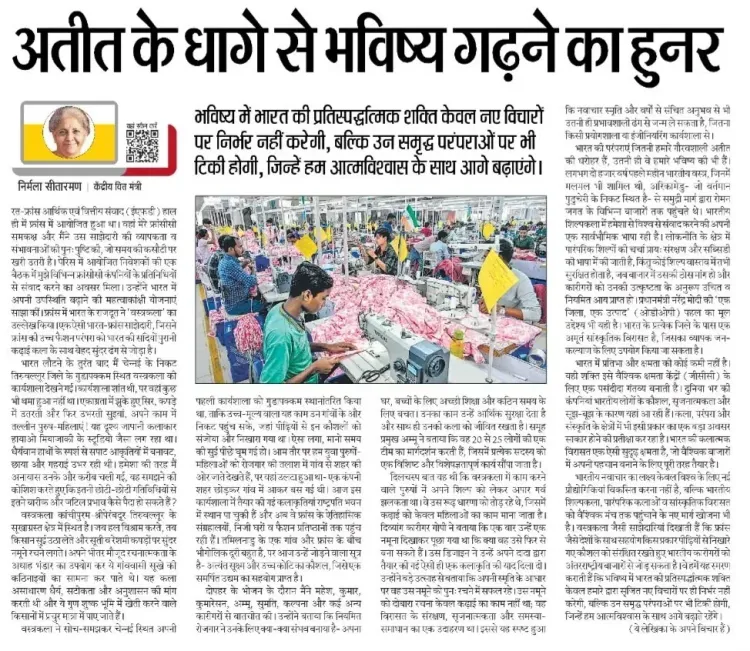
Finance Minister Nirmala Sitharaman argued in a Hindi opinion column on 20 July 2026 that India's artistic and cultural heritage holds the same global export potential as its technology talent pool, drawing a direct parallel with the country's thriving Global Capability Centre ecosystem.
Key Takeaways
Finance Minister Nirmala Sitharaman published an opinion column in Live Hindustan on 20 July 2026 arguing India's cultural heritage has untapped global export potential.
She drew a direct parallel between India's Global Capability Centre (GCC) success and the opportunity in art, tradition, and culture.
Sitharaman credited Indian 'skill, creativity, and ingenuity' as the foundation for both technology and cultural exports.
India's GCC ecosystem is rooted in reforms dating to 1991 and was further boosted by the Digital India programme launched in 2015 .
The column signals a possible policy push to apply GCC-style incentives to creative industries, with the next Union Budget a key watch point.
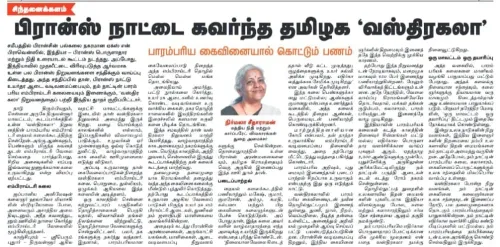
Union Finance Minister Nirmala Sitharaman on Monday, 20 July 2026, argued that India's artistic heritage holds the same global export potential as its technology talent, drawing a direct parallel between the country's booming Global Capability Centre ecosystem and its largely untapped creative economy. The argument appeared in an opinion column she authored in the Hindi daily Live Hindustan.
Context
Writing in Hindi, Sitharaman stated: 'भारत में प्रतिभा और क्षमता की कोई कमी नहीं है' ('India has no shortage of talent and capability'). She described this human capital as the core reason multinational companies are choosing India as a preferred destination for their Global Capability Centres (GCCs) — offshore hubs handling IT, R&D, finance, and analytics for parent firms worldwide.
The minister then extended the argument beyond technology, writing that 'a similarly large opportunity is waiting to be realised in the fields of art, tradition, and culture.' She described India's artistic heritage as a 'robust capability that is fully prepared to establish its identity in global markets.'
Policy Backdrop
India's emergence as a leading GCC location is rooted in the services-sector liberalisation that followed the 1991 balance-of-payments reforms, which opened the door to foreign direct investment in IT and back-office functions. Successive programmes — including Digital India launched in 2015 and a series of national skill-mission initiatives — deepened the engineering and analytics talent pool that now underpins the GCC ecosystem.
The creative-economy argument Sitharaman advances is not new to Indian policy circles. Successive Economic Surveys and FDI policy updates have treated both IT-BPM services and tourism-and-culture as high-value export sectors, reflecting a long-standing effort to pair technology exports with soft-power promotion. What is notable is a senior Cabinet minister explicitly linking the two in public discourse.
Stakeholders and Impact
The immediate audience for the column includes multinational corporations evaluating India as a GCC location, skilled professionals in engineering and analytics, and — significantly — cultural practitioners such as artisans, designers, performing artists, and creative entrepreneurs who have historically operated outside the formal export-promotion framework.
By drawing the GCC parallel, Sitharaman signals that the same policy levers used to attract technology investment — talent development, ease of doing business, FDI facilitation — could in principle be applied to creative industries. This framing matters for budget allocations and for any future parliamentary action on a creative-economy policy framework.
What's Next
Observers will watch whether the minister's column translates into concrete measures in the next Union Budget — such as dedicated incentives for creative-sector exports, a formal GCC-style policy for cultural industries, or expanded funding for institutions that bridge traditional craftsmanship and global markets. The column's publication in a widely read Hindi daily also suggests the government is building a domestic audience for the creative-economy narrative ahead of any formal policy announcement.
Point of View
Extending the 'India as talent hub' brand into creative industries ahead of what could be a pre-Budget policy signal. By anchoring the cultural argument in the GCC success story — a tangible, quantifiable achievement — she gives the creative-economy pitch institutional credibility it has historically lacked. The choice of a Hindi-language platform also suggests the messaging is aimed at a domestic constituency of artisans and small cultural entrepreneurs, not just foreign investors. If this framing materialises into Budget incentives, it would mark a meaningful expansion of India's services-export policy architecture.
NationPress
21 Jul 2026
Frequently Asked Questions
What did Nirmala Sitharaman say about India's creative economy?
Sitharaman argued in a 20 July 2026 Hindi column that India's artistic heritage is a 'robust capability' ready to establish itself in global markets, drawing a parallel with the country's success in attracting Global Capability Centres.
What is a Global Capability Centre (GCC) in India?
A Global Capability Centre is an offshore delivery hub set up by a multinational company in India to handle functions such as IT, R&D, finance, and analytics. India has become one of the world's leading GCC destinations owing to its large English-language engineering talent pool and cost advantages.
Why is Nirmala Sitharaman linking GCCs with India's cultural heritage?
She is arguing that the same human-capital strengths — skill, creativity, and ingenuity — that attract technology firms to India can equally power the export of art, craft, and cultural products to global markets.
Will there be new Budget incentives for India's creative industries?
No formal announcement has been made. Policy observers will watch the next Union Budget for potential measures such as creative-sector export incentives or a dedicated policy framework, which the minister's column may be signalling.
What is the history of India's GCC growth?
India's GCC ecosystem traces back to the services-sector liberalisation of 1991, accelerated by Digital India in 2015 and national skill-mission programmes that built a large technology talent pipeline attractive to multinational firms.