Sitharaman Visits 600-Year-Old Shakti Peetha in Meghalaya

Synopsis
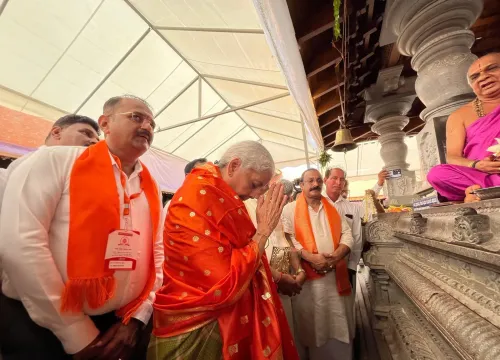
Union Finance Minister Nirmala Sitharaman visited the Shri Maa Jayantee Temple in Nartiang, West Jaintia Hills, Meghalaya on 20 June 2026, offering prayers at the ancient Shakti Peetha believed to be over 600 years old and reflecting the region's deep spiritual and cultural heritage.
Key Takeaways
Union Finance Minister Nirmala Sitharaman visited the Shri Maa Jayantee Temple in Nartiang, West Jaintia Hills, Meghalaya on 20 June 2026 .
The temple is believed to be more than 600 years old and is recognised as one of the 51 Shakti Peethas in Hindu tradition.
The site reflects Meghalaya's rich spiritual, cultural, and historical heritage, rooted in the legacy of the former Jaintia kingdom .
Central ministers have periodically visited Northeast India's religious sites, aligned with the PRASAD pilgrimage infrastructure scheme active since 2014-15 .
The visit may draw renewed attention to pilgrimage tourism prospects in West Jaintia Hills and the broader northeastern region.
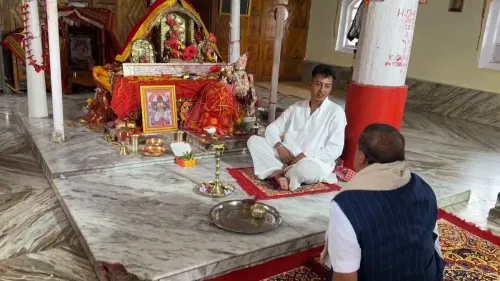
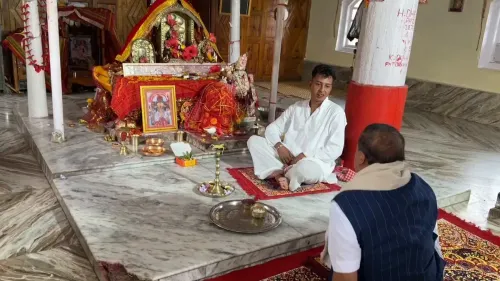
Union Finance Minister Nirmala Sitharaman visited the Shri Maa Jayantee Temple in Nartiang, West Jaintia Hills, Meghalaya, on Saturday, 20 June 2026, offering prayers at the ancient shrine. The temple, believed to be more than 600 years old, is widely recognised as one of the 51 Shakti Peethas in Hindu tradition.
Context
The Shri Maa Jayantee Temple in Nartiang stands as one of the most significant religious sites in northeastern India, venerated as a Shakti Peetha — a category of shrines considered among the holiest in the Shakta tradition of Hinduism. The 51 Shakti Peethas are spread across the Indian subcontinent, and the Nartiang temple's inclusion in this canon gives it pan-Indian religious significance that extends well beyond Meghalaya. Sitharaman's visit draws fresh attention to this heritage site, which is rooted in the history of the former Jaintia kingdom and the district of West Jaintia Hills.
Policy Backdrop
Central ministers have periodically visited religious and cultural sites in the Northeast as part of broader efforts to highlight the region's shared heritage with the rest of India. The BJP-led central government has supported the PRASAD (Pilgrimage Rejuvenation and Spiritual Augmentation Drive) scheme since 2014-15, channelling funds into pilgrimage infrastructure across multiple states. Northeastern states have been a focus of outreach under successive central governments, with cultural visits often accompanying infrastructure and development announcements in the region.
Meghalaya is home to the matrilineal Khasi, Jaintia, and Garo communities, and the state's religious landscape is a layered blend of indigenous traditions and Hinduism. The Nartiang temple complex, with its ancient monoliths and the Shakti Peetha shrine, represents this confluence of spiritual and cultural heritage.
Significance for Stakeholders
For local communities in West Jaintia Hills, the visit by a senior Union Cabinet minister brings visibility to a site that has long been central to regional identity and devotion. Pilgrimage tourism to the Shri Maa Jayantee Temple has the potential to grow if the site receives enhanced infrastructure support or is formally included under central tourism promotion schemes. The broader recognition of the temple as part of India's shared spiritual geography also resonates with ongoing efforts to promote domestic religious tourism across the country.
What's Next
Observers will watch whether Sitharaman's visit translates into formal policy attention — such as the temple's inclusion under the PRASAD scheme or other central heritage-promotion programmes. Follow-up visits by other Union ministers to Meghalaya and the wider Northeast are a possibility, consistent with the pattern of ministerial engagement with the region. The spotlight on Nartiang may also encourage greater interest among pilgrims and heritage tourists travelling to northeastern India.
Point of View
PRASAD inclusion, or tourism promotion — will be the real measure of the visit's impact.
NationPress
19 Sept 2026
Frequently Asked Questions
Where is the Shri Maa Jayantee Temple located?
The Shri Maa Jayantee Temple is located in Nartiang, in the West Jaintia Hills district of Meghalaya, northeastern India.
Why is the Nartiang temple considered important in Hinduism?
The temple is recognised as one of the 51 Shakti Peethas, a group of shrines considered among the holiest in the Shakta tradition of Hinduism, giving it pan-India religious significance.
How old is the Shri Maa Jayantee Temple?
The temple is believed to be more than 600 years old, with its origins linked to the history of the former Jaintia kingdom in what is now Meghalaya.
Why did Nirmala Sitharaman visit Meghalaya?
Sitharaman visited the Shri Maa Jayantee Temple in Nartiang on 20 June 2026 to offer prayers at the ancient Shakti Peetha shrine, highlighting the site's spiritual and cultural heritage.
What is the PRASAD scheme and does it apply to temples in the Northeast?
PRASAD (Pilgrimage Rejuvenation and Spiritual Augmentation Drive) is a central government scheme launched in 2014-15 to develop pilgrimage infrastructure across India; several northeastern sites have been considered for inclusion under the programme.