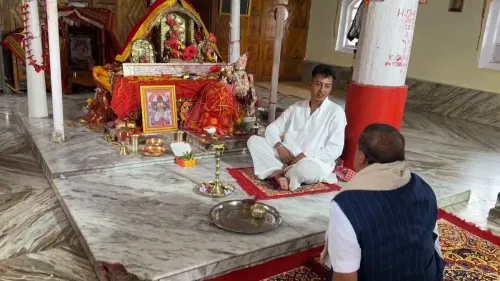
CM Himanta Visits Maa Jayanti Mandir, Cites Shakti Peeth Bond
Synopsis
Assam Chief Minister Himanta Biswa Sarma visited Maa Jayanti Mandir in Meghalaya's Jaintia Hills on 9 July 2026, invoking the spiritual bond between the Shakti Peeth and Kamakhya Temple in Assam to highlight the shared civilisational legacy of the two north-eastern states.
Key Takeaways
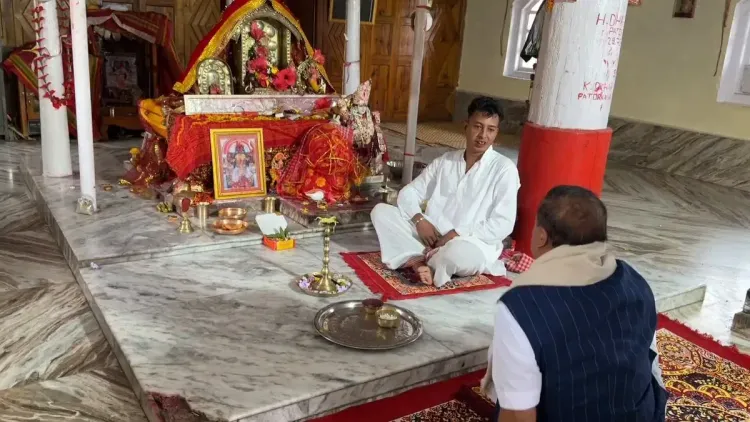
CM Himanta Biswa Sarma offered prayers at Maa Jayanti Mandir in the Jaintia Hills, Meghalaya on 9 July 2026 .
The temple is one of the 51 sacred Shakti Peeths in the Hindu tradition.
Sarma cited a traditional belief that the Jaintias were among the earliest devotees ( sadhaks ) of Maa Kamakhya in Assam.
The CM described the bond between the two Shakti Peeths as a 'shared spiritual legacy' connecting Assam and Meghalaya .
The visit aligns with BJP-led efforts across the North East to promote inter-state cultural ties through shared Shakta heritage.
A joint Assam-Meghalaya Shakti Peeth pilgrimage circuit remains a possible but unannounced follow-up.
Assam Chief Minister Himanta Biswa Sarma visited Maa Jayanti Mandir in Meghalaya on Thursday, 9 July 2026, offering prayers at one of the 51 sacred Shakti Peeths nestled in the Jaintia Hills. The CM used the occasion to invoke the shared spiritual heritage connecting Assam and Meghalaya, describing the temple as 'a powerful reminder of the deep and enduring roots of Sanatan Dharma in the North East.'
Context
Maa Jayanti Mandir, situated in the Jaintia Hills of Meghalaya, is revered as one of the 51 Shakti Peeths — sacred shrines in the Hindu tradition believed to mark spots where parts of the goddess Sati fell to earth. CM Sarma described the site as carrying deep civilisational significance, noting the traditional belief that 'the Jaintias were among the earliest sadhaks of Maa Kamakhya.'
The Kamakhya Temple in Guwahati, Assam, is among the most prominent of the 51 Shakti Peeths and a major centre of Shakta worship in the subcontinent. The CM's remarks draw a direct spiritual lineage between the two shrines, presenting their bond as evidence of a 'shared spiritual legacy that continues to connect Assam and Meghalaya.'
Policy Backdrop
The visit fits into a broader pattern seen across BJP-led administrations in the North East, where shared Shakti Peeth heritage has been repeatedly invoked to highlight civilisational continuity and inter-state cultural linkages. State governments in Assam have promoted the Kamakhya Temple as a premier pilgrimage destination through infrastructure and heritage tourism schemes since the mid-2000s.
CM Sarma, who also serves as convenor of the North-East Democratic Alliance (NEDA), has consistently used cultural and religious visits to reinforce ties among the north-eastern states. Framing the Jaintia Hills temple within the same spiritual geography as Kamakhya extends that narrative to Meghalaya, a state governed by a NEDA-aligned coalition.
Stakeholders and Impact
The statement carries significance for Hindu pilgrims and the Jaintia community of Meghalaya, whose indigenous identity has historically intersected with both tribal traditions and Shakta practices. Positioning the Jaintias as 'earliest sadhaks' of Maa Kamakhya acknowledges a local spiritual legacy that is often distinct from mainstream narratives of Hinduism in the region.
Heritage tourism stands to benefit if the CM's remarks translate into policy. A joint Assam-Meghalaya Shakti Peeth pilgrimage circuit — linking Kamakhya in Guwahati with Jayanti Mandir in the Jaintia Hills — has been floated in regional discussions as a potential tourism and cultural project, though no formal announcement has been made.
What's Next
Observers will watch for follow-up administrative decisions, including possible announcements on a joint Shakti Peeth pilgrimage corridor or heritage tourism infrastructure connecting the two states. The visit may also feed into broader conversations about cultural diplomacy within the NEDA framework ahead of scheduled state-level engagements in the North East.
For now, the CM's temple visit reinforces a civilisational argument that the BJP has deployed across the region — that Sanatan Dharma's roots in the North East predate colonial and modern administrative boundaries, and that shared sacred geographies can serve as a foundation for inter-state solidarity.
Point of View
Effectively expanding the spiritual map the BJP uses to assert civilisational continuity in the North East. By invoking the Jaintias as early Kamakhya devotees, Sarma threads together tribal identity and Sanatan Dharma in a way that speaks to both local pride and a pan-Hindu narrative. As NEDA convenor, such gestures also serve a political function: reinforcing soft-power ties with Meghalaya's coalition government ahead of future electoral and policy engagements. Whether this translates into a concrete pilgrimage corridor or remains symbolic will be the real test of the visit's policy weight.
NationPress
8 Oct 2026
Frequently Asked Questions
Where is Maa Jayanti Mandir located?
Maa Jayanti Mandir is located in the Jaintia Hills region of Meghalaya, North East India. It is recognised as one of the 51 sacred Shakti Peeths in the Hindu tradition.
What is the connection between Maa Jayanti Mandir and Kamakhya Temple?
CM Himanta Biswa Sarma cited a traditional belief that the Jaintia people were among the earliest devotees of Maa Kamakhya in Assam, suggesting a deep historical spiritual bond between the two Shakti Peeths.
Why did Assam CM Himanta visit Meghalaya in July 2026?
CM Sarma visited Maa Jayanti Mandir in Meghalaya's Jaintia Hills on 9 July 2026 to offer prayers, describing the temple as a reminder of Sanatan Dharma's roots in the North East and the shared heritage of Assam and Meghalaya.
What are the 51 Shakti Peeths?
The 51 Shakti Peeths are sacred Hindu shrines believed to mark the spots where parts of the goddess Sati fell to earth. They are spread across the Indian subcontinent, with Kamakhya in Assam and Jayanti Mandir in Meghalaya being two of them.
Is there a plan for an Assam-Meghalaya pilgrimage circuit?
No formal announcement has been made, but a joint Assam-Meghalaya Shakti Peeth pilgrimage corridor has been discussed in regional policy circles. CM Sarma's visit may signal intent, but no confirmed project exists as of 9 July 2026.