Sitharaman speaks to Le Figaro on India's Gulf crisis response
Synopsis
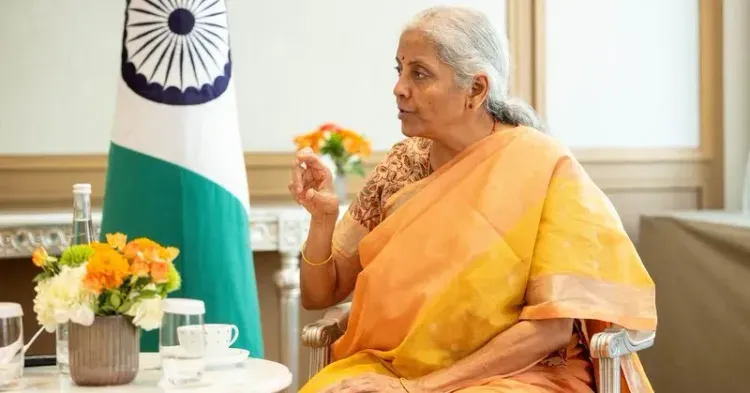
Finance Minister Nirmala Sitharaman discussed India's economic management of the Gulf crisis — covering growth, trade agreements and consumption — in an interview with Le Figaro's economics editor Fabrice Node-Langlois, published 3 July 2026.
Key Takeaways
Nirmala Sitharaman gave an interview to Le Figaro economics editor Fabrice Node-Langlois , published 3 July 2026 .
The interview covered India's handling of economic fallout from the Gulf crisis , including growth, trade deals and consumption.
India imports over 80 per cent of its crude oil, making Gulf disruptions a direct fiscal and consumer-price concern.
India has expanded strategic petroleum reserves since 2018 and used excise-duty cuts to cushion consumers from energy-price spikes.
Trade negotiations with the EU and the GCC form part of India's longer-term strategy to diversify supply and export routes.
The next quarterly GDP release and updates on trade talks will be key indicators of whether India's stated resilience holds.
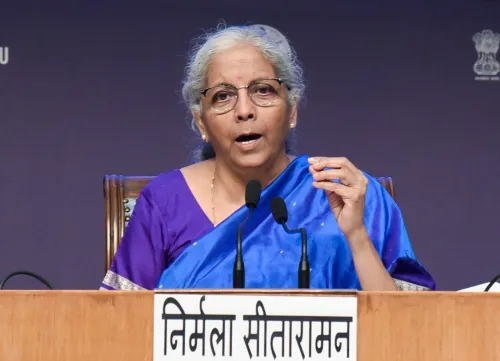
Union Finance Minister Nirmala Sitharaman gave an interview to Mr Fabrice Node-Langlois, Editor-in-Chief (Economics) of the French daily Le Figaro, addressing how India managed the economic fallout from the Gulf crisis, covering themes of growth, trade agreements and domestic consumption. The interview was published on 3 July 2026 and shared by the Finance Ministry's official handle on 4 July 2026.
Context
India imports over 80 per cent of its crude oil, a significant share of which originates from Gulf suppliers. Any geopolitical disruption in the region therefore carries direct consequences for domestic fuel prices, the current account, and broader consumer spending. The Finance Minister's engagement with an international economics publication signals New Delhi's intent to communicate its policy stance to global investors and trading partners at a moment of regional uncertainty.
The interview, published under the headline addressing growth, trade deals and consumption, suggests Sitharaman laid out India's multi-pronged response to the energy-price pressures stemming from the Gulf situation — a pattern consistent with how successive Indian governments have used international media platforms to project economic resilience.
Policy Backdrop
India has built up its strategic petroleum reserves progressively since 2018 to cushion the economy against oil-price volatility triggered by Gulf geopolitical events. When a comparable global energy spike followed the Ukraine conflict, the 2022 Union Budget deployed targeted excise-duty cuts on fuel to protect consumers and keep consumption from contracting sharply.
Trade-agreement negotiations have also been a recurring instrument. Talks with the European Union and the Gulf Cooperation Council (GCC) have sought to diversify both export destinations and import sourcing, reducing India's structural dependence on any single supply corridor. Sitharaman, as the minister overseeing fiscal policy since 2019, has been the principal architect of these demand-side and supply-side responses.
Stakeholders and Impact
Indian consumers are the most immediate stakeholders: fuel prices feed directly into food inflation, transport costs and household budgets across income groups. Oil importers and refiners watch the government's excise and subsidy stance closely, as any policy shift alters their margins and investment calculus.
Exporters, particularly those in sectors competing with Gulf-linked supply chains, stand to gain or lose depending on how trade-agreement negotiations evolve. International investors and multilateral lenders also track such high-profile interviews for signals on India's fiscal discipline and growth outlook, making the Le Figaro conversation an exercise in economic diplomacy as much as domestic communication.
What's Next
Analysts will watch India's next quarterly GDP release for evidence of whether growth held up through the Gulf-crisis period, and whether consumption data validates the government's narrative of resilience. Any follow-up announcements on India-EU or India-GCC trade talks will be read as the concrete policy sequel to the positions Sitharaman articulated in the interview. The Finance Minister's willingness to engage a major European economics publication also keeps India visible in the global conversation on supply-chain diversification away from volatile regions.
Point of View
Aimed at reassuring foreign investors and trade partners that India's growth story remains intact despite regional turbulence. The interview fits a well-established pattern: when external shocks threaten India's macro narrative, the Finance Ministry reaches outward to shape perception in capital-exporting markets. The specific framing around trade agreements signals that New Delhi wants any Gulf-crisis coverage to be read alongside its diversification agenda, not in isolation. Watched alongside upcoming GDP data and trade-talk milestones, the interview may mark the opening of a broader government communication push ahead of the next budget cycle.
NationPress
4 Jul 2026
Frequently Asked Questions
What did Nirmala Sitharaman say in her Le Figaro interview?
The interview, published on 3 July 2026, addressed how India managed the economic consequences of the Gulf crisis, focusing on growth, trade agreements and domestic consumption. Specific quotes from the interview have not been independently verified by NationPress.
Why is the Gulf crisis important for India's economy?
India imports over 80 per cent of its crude oil, a large share from Gulf suppliers, so any geopolitical disruption there directly affects domestic fuel prices, inflation and the current account deficit.
What steps has India taken to manage oil-price shocks from the Gulf?
India has expanded its strategic petroleum reserves since 2018 and has previously deployed excise-duty cuts on fuel to protect consumers. Diversification of crude sources and trade-agreement negotiations are also part of the policy toolkit.
What is Le Figaro and why does it matter for this interview?
Le Figaro is a major French daily newspaper with dedicated economics coverage and a wide readership among European investors and policymakers, making it a significant platform for India to communicate its economic position internationally.
What should we watch for after this Sitharaman interview?
Key indicators include India's next quarterly GDP release, which will show whether growth held up through the Gulf-crisis period, and any new developments in India-EU or India-GCC trade negotiations.