Sitharaman: Universities doubled, enrolment hit 4.5 cr since 2014
Synopsis
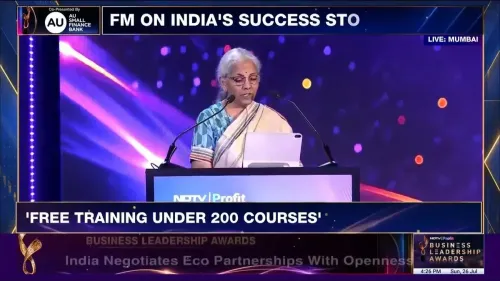
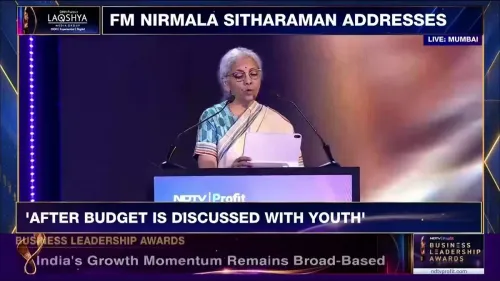
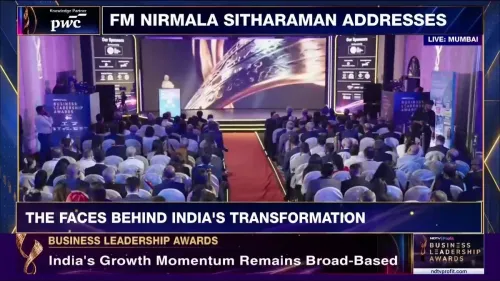
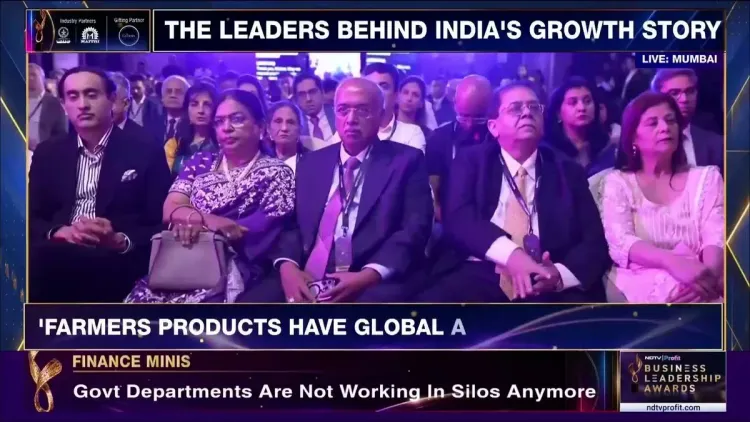
Finance Minister Nirmala Sitharaman, speaking at the NDTV Profit Business Leadership Awards 2026, said universities nearly doubled to 1,340 and higher-education enrolment crossed 4.5 crore students since 2014, citing expanded access as a government achievement under NEP 2020 and RUSA.
Key Takeaways
Universities in India grew from 723 in 2014 to 1,340 — an increase of 617 institutions .
Colleges rose from 36,600 to 52,000 over the same period, adding over 15,000 institutions.
Higher-education enrolment increased from approximately 3 crore to more than 4.5 crore students — a rise of over 1.5 crore .
The remarks were made at the NDTV Profit Business Leadership Awards 2026 on 26 July 2026 .
The figures are consistent with data tracked by the All India Survey on Higher Education (AISHE) .
NEP 2020 targets a Gross Enrolment Ratio of 50 per cent by 2035 , with institutional expansion as a key driver.
Union Finance Minister Nirmala Sitharaman, speaking at the NDTV Profit Business Leadership Awards 2026 on Sunday, 26 July 2026, cited a sweeping expansion of India's higher-education infrastructure since 2014, pointing to a near-doubling of universities, a sharp rise in colleges, and a jump in student enrolment of more than 1.5 crore.
Context
Sitharaman stated that the number of universities had grown from 723 in 2014 to 1,340, while colleges rose from 36,600 to 52,000 over the same period. Higher-education enrolment, she said, climbed from approximately 3 crore students to more than 4.5 crore, 'extending educational opportunities to a wider section of our society.' The remarks were part of the first in a thread of posts from her official handle, labelled '1/n'.
The figures align broadly with data tracked by the All India Survey on Higher Education (AISHE), which has published annual institution and enrolment counts since the 2010-11 cycle and serves as the government's primary benchmark for such claims.
Policy Backdrop
The expansion cited by Sitharaman spans the tenure of the National Democratic Alliance government and runs parallel to two major policy interventions. The Rashtriya Uchchatar Shiksha Abhiyan (RUSA) was revamped after 2014 to channel infrastructure and quality grants to state universities and colleges, particularly in underserved regions.
The National Education Policy 2020 (NEP 2020), approved by the Union Cabinet, set an ambitious target of raising the Gross Enrolment Ratio (GER) in higher education to 50 per cent by 2035, up from around 27 per cent at the time of its adoption. Institutional density — the number of universities and colleges relative to the eligible population — is a core lever in achieving that target.
The government's consistent framing links physical expansion of campuses, especially in tier-2 and tier-3 cities, with human-capital development goals tied to economic growth.
Stakeholders and Impact
The most direct beneficiaries of the expansion are the roughly 4.5 crore students now enrolled in higher education, many of them first-generation learners from smaller towns and rural districts where new institutions have been established. State universities and affiliated colleges — which absorb the bulk of enrolment outside the elite central-university and IIT ecosystem — have received the largest share of new institutional additions.
Industry bodies and corporate leaders attending the awards event represent a stakeholder group that tracks graduate supply closely; the minister's remarks signal that the government views the enrolment surge as a pipeline for a skilled workforce aligned with economic ambitions.
What's Next
The next release of the AISHE report or the Unified District Information System for Education Plus (UDISE+) data will provide an independent check on whether enrolment and institutional figures have continued to climb. Parliamentary scrutiny of education outlays in the forthcoming Union Budget is also expected to revisit these baseline numbers as legislators debate adequacy of per-student funding alongside raw access metrics. The remaining posts in Sitharaman's thread — indicated by the '1/n' tag — are likely to extend her remarks to other sectors or policy outcomes presented at the same event.
Point of View
Particularly as India positions itself as a talent-surplus economy. The near-doubling of universities is a striking headline figure, though analysts will note that raw institutional counts do not capture quality, faculty vacancies, or funding per student — gaps that NEP 2020 itself acknowledges. The '1/n' thread format suggests the minister is building a cumulative scorecard across sectors, likely ahead of Budget season when the government needs to defend allocation priorities. Whether the enrolment surge translates into improved graduate employability remains the central question that will define the policy's long-term legacy.
NationPress
26 Jul 2026
Frequently Asked Questions
How many universities are there in India in 2026 according to the government?
According to Finance Minister Nirmala Sitharaman, the number of universities in India has grown to 1,340 , up from 723 in 2014 .
How many students are enrolled in higher education in India?
Sitharaman stated that higher-education enrolment has crossed 4.5 crore students , rising from approximately 3 crore in 2014 .
What is the National Education Policy 2020 target for enrolment?
NEP 2020 sets a target of raising the Gross Enrolment Ratio in higher education to 50 per cent by 2035 , compared to around 27 per cent at the time of its adoption.
What is AISHE and how does it track education data in India?
The All India Survey on Higher Education (AISHE) is an annual government survey that tracks the number of universities, colleges, and student enrolment across India, published since the 2010-11 cycle.
What is RUSA and what role does it play in expanding colleges?
Rashtriya Uchchatar Shiksha Abhiyan (RUSA) is a centrally sponsored scheme revamped after 2014 to provide infrastructure and quality grants to state universities and colleges, supporting the expansion cited by the minister.