CM Dhami Cites Post-2014 Education Expansion Data
Synopsis
Uttarakhand CM Pushkar Singh Dhami cited Union government figures showing the number of colleges rising from 38,000 to 52,000 since 2014, alongside the addition of 7 new IITs, 8 new IIMs, and an expansion of AIIMS campuses to 25, framing the decade as a landmark period for India's higher-education infrastructure.
Key Takeaways
CM Dhami stated that the number of colleges in India has risen from 38,000 before 2014 to 52,000 .
Seven new IITs and eight new IIMs have been established since 2014 , according to the CM's remarks.
The number of AIIMS campuses has grown to 25 , expanding access to premier medical education and healthcare.
The statement was shared by the official Chief Minister's Office of Uttarakhand on 30 May 2026 .
The remarks align with a broader BJP-governed-state pattern of highlighting Union government achievements in education infrastructure.
Education-policy watchers are monitoring the 2026–27 Union Education Budget for further institutional expansion announcements.
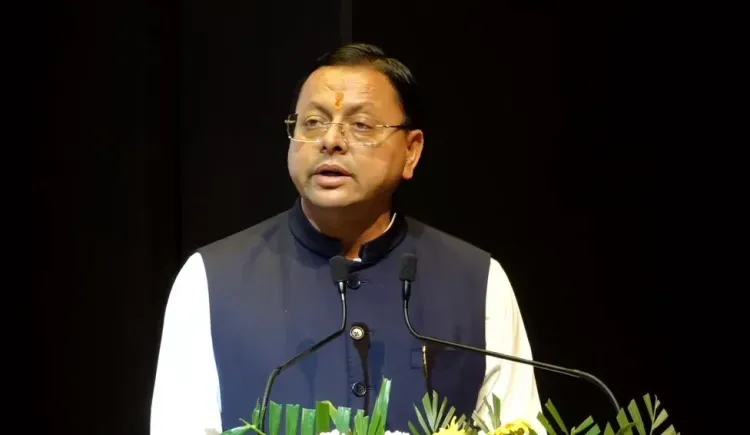
The Chief Minister's Office of Uttarakhand, on Saturday, 30 May 2026, quoted Chief Minister Pushkar Singh Dhami citing Union government data on the expansion of higher education and medical institutions since 2014, highlighting growth in colleges, IITs, IIMs, and AIIMS campuses across the country.
Context
CM Dhami was quoted as stating: '2014 se pehle desh mein 38 hazaar college the, jinki sankhya 52 hazaar ho gayi hai' ['Before 2014, the country had 38,000 colleges; that number has risen to 52,000.']. He further noted that seven new IITs and eight new IIMs have been established since 2014, and that the number of AIIMS institutions has grown to 25. The remarks frame the decade-long period since 2014 as one of significant institutional expansion in centrally-funded education and healthcare.
The statement was shared by the official Chief Minister's Office handle and is consistent with a broader pattern of BJP-governed states amplifying Union government achievements on education infrastructure. Uttarakhand, a state with a relatively young higher-education ecosystem, has a direct stake in the expansion of central institutions, several of which are located in or near the hill state's catchment regions.
Policy Backdrop
The groundwork for post-2014 institutional growth was laid partly by the 12th Five Year Plan (2012–17), which flagged the need for additional centrally-funded technical institutions to address regional imbalances in access to quality education. Cabinet approvals in 2015 and 2016 sanctioned several new IITs and IIMs, with campuses subsequently set up in states such as Himachal Pradesh, Andhra Pradesh, Bihar, Jammu, Palakkad, and Tirupati, among others.
On the medical side, the AIIMS Amendment Act, 2012, and successive cabinet decisions from 2015 onward enabled multiple phases of AIIMS expansion, extending the flagship medical institution's footprint to states that previously lacked a campus. The Ministry of Education and the Ministry of Health and Family Welfare have jointly overseen the approval and funding of these new institutions under various centrally-sponsored schemes.
Stakeholders and Impact
The primary beneficiaries of this expansion are higher-education students, medical aspirants, and the state governments that host new campuses, as each institution brings faculty positions, research activity, and ancillary economic development. For states in northern and northeastern India that historically lacked premier institutions, the new campuses represent a meaningful shift in access to subsidised, high-quality technical and medical education.
Critics and education-policy researchers have, however, noted that rapid physical scaling of institutions does not automatically translate into improved outcomes, and have called for equal attention to faculty recruitment, accreditation quality, and the implementation of the National Education Policy 2020 at the state level. The college-count growth — from 38,000 to 52,000 — spans both government and private institutions and reflects a broader enrolment push aimed at improving India's gross enrolment ratio in higher education.
What's Next
Parliamentary discussions on the 2026–27 Union Education Budget are expected to shed further light on whether additional AIIMS or IIT campuses will receive cabinet nods, and how existing new institutions will be staffed and resourced. At the state level, the pace at which Uttarakhand aligns its own higher-education framework with NEP 2020 targets will be a key indicator of whether the broader expansion narrative translates into on-ground outcomes for students in the state.
As India moves toward its goal of a 50 per cent gross enrolment ratio in higher education by 2035 — a target enshrined in NEP 2020 — the trajectory of institutional growth cited by CM Dhami will remain a benchmark against which both infrastructure delivery and educational quality are measured.
Point of View
IITs, IIMs, AIIMS — the communication sidesteps qualitative debates about faculty shortages or accreditation gaps and instead foregrounds physical infrastructure as proof of governance delivery. This approach fits a well-established BJP pattern of using institutional headcounts to signal transformative change, particularly in education and health. The broader implication is that the 2014-to-present period is being actively constructed as a reference baseline against which future policy promises will be measured.
NationPress
14 Oct 2026
Frequently Asked Questions
How many new IITs were set up after 2014 in India?
According to a statement by Uttarakhand CM Pushkar Singh Dhami, seven new IITs were established in India after 2014, adding to the existing network of premier engineering institutions.
How many AIIMS are there in India now?
CM Dhami's statement, shared by the Uttarakhand Chief Minister's Office on 30 May 2026, puts the current number of AIIMS campuses in India at 25 , up from roughly a dozen before 2014.
How many colleges are there in India in 2026?
According to figures cited by Uttarakhand CM Pushkar Singh Dhami, India now has approximately 52,000 colleges , compared to 38,000 before 2014.
How many new IIMs were established after 2014?
CM Dhami cited the establishment of eight new IIMs since 2014, with campuses in states including Himachal Pradesh, Andhra Pradesh, and Bihar, among others.
What is the National Education Policy 2020 target for gross enrolment ratio?
NEP 2020 sets a target of a 50 per cent gross enrolment ratio in higher education by 2035 , making the expansion of institutions like IITs, IIMs, and AIIMS a key part of India's long-term education strategy.