Smriti Irani hails 32 lakh citizens at Anganwadi Milan Seva drive

Synopsis
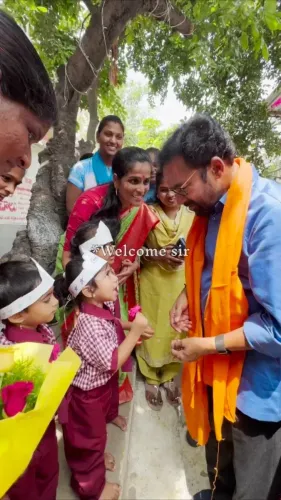
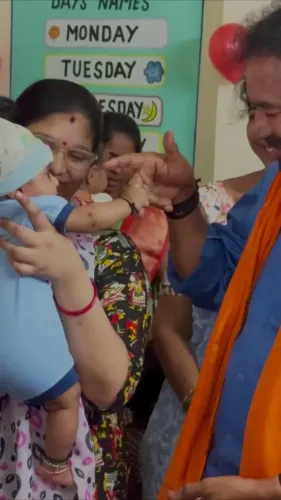
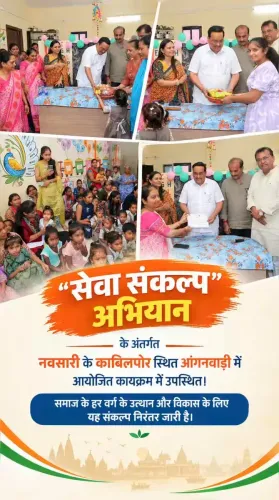
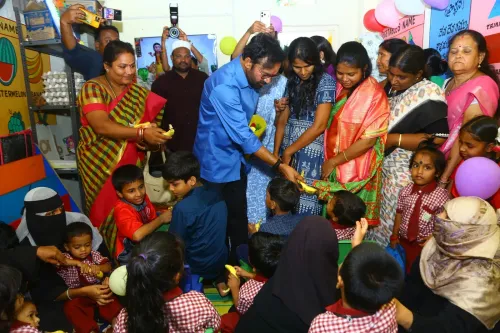
BJP leader Smriti Irani has spotlighted the #AnganMilanSeva campaign, reporting that over 32 lakh citizens visited 72,000 Anganwadi centres across 35 States and UTs in just 48 hours to honour frontline Anganwadi workers. The drive continues until October 7.
Key Takeaways
32 lakh+ citizens participated in #AnganMilanSeva within the first 48 hours of the campaign.
The drive spans 72,000 Anganwadi centres across 35 States and Union Territories , from hill communities to coastal areas.
The campaign runs under the broader #SevaSankalpAbhiyaan banner and continues until October 7, 2026 .
Citizens are encouraged to visit their nearest Anganwadi, bring fruit for children, and thank workers in person.
The Integrated Child Development Services (ICDS) scheme, launched in 1975 , underpins the Anganwadi network covering nutrition, immunisation and pre-primary education.
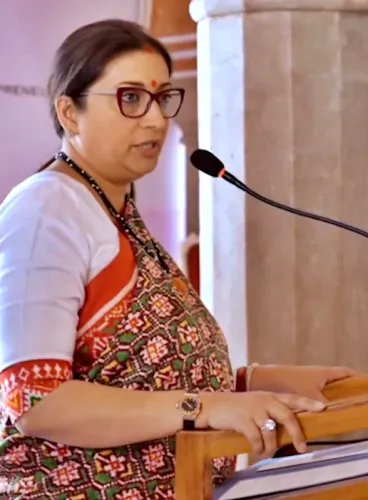
BJP leader Smriti Irani , former Union Minister of Women and Child Development, has been a prominent voice in amplifying the campaign.
Across 72,000 Anganwadi centres in 35 States and Union Territories — from remote hill communities to coastal villages — more than 32 lakh citizens turned up in just 48 hours to honour the women who quietly hold India's early childhood network together. BJP leader Smriti Irani marked the moment on Sunday, September 27, calling it a single voice of service rising from every courtyard of the nation.
What the Angan Milan Seva campaign is asking of every Indian
The ask is deliberately simple. Visit the nearest Anganwadi. Spend a few minutes with the workers — the 'Anganwadi Didis' — who run it. Bring some fruit for the children. Offer a smile and a thank you. Irani's post frames the gesture with a line that cuts through the ceremonial: 'सेवा is not measured by how much we give, but by how many hearts we touch.' ('Service is not measured by how much we give, but by how many hearts we touch.')
The #AnganMilanSeva campaign, run under the broader #SevaSankalpAbhiyaan banner, continues until October 7. The call to action is community-first — citizens are encouraged to physically walk into their local centre rather than engage digitally.
The 51-year-old network these women have kept alive
The Integrated Child Development Services (ICDS) scheme was launched in 1975 — now more than five decades ago — as India's primary response to child malnutrition and the absence of preschool education in rural areas. Its delivery mechanism is the Anganwadi centre: a village-level node staffed by a worker and a helper who together provide nutrition supplements, immunisation support, health referrals, and pre-primary learning to children under six and to expectant and nursing mothers.
Despite being among the largest community health networks in the world, Anganwadi workers have historically operated in low-visibility roles, their contribution rarely commanding the same public recognition as other frontline cadres. Campaigns that bring citizens physically into these centres attempt to close that gap — and to reinforce the centres' role as community anchors, not just government outposts.
Irani's long association with the Anganwadi system
As Union Minister of Women and Child Development, Irani oversaw the ministry that directly administers ICDS and the Anganwadi network. Her continued public engagement with the campaign signals an effort to keep grassroots welfare visibility high — framing Anganwadi workers not as bureaucratic functionaries but as carriers of a national service ethic.
The campaign's scale — cutting across 35 States and UTs simultaneously — points to coordinated mobilisation at the block and district level, using the existing Anganwadi infrastructure as both the venue and the subject of the tribute.
With ten days still remaining in the campaign, the pressure is now on citizens in towns and cities — where Anganwadi centres are often invisible to the middle class — to make the short walk that the post is explicitly requesting. Because the Didis have already shown up. The question is whether India will show up for them.
Point of View
The campaign sidesteps the harder questions around Anganwadi worker remuneration and regularisation. For Irani, continued association with the Anganwadi ecosystem keeps her politically invested in a constituency — women's and child welfare — that defined her ministerial identity. Whether the campaign translates into sustained institutional support for these workers, or remains a bounded moment of appreciation, will be the real test of its intent.
NationPress
28 Sept 2026
Frequently Asked Questions
What is the #AnganMilanSeva campaign?
#AnganMilanSeva is a nationwide community outreach drive under the #SevaSankalpAbhiyaan initiative that invites citizens to visit their nearest Anganwadi centre, spend time with Anganwadi workers, and bring fruit for children as a gesture of appreciation. The campaign runs until October 7, 2026.
What are Anganwadi centres and what do they do?
Anganwadi centres are village-level facilities under the Integrated Child Development Services (ICDS) scheme, launched in 1975. They deliver nutrition support, immunisation, health referrals, and pre-primary education to children under six years old, as well as to pregnant and nursing mothers.
How many people participated in the Angan Milan Seva campaign?
According to the post by BJP leader Smriti Irani, over 32 lakh citizens participated across 72,000 Anganwadi centres in 35 States and Union Territories within the first 48 hours of the campaign.
Who are Anganwadi Didis?
Anganwadi Didis is a colloquial term for Anganwadi workers — women employed at the grassroots level under the ICDS scheme to provide early childhood care, nutrition services, and community health support in villages and urban slums across India.
What is Smriti Irani's connection to Anganwadi workers?
Smriti Irani served as Union Minister of Women and Child Development, the ministry that directly oversees the ICDS scheme and the Anganwadi network. She has remained a vocal supporter of Anganwadi workers' public recognition since her ministerial tenure.