Sonowal: 28% Major Port Energy Now Renewable, 3 Green H2 Hubs Coming
Synopsis
Union Minister Sarbananda Sonowal reveals that 28% of energy at India's Major Ports is now renewable and three Green Hydrogen Hubs are in development, advancing PM Modi's Net Zero 2070 pledge and positioning India in the global clean shipping race.
Key Takeaways
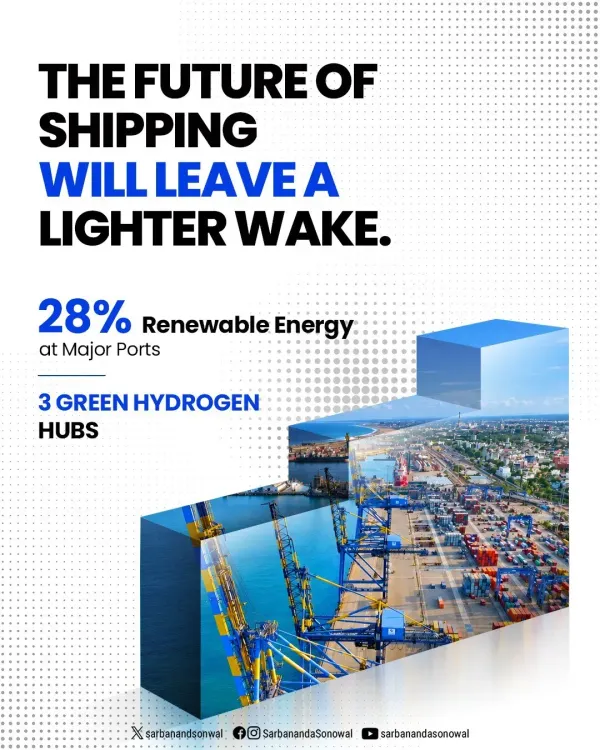
28% of energy at India's 12 Major Ports now comes from renewable sources, according to Minister Sonowal.
Three Green Hydrogen Hubs are actively being developed to serve maritime clean-fuel needs.
The push is anchored in PM Modi's Net Zero by 2070 commitment, first declared at COP26 in Glasgow, November 2021 .
The National Green Hydrogen Mission , approved by the Union Cabinet in January 2023 , provides the national policy framework underpinning the hubs.
The Sagarmala Project (launched 2015 ) laid the modernisation groundwork that today's green energy layer builds upon.
Site locations and funding structures for the three hubs are yet to be publicly notified — the next key disclosure milestone.
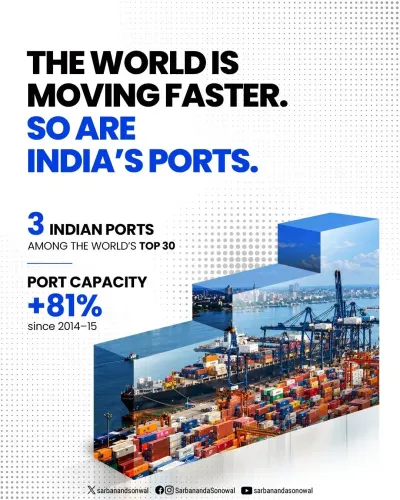
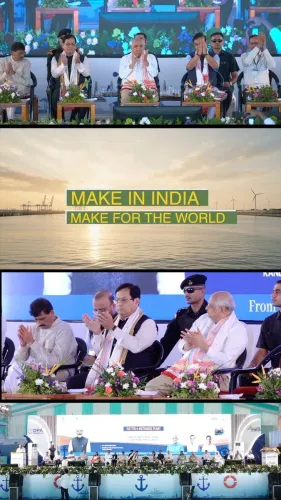
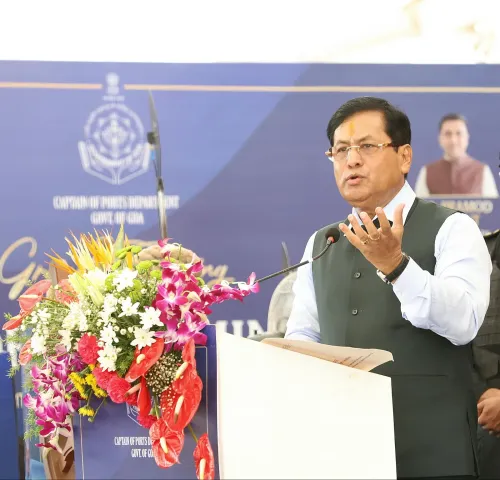
India's ports are no longer just gateways for cargo — they are quietly becoming laboratories for the country's clean-energy ambition. Union Minister of Ports, Shipping and Waterways Sarbananda Sonowal on Wednesday, October 21, 2026, flagged a striking milestone: 28% of the energy consumed at India's Major Ports now comes from renewable sources, while three Green Hydrogen Hubs are actively in development to anchor the next phase of maritime decarbonisation.
The numbers behind India's greening ports
Sonowal's post frames the push squarely within Prime Minister Narendra Modi's Net Zero by 2070 commitment — a target India first announced at the COP26 climate summit in Glasgow in November 2021. India operates 12 centrally administered Major Ports that together handle the bulk of the country's seaborne trade. Getting even a quarter of their power from clean sources marks a measurable operational shift, not just a policy aspiration.
The minister did not specify which ports have crossed the highest renewable thresholds, or the combined installed capacity behind that 28% figure. What the post makes clear is the direction: the ministry is treating its port estate as a grid-scale renewable deployment opportunity, not merely a logistics network.
Three Green Hydrogen Hubs and the IMO pressure behind them
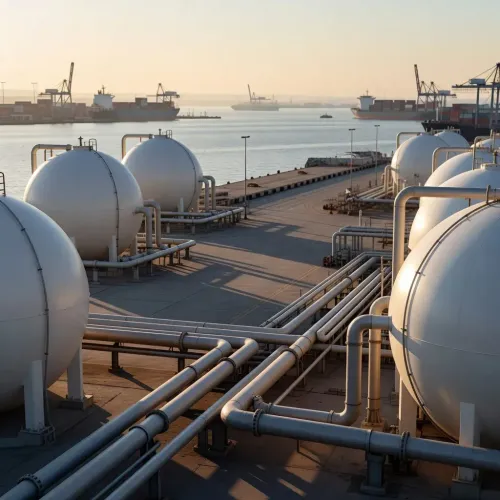
The three planned Green Hydrogen Hubs sit at the intersection of two converging forces. Domestically, the National Green Hydrogen Mission — cleared by the Union Cabinet in January 2023 — set the architecture for scaling green hydrogen production and offtake across India. Ports are a natural anchor because bunkering hydrogen for international shipping is one of the fastest-growing demand verticals globally.
Internationally, the International Maritime Organization has been tightening its emission-reduction pathways, putting pressure on port operators worldwide to offer zero-carbon fuel options. India positioning its hubs as part of a 'global clean energy transition' — Sonowal's own phrase — signals that the ministry sees export and bunkering revenue, not just domestic decarbonisation, as the prize.
The Sagarmala Project, launched in 2015, had already embedded sustainability components into port modernisation. The current renewable and hydrogen push is best understood as Sagarmala's green chapter: the physical infrastructure is largely built; the energy layer is now being retrofitted on top of it.
What to watch as the hubs take shape
The specific locations and funding structures for the three Green Hydrogen Hubs have not been publicly notified. Cabinet or ministry announcements confirming site selection, private-sector partnerships, and timelines will be the next concrete markers of how quickly this ambition converts to steel and pipelines. The ministry's next annual report will also update the renewable-energy percentage, providing a live scoreboard on whether the 28% figure is a plateau or a waypoint.
India's maritime decarbonisation story is being written port by port, megawatt by megawatt. The question is no longer whether the sector will go green — it is how fast the hubs get built before competing nations lock in the first-mover advantage in zero-carbon bunkering.
Point of View
The ministry is weaving maritime policy into the BJP's broader climate-diplomacy narrative — one that seeks to reframe India as a proactive clean-energy leader rather than a reluctant emissions reducer. The Green Hydrogen Hub announcement also carries an economic subtext: whoever locks in zero-carbon bunkering infrastructure earliest stands to capture significant shipping-route revenue as the global fleet transitions. The unresolved detail — where exactly the hubs will be located and who funds them — will determine whether this is genuine strategic positioning or aspirational milestone-setting.
NationPress
21 Oct 2026
Frequently Asked Questions
How much of India's Major Port energy comes from renewable sources?
According to Minister Sarbananda Sonowal, 28% of the energy consumed at India's Major Ports is now sourced from renewable energy.
What are India's Green Hydrogen Hubs at ports?
India is developing three Green Hydrogen Hubs at its major ports to produce and supply green hydrogen as a zero-carbon fuel for the shipping sector, as part of the broader National Green Hydrogen Mission approved in January 2023.
What is India's Net Zero target and when was it announced?
India committed to achieving Net Zero carbon emissions by 2070 , a target first announced by Prime Minister Narendra Modi at the COP26 climate summit in Glasgow in November 2021 .
What is the Sagarmala Project and how does it connect to green ports?
The Sagarmala Project , launched in 2015 , is a flagship port-led development programme that included sustainability components in port modernisation. The current renewable energy and green hydrogen push is considered the next phase building on Sagarmala's infrastructure work.
Where will India's Green Hydrogen Hubs for ports be located?
The specific locations and funding structures for the three Green Hydrogen Hubs have not yet been publicly notified by the Ministry of Ports, Shipping and Waterways. Cabinet or ministry announcements are awaited.