Sonowal Assures Seafarers: 4,000 Repatriated Amid Global Conflicts

Synopsis
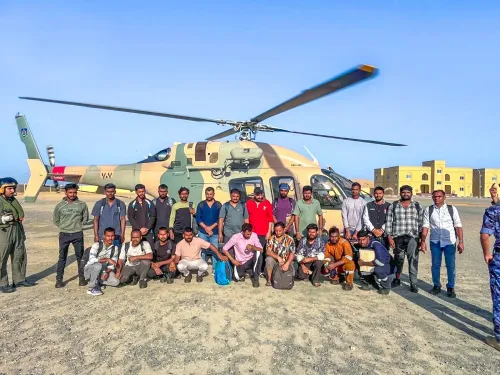
Union Minister Sarbananda Sonowal announced on August 8, 2026, that India coordinated the safe repatriation of over 4,000 Indian seafarers stranded amid geopolitical conflicts, reaffirming the Modi government's commitment to maritime worker welfare and safety.
Key Takeaways
Over 4,000 Indian seafarers were safely repatriated after being stranded amid ongoing geopolitical conflicts, per Minister Sonowal's announcement.
Union Minister Sarbananda Sonowal publicly assured India's seafarer community: 'You Are Not Alone,' framing the operation as a government duty.
India is one of the world's largest suppliers of maritime labour, with seafarers deployed across high-risk corridors including the Red Sea and Gulf region .
The government has a precedent for large-scale seafarer repatriation, having coordinated similar operations during the COVID-19 pandemic (2020-2021) under the Vande Bharat Mission.
India's ratification of the Maritime Labour Convention 2006 and the Seafarers' Welfare Fund provide the institutional backbone for such emergency interventions.
Parliamentary updates on seafarer safety rule amendments and new bilateral maritime labour agreements are expected to follow.
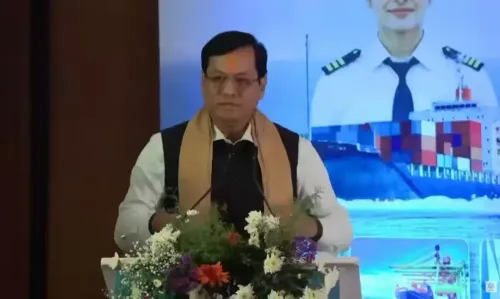
When geopolitical storms batter the world's shipping lanes, it is India's 3.2 lakh-strong seafarer workforce — the men and women keeping global trade moving — who are often caught in the crossfire. Union Minister of Ports, Shipping and Waterways Sarbananda Sonowal stepped forward on Saturday, August 8, 2026, with a direct message of solidarity: 'You Are Not Alone.'
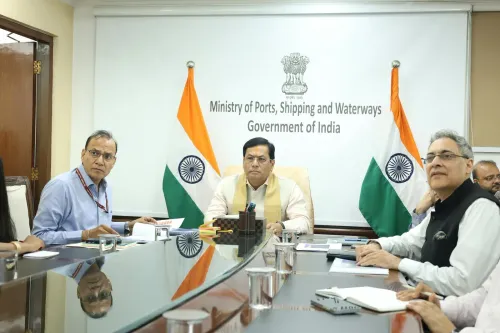
Posting on X, Sonowal announced that the government had recently coordinated the safe repatriation of over 4,000 stranded Indian seafarers caught in the crosshairs of ongoing geopolitical conflicts. 'The PM Modi Govt stands with you, ensuring every seafarer is safe, respected and supported,' he wrote, framing the operation as a direct expression of state duty toward maritime workers.
India's Seafarers in the Line of Fire
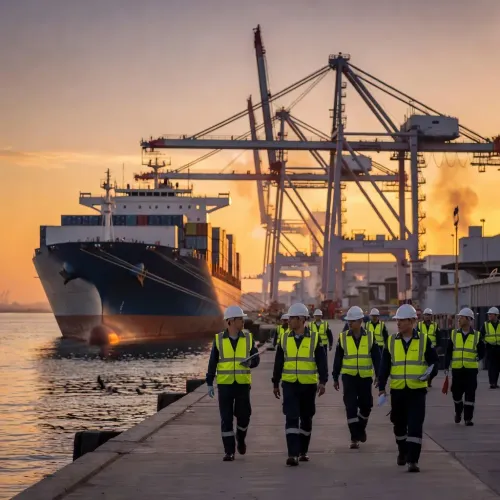
India is one of the world's largest suppliers of maritime labour, with Indian officers and ratings serving aboard vessels across every major shipping corridor — including routes through the Red Sea and Gulf region, both of which have seen acute instability in recent years. When conflict erupts, these workers face stranded contracts, blocked ports, and in extreme cases, direct physical danger.
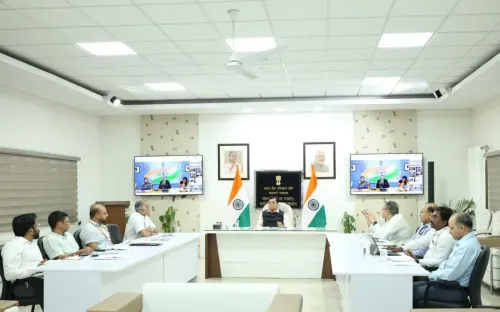
The Ministry of Ports, Shipping and Waterways has the mandate to protect this workforce under the Merchant Shipping Act framework. India's ratification of the Maritime Labour Convention 2006 further commits the state to guaranteeing seafarers' rights, welfare, and safe repatriation when circumstances demand it.
A Pattern Forged in Crisis
This is not the first time India has mounted a large-scale maritime rescue. During the COVID-19 pandemic between 2020 and 2021, the government coordinated the repatriation of thousands of seafarers stranded globally under the Vande Bharat Mission — a logistical operation that set a precedent for state-led intervention in maritime worker welfare.
The Seafarers' Welfare Fund, maintained by the ministry, provides emergency support for working conditions and distress situations. Sonowal's statement signals that this institutional machinery was activated once again — this time in response to conflicts reshaping global shipping routes in 2026.
Blue Economy, Real People
The Modi government's broader 'blue economy' push — anchored in port modernisation, coastal shipping expansion, and maritime trade growth — rests on the shoulders of Indian seafarers who crew the vessels making that trade possible. Sonowal's public assurance is as much a policy signal as it is a welfare statement: the government intends to treat seafarer safety not as an afterthought, but as a pillar of maritime strategy.
With parliamentary discussions on proposed amendments to seafarer safety rules and potential new bilateral maritime labour agreements on the horizon, the minister's words carry weight beyond the immediate moment. India's seafarers are watching — and so is the industry.
Point of View
Operational arm of India's maritime policy — not merely a legislative commitment. The repatriation of over 4,000 workers amid live geopolitical conflicts demonstrates that the Ministry of Ports, Shipping and Waterways has built crisis-response capacity since the pandemic-era Vande Bharat operations. It also serves a strategic political purpose: reinforcing the BJP government's 'citizen-first' brand among a workforce that is economically significant but often politically invisible. With blue economy ambitions scaling up and global shipping routes under sustained pressure, how India treats its seafarers in crises will increasingly define its credibility as a major maritime nation.
NationPress
8 Aug 2026
Frequently Asked Questions
How many Indian seafarers were repatriated amid geopolitical conflicts in 2026?
According to Union Minister Sarbananda Sonowal, over 4,000 Indian seafarers were safely repatriated after being stranded due to ongoing geopolitical conflicts.
What did Sarbananda Sonowal say about Indian seafarers?
Sonowal posted on X assuring seafarers: 'You Are Not Alone,' and stated that the Modi government stands with every seafarer to ensure they are safe, respected, and supported.
Which government scheme supports stranded Indian seafarers?
India maintains the Seafarers' Welfare Fund under the Ministry of Ports, Shipping and Waterways, and has previously used the Vande Bharat Mission framework for large-scale repatriations during crises such as the COVID-19 pandemic.
Has India repatriated seafarers during crises before?
Yes. During the COVID-19 pandemic (2020-2021) , India coordinated the repatriation of thousands of stranded seafarers globally under the Vande Bharat Mission, setting a precedent for state-led maritime worker rescue.
What international convention protects Indian seafarers' rights?
India has ratified the Maritime Labour Convention 2006 , which obligates the state to guarantee seafarers' welfare, working conditions, and safe repatriation in emergency situations.