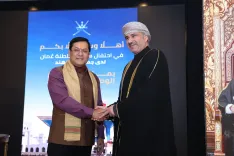
Sonowal attends Oman National Day, cites 5,000-yr maritime bond
Synopsis
Union Minister Sarbananda Sonowal attended Oman's National Day as Chief Guest on 20 November 2026, citing nearly 5,000 years of maritime history and praising Oman's role in regional security and support for Indian seafarers, as India deepens its western Indian Ocean strategy.
Key Takeaways
Union Minister Sarbananda Sonowal was Chief Guest at Oman's National Day celebrations on 20 November 2026 .
India and Oman share nearly 5,000 years of maritime trade history, underpinning current strategic ties.
The bilateral naval exercise Naseem Al Bahr has been conducted since 1993 , one of India's longest-running Gulf security arrangements.
A defence cooperation agreement (2006) and a maritime transport MoU (2011) form the formal backbone of the relationship.
Sonowal specifically acknowledged Oman's 'support and assistance to Indian seafarers in distress ' — a key concern for the Ports Ministry.
India's engagement positions Oman as a strategic node for protecting sea lanes and advancing port connectivity under India's broader GCC outreach.
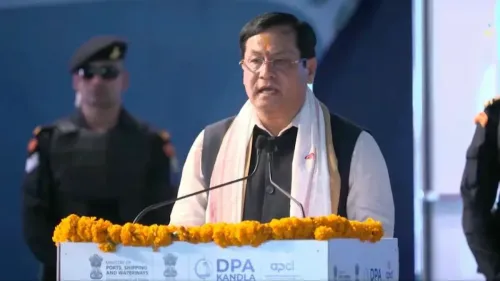
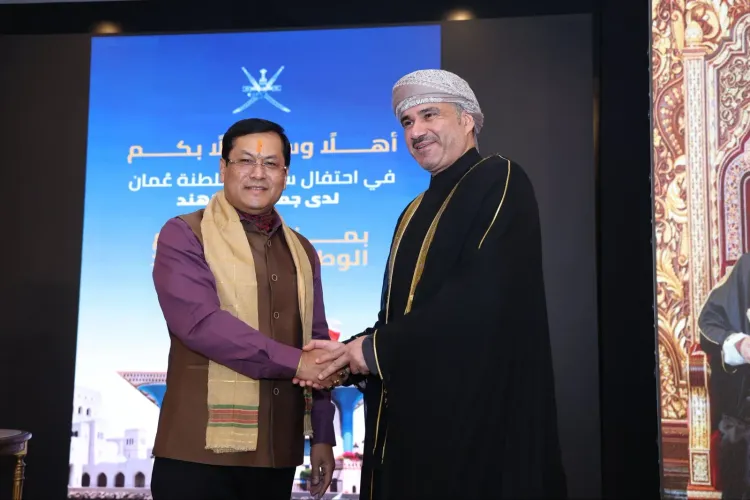
Five thousand years of seafaring history — and counting. Union Minister of Ports, Shipping and Waterways Sarbananda Sonowal represented India as Chief Guest at the National Day celebrations of the Sultanate of Oman on Friday, 20 November 2026, using the occasion to underscore one of the Indian Ocean world's oldest living partnerships.
A maritime civilisation, not just a bilateral file
Sonowal's presence at Muscat was no ceremonial courtesy call. The minister noted that India and Oman share 'a friendship built over nearly 5,000 years of maritime exchanges' — a lineage that runs from ancient dhow trade across the Arabian Sea to contemporary port cooperation agreements and joint naval exercises. That historical depth gives the relationship a texture most modern alliances simply cannot replicate.
Invoking the leadership of Prime Minister Narendra Modi and Sultan Haitham bin Tariq, Sonowal said the 'historic partnership is entering an exciting new chapter' — a signal that both sides see the current moment as a point of acceleration, not consolidation.
Naval exercises, MoUs, and the seafarer safety thread
The strategic architecture supporting the rhetoric is real. India and Oman have conducted the bilateral naval exercise Naseem Al Bahr since 1993, making it one of the longest-running India-Gulf security arrangements. A defence cooperation agreement signed in 2006 and a memorandum of understanding on maritime transport in 2011 anchored the relationship in formal legal frameworks, with port and logistics discussions deepening further during high-level visits in 2018–19.
Sonowal specifically called out Oman's 'support and assistance to Indian seafarers in distress' — a pointed acknowledgement given that hundreds of thousands of Indian nationals live and work in the Gulf, and Oman's coastguard infrastructure sits astride key sea lanes connecting India to Europe and East Africa. For a Ports Minister, that gratitude is professional as much as it is diplomatic.
Regional peace, anti-piracy, and India's western Indian Ocean calculus
Beyond bilateral warmth, Sonowal's remarks carried a strategic undertone: India 'deeply appreciates Oman's constructive role in promoting regional peace and maritime security.' Oman has long served as a back-channel interlocutor in Gulf tensions — a role India values as it seeks to protect sea lanes of communication that carry the bulk of its energy imports. Oman's Vision 2040 economic diversification programme, meanwhile, opens new corridors for Indian port operators, logistics firms, and maritime service providers.
India's sustained outreach to GCC states under the Modi government has increasingly leaned on this historical maritime frame — turning shared ancient trade into a contemporary argument for port connectivity projects, anti-piracy cooperation, and expatriate community protection. Sonowal's presence as Chief Guest, rather than a junior envoy, signals exactly how seriously New Delhi rates that strategic real estate.
The next chapter Sonowal promised is likely to be written in port terminals, shipping lanes, and security agreements — the oldest kind of diplomacy there is.
Point of View
Rather than leaving it to routine embassy protocol. The choice of the Ports and Shipping Minister — not a foreign affairs envoy — signals that India wants its deepest practical cooperation with Oman, from port logistics to seafarer welfare, to carry visible political weight. This fits a broader Modi-era pattern of using sectoral ministers as diplomatic proxies to signal thematic priorities in bilateral relationships. With Oman's Vision 2040 creating fresh infrastructure investment opportunities and the western Indian Ocean remaining a contested security space, the timing suggests New Delhi is positioning for a new round of concrete agreements.
NationPress
20 Nov 2026
Frequently Asked Questions
Why was Sarbananda Sonowal the Chief Guest at Oman's National Day?
Sonowal attended as Chief Guest representing India, reflecting the depth of India-Oman ties in maritime trade, port cooperation, and security — areas directly within his ministerial portfolio as Union Minister of Ports, Shipping and Waterways.
How old is the India-Oman relationship?
India and Oman share nearly 5,000 years of maritime exchanges, rooted in ancient dhow trade across the Arabian Sea, making it one of the oldest bilateral relationships in the region.
What is the Naseem Al Bahr exercise?
Naseem Al Bahr is a bilateral naval exercise between India and Oman that has been conducted since 1993, making it one of the longest-running India-Gulf security arrangements.
What agreements has India signed with Oman on maritime issues?
India and Oman signed a defence cooperation agreement in 2006 and a memorandum of understanding on maritime transport in 2011, with port and logistics cooperation discussions deepening further in 2018–19.
Why does India value Oman's role in regional peace?
Oman has historically served as a back-channel diplomatic interlocutor in Gulf tensions, and its coastline sits astride key sea lanes critical for India's energy imports and maritime trade routes to Europe and East Africa.