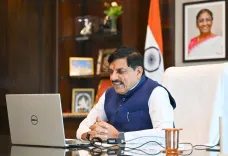
Sonowal Backs Next Generation Corvettes as Shipbuilding Boost
Synopsis
Union Minister Sarbananda Sonowal championed the Next Generation Corvettes project on November 2, 2026, calling it a 'massive catalyst' that unites domestic shipyards and MSMEs to build indigenous warships and drive India's maritime industrial ambitions under PM Modi's vision.
Key Takeaways
Sarbananda Sonowal , Union Minister of Ports, Shipping and Waterways, publicly backed the Next Generation Corvettes project on November 2, 2026 .
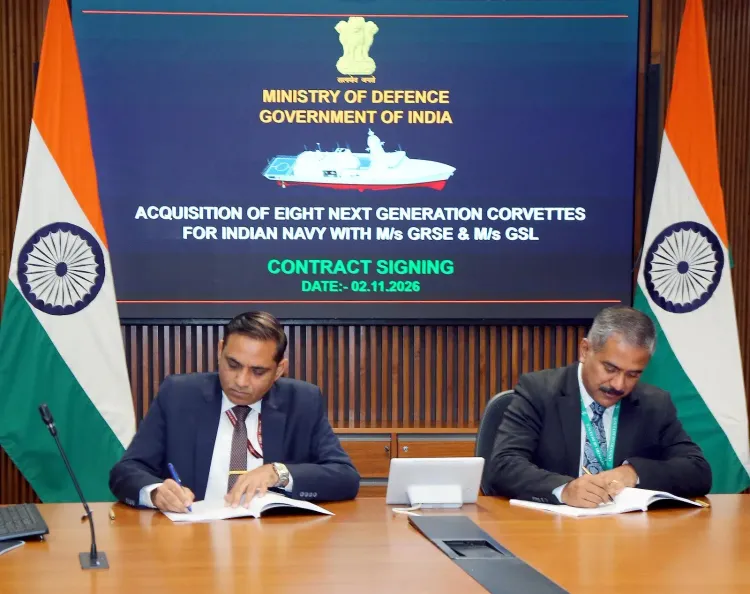
The project involves Indian Navy advanced indigenous corvettes built through domestic shipyards and MSMEs .
Sonowal framed it as a job-creation and industrial-capacity accelerator, not just a defence programme.
The initiative is rooted in Atmanirbhar Bharat (2020) and the Sagarmala Project (2015), India's twin frameworks for maritime and defence self-reliance.
Tender awards and construction timelines for the corvettes remain to be finalised.
PM Narendra Modi's maritime vision was cited as the guiding force behind India's push to become a global shipbuilding power.
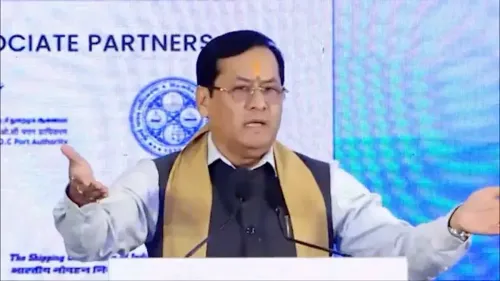
India's domestic shipbuilding ambitions just got a high-profile endorsement. Union Minister of Ports, Shipping and Waterways Sarbananda Sonowal on Monday, November 2, 2026, hailed the Next Generation Corvettes project as a 'massive catalyst' for India's maritime industrial ecosystem, calling it a landmark step toward the country becoming a global maritime powerhouse.
Warships Built at Home: What the Corvettes Project Signals
The Next Generation Corvettes project is an Indian Navy initiative to build advanced warships using domestic shipyards and micro, small and medium enterprises (MSMEs) — the backbone of India's manufacturing base. Sonowal specifically called out the project's role in uniting these stakeholders to 'create jobs and accelerate industrial capacity,' framing it not just as a defence programme but as an economic multiplier.
The symbolism is deliberate. Corvettes are agile, multi-role warships central to coastal and blue-water naval operations. Building them at home, with domestic supply chains, signals that India is no longer content to be a buyer in the global arms market. It wants to be a builder — and eventually, a seller.
The Policy Architecture Behind the Push
This project does not exist in isolation. It sits squarely within two major government frameworks: the Atmanirbhar Bharat initiative, announced in 2020 to slash import dependence in defence manufacturing, and the Sagarmala Project, launched in 2015 to build port-led maritime infrastructure and shipbuilding capacity along India's coastline.
Together, these programmes have steadily shifted India's defence posture from procurement to production. Private shipyards and MSMEs have been pulled into the warship construction pipeline — a structural change that creates industrial depth far beyond a single vessel class. Sonowal's ministry sits at the intersection of this civilian-maritime and naval-industrial crossover, making his voice on the project particularly consequential.
Modi's Maritime Vision and India's Global Ambition
Sonowal credited Prime Minister Narendra Modi's vision as the driving force steering India toward maritime leadership. The framing tracks with a consistent government narrative: that India's geography — 7,500 kilometres of coastline, two major oceanic flanks, and proximity to the world's busiest shipping lanes — is a strategic asset that must be converted into economic and military capability.
For the Indian Navy, the corvettes represent a modernisation push that blends operational necessity with industrial policy. For the MSMEs plugged into the supply chain, it means defence contracts, technology exposure, and a potential runway into export markets as India's shipbuilding reputation grows.
The tenders are yet to be awarded, the construction timelines unset — but the political will is now loudly on record. When a senior cabinet minister calls your sector a 'massive catalyst,' the message to shipyards, suppliers, and investors is unmistakable: the orders are coming. Build the capacity now.
Point of View
Large shipyards, and the MSME sector into a single industrial ecosystem. Sonowal's endorsement is politically significant: his ministry bridges civilian maritime infrastructure and naval supply chains, giving the project cross-departmental momentum. The broader pattern here is India systematically closing the gap between its strategic geography and its industrial capacity — a gap competitors have exploited for decades. If tender awards and delivery timelines follow the political rhetoric, the corvettes programme could become a template for how India indigenises complex weapons platforms at scale.
NationPress
2 Nov 2026
Frequently Asked Questions
What is the Next Generation Corvettes project in India?
The Next Generation Corvettes project is an Indian Navy initiative to build advanced, multi-role warships using domestic shipyards and MSMEs, as part of India's broader defence indigenisation drive under Atmanirbhar Bharat.
What did Sarbananda Sonowal say about the corvettes project?
Sonowal called it a 'massive catalyst' for India's shipbuilding ecosystem, saying it unites domestic shipyards and MSMEs to create jobs and accelerate industrial capacity, aligned with PM Modi's vision for maritime leadership.
How does Atmanirbhar Bharat relate to Indian Navy shipbuilding?
Atmanirbhar Bharat, announced in 2020, aims to reduce India's dependence on defence imports by boosting domestic manufacturing — the Next Generation Corvettes project is a direct application of this policy in naval warship construction.
What is the Sagarmala Project and its link to shipbuilding?
Sagarmala, launched in 2015, is a government scheme to develop port-led maritime infrastructure in India, including building shipbuilding capacity along India's 7,500-kilometre coastline.
When will the Next Generation Corvettes be built?
Specific construction timelines and tender awards for the Next Generation Corvettes project have not yet been officially announced; the project is currently in its framework and policy endorsement stage.