Sonowal flags Deendayal Port's green fuel push at Kandla
Synopsis
Deendayal Port at Kandla has commissioned an e-Methanol plant, a 1 MW electrolyser-based Green Hydrogen unit, and allotted 3,400 acres for green fuel projects — advances Union Minister Sarbananda Sonowal flagged on 26 September 2026 as India pushes maritime decarbonisation.
Key Takeaways
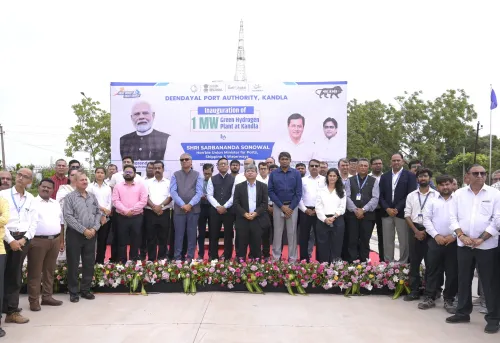
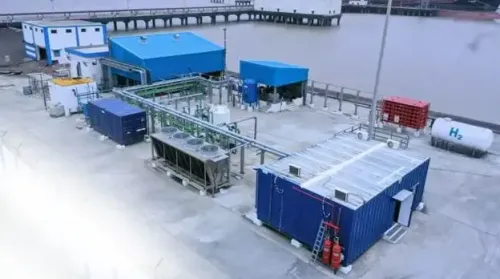
Deendayal Port, Kandla has commissioned a 1 MW electrolyser-based Green Hydrogen plant .
Approximately 3,400 acres have been allotted at the port for Green Hydrogen and Green Ammonia projects .
The port conducted a successful methanol bunkering operation in 2026, one of India's first.
A new e-Methanol plant has been added, enabling carbon-neutral marine fuel production and supply at the same site.
The developments align with India's National Green Hydrogen Mission (2023) and the long-running Sagarmala Project (2015) .
The port's cluster model positions India to meet International Maritime Organization decarbonisation targets and attract compliant vessel traffic.
Long before most ports began talking about decarbonisation, Deendayal Port at Kandla, Gujarat was already laying pipe — literally. Union Minister of Ports, Shipping and Waterways Sarbananda Sonowal amplified a post on Saturday, 26 September 2026 highlighting the port's expanding green energy footprint, anchored by a freshly commissioned e-Methanol plant that adds a new chapter to an ecosystem years in the making.
A 1 MW electrolyser, 3,400 acres, and a bunkering first
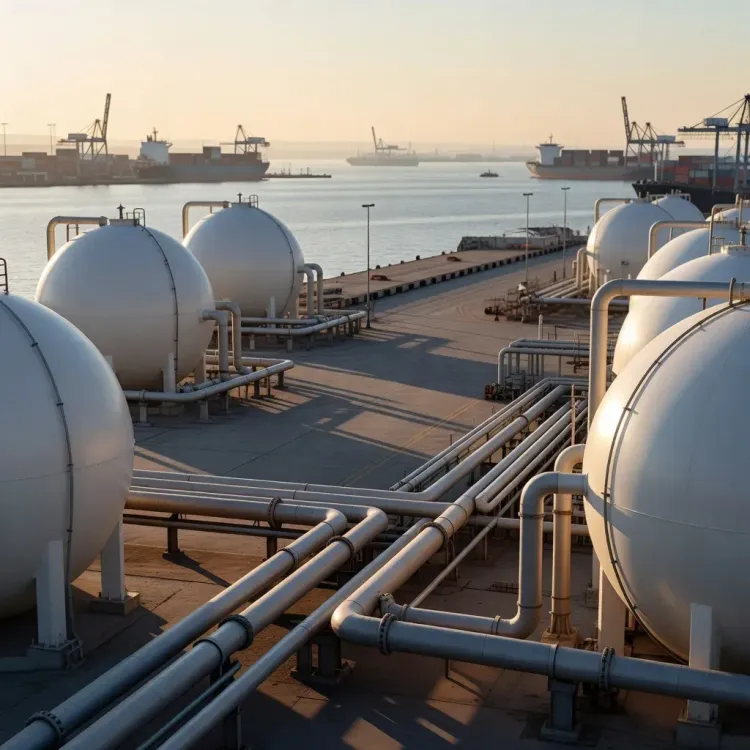
The post spells out a layered story of infrastructure built in sequence. Deendayal Port — formerly known as Kandla Port and one of India's oldest and largest bulk-cargo handlers — has commissioned a 1 MW electrolyser-based Green Hydrogen plant, the foundational unit of any port-side green fuel hub. Alongside it, roughly 3,400 acres have been set aside specifically for Green Hydrogen and Green Ammonia projects, signalling that this is industrial-scale ambition, not a pilot nod.
Earlier this year the port crossed another milestone: a successful methanol bunkering operation — supplying methanol as marine fuel to a vessel. That single event matters disproportionately. Bunkering infrastructure is what turns a production site into a living green-fuel corridor, and very few Indian ports have crossed that line.
Where the e-Methanol plant fits India's net-zero shipping plan
The new e-Methanol plant closes the loop. Green hydrogen produced via electrolysis can be converted into e-Methanol — a carbon-neutral liquid fuel that ships can burn today with modest engine modifications. Producing and bunkering it at the same port removes the costly logistics of transporting fuel from inland facilities, which has historically undermined the economics of alternative marine fuels.
This trajectory aligns directly with India's National Green Hydrogen Mission, approved in 2023, which set domestic production targets and flagged hard-to-abate sectors — including maritime shipping — as priority use cases. Deendayal Port's cluster approach, stacking hydrogen production, large land allocation, bunkering trials, and now e-Methanol output, mirrors what the Mission's architects envisioned as a port-led demonstration model.
The port-led industrial development logic traces back further still, to the Sagarmala Project launched in 2015, which repositioned India's major ports not just as cargo gateways but as industrial anchors. Kandla's green fuel cluster is arguably the most concrete expression of that decade-old bet.
Why timing matters for global shipping rules
The International Maritime Organization has tightened its emissions roadmap, pushing shipowners to decarbonise well before 2050. Vessels calling at Indian ports need access to compliant fuels — methanol and ammonia among the leading candidates — or face surcharges and route penalties as regulations bite. A port that produces, stores, and supplies e-Methanol domestically holds a competitive card over rivals still dependent on fossil-fuel bunkering.
India's net-zero target of 2070 adds a domestic dimension: every tonne of e-Methanol supplied to a vessel is a tonne of heavy fuel oil displaced. At Kandla's cargo volumes, those tonnes add up fast.
The next number to watch is capacity: how quickly the e-Methanol plant scales from demonstration to commercial output, and whether similar clusters follow at other major ports. Kandla has built the proof of concept — the rest of India's coast is paying close attention.
Point of View
Land banking, bunkering trials, and now e-Methanol production — is a rare case of an Indian infrastructure project following a coherent technology roadmap rather than announcing isolated pilots. For the Ministry of Ports, Shipping and Waterways, Kandla is becoming a proof-of-concept it can replicate at other major ports as IMO emissions rules tighten. The convergence of the National Green Hydrogen Mission and Sagarmala's port-led industrialisation logic gives this cluster unusually strong policy tailwinds. The critical test ahead is whether commercial-scale output arrives in time to capture vessel traffic before rival green-fuel ports in the Gulf and Southeast Asia lock in long-term bunkering contracts.
NationPress
26 Sept 2026
Frequently Asked Questions
What is the e-Methanol plant at Deendayal Port?
The e-Methanol plant at Deendayal Port, Kandla converts green hydrogen — produced via electrolysis using renewable energy — into e-Methanol, a carbon-neutral liquid fuel that ships can use as a direct substitute for conventional marine fuels.
How much land has Deendayal Port set aside for green fuel projects?
Deendayal Port has allotted approximately 3,400 acres specifically for Green Hydrogen and Green Ammonia projects, making it one of the largest dedicated green-fuel land banks at any Indian port.
What is the National Green Hydrogen Mission?
India's National Green Hydrogen Mission was approved in 2023 to scale up domestic green hydrogen production capacity and pilot its use in hard-to-abate sectors including maritime shipping, heavy industry, and transport.
Why is methanol bunkering significant for Indian ports?
Methanol bunkering — supplying methanol as marine fuel directly to vessels — is significant because it turns a port into an operational green-fuel corridor, not just a production site, allowing ships to refuel with a lower-emission alternative to heavy fuel oil.
How does the Sagarmala Project relate to Kandla's green energy push?
The Sagarmala Project, launched in 2015, aimed to transform India's major ports into industrial anchors beyond cargo handling. Kandla's integrated green hydrogen, ammonia, and methanol cluster is a direct expression of that port-led industrial development strategy.