Sonowal hails Deendayal Port's 7.78 lakh tonne record
Synopsis
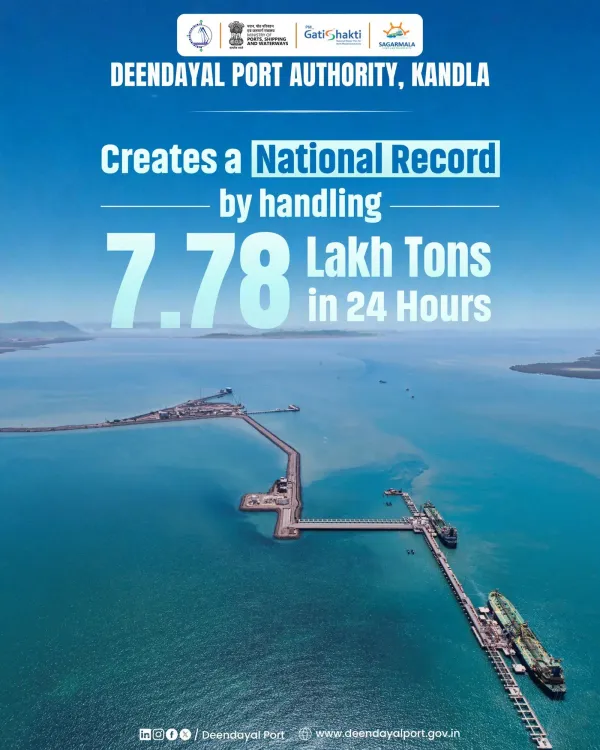
Deendayal Port in Kandla, Gujarat has set a national record by handling 7.78 lakh tonnes of cargo in a single 24-hour period. Union Minister Sarbananda Sonowal credited the port workforce and the Modi government's maritime reforms, including the Sagarmala Project and Maritime India Vision 2030, for the milestone.
Key Takeaways
Deendayal Port at Kandla, Gujarat set a national record by handling 7.78 lakh tonnes of cargo in 24 hours as of 27 June 2026 .
Union Minister Sarbananda Sonowal publicly congratulated the port and attributed the achievement to workforce dedication and government-led maritime reforms.
The port, formerly Kandla Port , was renamed Deendayal Port Trust in 2017 and handles petroleum, coal, fertilisers, and containers.
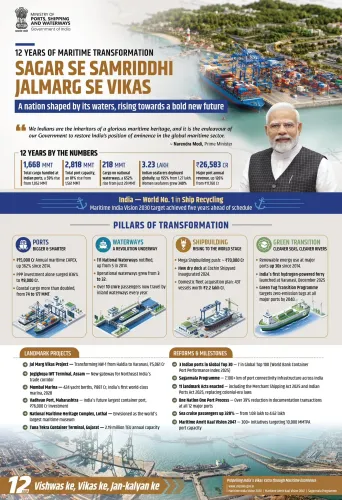
The milestone aligns with targets set under the Sagarmala Project (2015) and Maritime India Vision 2030 , both central to the Modi government's port modernisation drive.
Faster cargo turnaround benefits shipping companies, bulk cargo exporters, and industries dependent on western-coast trade routes.
Further mechanisation and public-private partnership bids at Deendayal and neighbouring ports are expected as the government builds on this record.
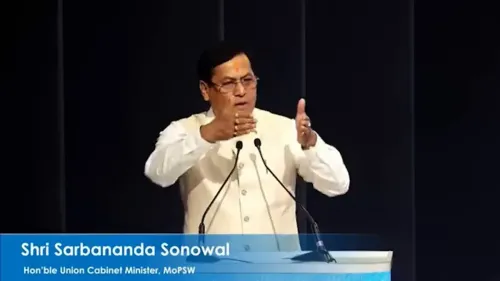
Union Minister of Ports, Shipping and Waterways Sarbananda Sonowal on Saturday, 27 June 2026 congratulated Deendayal Port for setting a national record by handling 7.78 lakh tonnes of cargo in a single 24-hour period, calling it a reflection of the port workforce's dedication and the maritime reforms pursued under Prime Minister Narendra Modi.
Context
Deendayal Port, situated at Kandla in Gujarat, is one of India's oldest and largest major ports on the western coast. Formerly known as Kandla Port, it was renamed Deendayal Port Trust in 2017 and handles a wide range of cargo including petroleum products, coal, fertilisers, and containers. The port serves as a critical gateway for India's trade with the Middle East, Africa, and Europe.
Minister Sonowal described the achievement as 'a shining example of our port workforce's dedication and the transformational maritime reforms' under the Prime Minister's leadership. The record cargo throughput in a single day marks a significant operational milestone for Indian ports.
Policy Backdrop
The achievement sits within a broader infrastructure push that the Modi government has sustained since 2014. The Sagarmala Project, launched in 2015, has been the central framework for port-led development, targeting reduced logistics costs, enhanced port connectivity with hinterlands, and greater mechanisation across major ports.
The Maritime India Vision 2030, released in 2021, further set ambitious targets for cargo capacity expansion and the development of green, technology-driven ports. Deendayal Port's single-day record is being cited by the ministry as evidence of progress against those targets. Investments in dredging, mechanised cargo-handling equipment, and private-sector participation have progressively raised throughput capacity at the port.
India's major ports collectively handled over 800 million tonnes of cargo in recent fiscal years, with the government targeting sustained double-digit growth in port traffic as part of a wider logistics efficiency drive that also includes dedicated freight corridors and integrated logistics parks.
Stakeholders and Impact
The direct beneficiaries of improved throughput at Deendayal Port include shipping companies, bulk cargo exporters and importers, and industries such as petroleum refining, power generation, and fertiliser manufacturing that depend on the port for raw material supply chains. Faster cargo turnaround translates directly into lower demurrage costs and more competitive freight rates for Indian traders.
The port workforce — dock workers, equipment operators, and logistics personnel — has been specifically acknowledged by Minister Sonowal for its role in achieving the record. Labour productivity improvements, alongside capital investment in equipment, are seen as twin drivers of the milestone. Exporters in Gujarat and the broader western-coast hinterland stand to benefit from the signal this sends about the port's capacity headroom.
What's Next
The record is likely to intensify focus on further mechanisation and capacity expansion bids at Deendayal Port and neighbouring facilities under the Sagarmala framework. The Ministry of Ports, Shipping and Waterways is expected to use this milestone to benchmark performance targets for other major ports under Maritime India Vision 2030.
With India's trade volumes projected to grow substantially through the decade, the pressure on western-coast ports to sustain and exceed this throughput level will only increase. Further public-private partnership bids for terminal mechanisation and capacity augmentation at Kandla are anticipated as the government looks to consolidate these operational gains into structural capacity.
Point of View
If sustained, would represent a meaningful step toward the cargo throughput goals of Maritime India Vision 2030, lending credibility to targets that critics have previously called aspirational. The spotlight on the workforce is also notable: it signals a deliberate effort by the ministry to frame port modernisation as a story of labour empowerment alongside capital investment.
NationPress
27 Jun 2026
Frequently Asked Questions
What is the national record set by Deendayal Port?
Deendayal Port at Kandla in Gujarat set a national record by handling 7.78 lakh tonnes of cargo in a single 24-hour period , as announced on 27 June 2026.
Where is Deendayal Port located?
Deendayal Port is located at Kandla in the Kutch district of Gujarat . It is one of India's oldest and largest major ports on the western coast, formerly known as Kandla Port.
What is the Sagarmala Project and how does it relate to this record?
The Sagarmala Project , launched by the central government in 2015 , is a port-led development initiative aimed at reducing logistics costs and improving port connectivity. Investments under Sagarmala in mechanisation and infrastructure at major ports like Deendayal are credited with enabling higher cargo throughput.
Who is Sarbananda Sonowal?
Sarbananda Sonowal is the Union Minister of Ports, Shipping and Waterways , a senior BJP leader, and a former Chief Minister of Assam. He has held the ports portfolio since 2021.
What is Maritime India Vision 2030?
Maritime India Vision 2030 is a policy roadmap released in 2021 that sets targets for cargo capacity expansion, green port development, and technology upgrades across India's major ports. Deendayal Port's single-day record is seen as progress toward those targets.