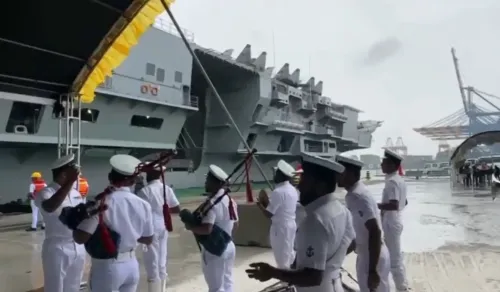
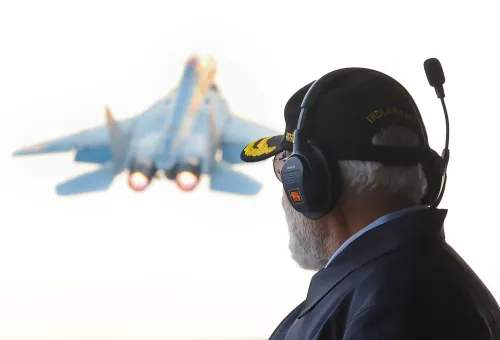
Sonowal hails INS Vikrant as symbol of Aatmanirbhar Bharat
Synopsis
Union Minister Sarbananda Sonowal praised INS Vikrant as more than a warship — calling it a symbol of Aatmanirbhar Bharat and India's growing maritime strength. India's first indigenously built aircraft carrier was commissioned at Cochin Shipyard in September 2022 after two decades of domestic design and construction.
Key Takeaways
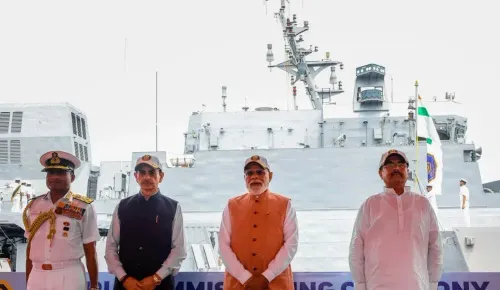
INS Vikrant was commissioned on 2 September 2022 at Cochin Shipyard — India's first indigenously designed and built aircraft carrier.
The Indigenous Aircraft Carrier programme was approved in 2003 , making Vikrant the product of over two decades of domestic engineering effort.
Union Minister Sarbananda Sonowal linked the carrier explicitly to the Aatmanirbhar Bharat self-reliance initiative launched in May 2020 .
INS Vikrant displaces approximately 45,000 tonnes and is the largest warship ever built in India.
A follow-on Indigenous Aircraft Carrier (IAC-2) remains under discussion — its progress will define the next chapter of India's naval indigenisation drive.
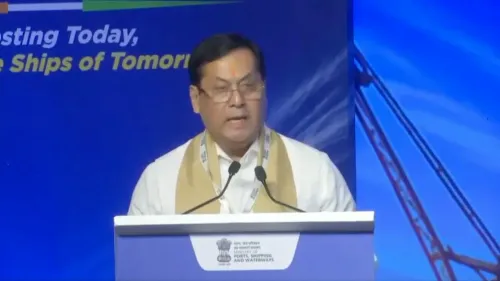
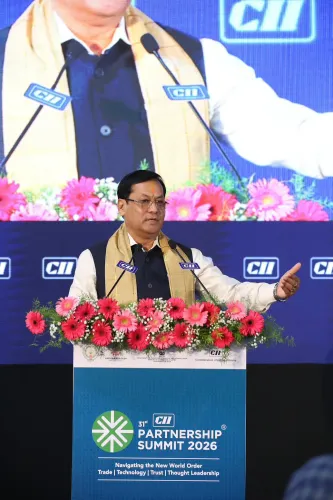
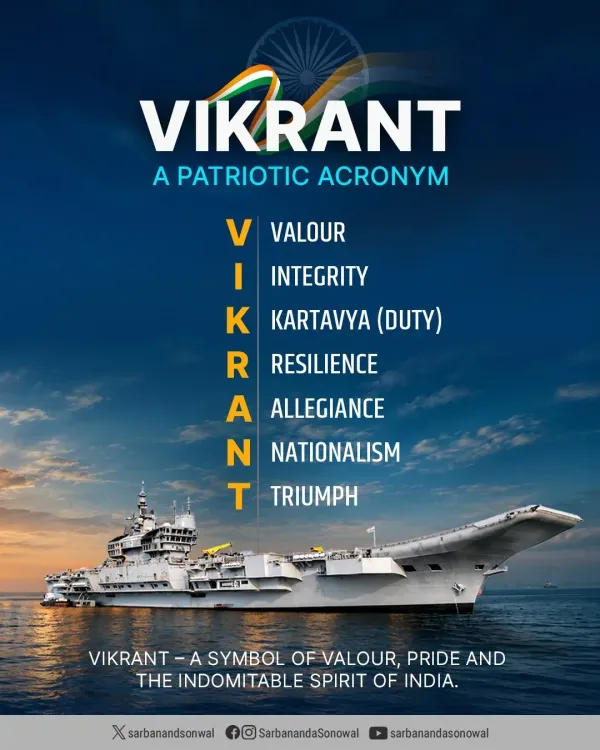
India's first indigenously built aircraft carrier is not just a warship — it is, in Union Ports and Shipping Minister Sarbananda Sonowal's words, a living embodiment of the nation's character. On Friday, 20 November 2026, Sonowal took to X to celebrate INS Vikrant as a testament to India's 'indomitable spirit and growing maritime strength,' framing the carrier as a mirror of collective national resolve.
From blueprint to blue water: the making of INS Vikrant
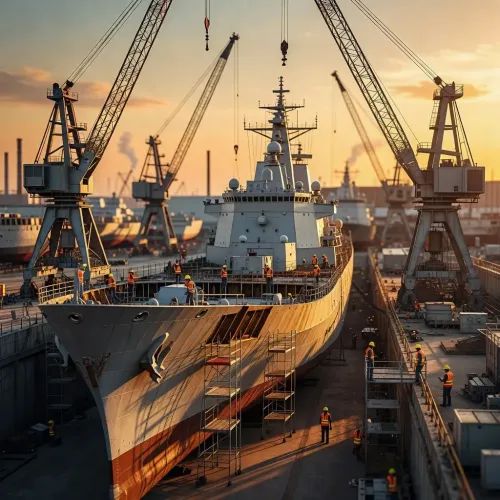
The story of INS Vikrant is, above all, a story of patience. The Indigenous Aircraft Carrier (IAC-1) programme was approved as far back as 2003, setting in motion more than two decades of domestic design, engineering, and shipbuilding labour at Cochin Shipyard. The carrier was finally commissioned on 2 September 2022 — a moment that marked India's entry into the small club of nations capable of designing and building a full-size aircraft carrier at home.
At roughly 45,000 tonnes displacement and stretching over 260 metres in length, INS Vikrant is the largest warship ever built in India. It operates under the Indian Navy as the centrepiece of the country's growing blue-water ambitions, capable of carrying a mix of fixed-wing aircraft and helicopters to project power across the Indian Ocean Region.
Aatmanirbhar Bharat's most visible maritime dividend
Sonowal's post draws an explicit line between INS Vikrant and the Aatmanirbhar Bharat initiative — Prime Minister Modi's self-reliance framework announced in May 2020 to slash defence imports and anchor production on Indian soil. INS Vikrant predates that announcement by name, but it has become the initiative's most photographed and cited symbol in the defence domain.
The carrier's construction involved thousands of Indian firms supplying steel, propulsion components, electronics, and weapons systems — a supply chain that defence planners argue is precisely the domestic industrial depth Aatmanirbhar Bharat was designed to cultivate. For a ministry focused on ports and waterways, the carrier also signals something broader: India's maritime economy and maritime security are increasingly two sides of the same strategic coin.
What the next carrier will tell us
The real test of Vikrant's legacy is what comes after it. Planners have long discussed a follow-on Indigenous Aircraft Carrier (IAC-2), and progress on that programme — alongside related shipbuilding contracts under the defence ministry — will reveal how deeply India has internalised the lessons of building its first flattop. A second carrier would cement a two-carrier doctrine, giving the Navy the ability to keep one platform deployed while the other undergoes maintenance.
Sonowal's post is part of a consistent pattern of messaging by senior BJP leaders on strategic autonomy in the maritime domain. The sentiment is celebratory, the symbolism deliberate — and the geopolitical subtext, in an Indian Ocean increasingly contested by rival naval presences, is impossible to miss.
Point of View
Sustained effort by the BJP government to frame India's defence indigenisation achievements as political and civilisational milestones, not merely procurement outcomes. INS Vikrant — commissioned in 2022 but consistently invoked in public messaging — functions as the most tangible proof-point for Aatmanirbhar Bharat's credibility in the high-stakes defence sector. For a Ports and Waterways minister, amplifying a Navy asset signals an integrated maritime vision where civilian infrastructure and naval power projection are presented as a single strategic project. The real policy watch, however, is whether the follow-on carrier programme accelerates — turning symbolism into sustained institutional capability.
NationPress
20 Nov 2026
Frequently Asked Questions
What is INS Vikrant and why is it significant?
INS Vikrant is India's first indigenously designed and built aircraft carrier, commissioned on 2 September 2022 at Cochin Shipyard. It is significant because it makes India one of only a handful of countries capable of building a full-size carrier domestically, and it is the largest warship ever constructed in India.
Where was INS Vikrant built?
INS Vikrant was built at Cochin Shipyard in Kerala, under the Indigenous Aircraft Carrier programme that was approved by the Indian government in 2003.
How is INS Vikrant connected to Aatmanirbhar Bharat?
INS Vikrant is widely cited as the most prominent symbol of the Aatmanirbhar Bharat (self-reliance) initiative in defence. Its construction involved thousands of Indian firms and demonstrated India's ability to reduce dependence on foreign shipbuilders for its most complex naval platforms.
Why did Sarbananda Sonowal post about INS Vikrant?
Sonowal posted to celebrate INS Vikrant as a symbol of national pride and India's growing maritime strength, framing it as a reflection of the country's resolve to build an Aatmanirbhar Bharat. Such posts are part of consistent government messaging on strategic autonomy in the maritime domain.
Will India build a second indigenous aircraft carrier?
A follow-on Indigenous Aircraft Carrier (IAC-2) has been discussed by Indian defence planners. Progress on that programme and related shipbuilding contracts under the defence ministry is closely watched as an indicator of how deeply India has built on the lessons of constructing INS Vikrant.