Sonowal Hails 11 Years of Digital India, Cites UPI and BharatNet Gains
Synopsis
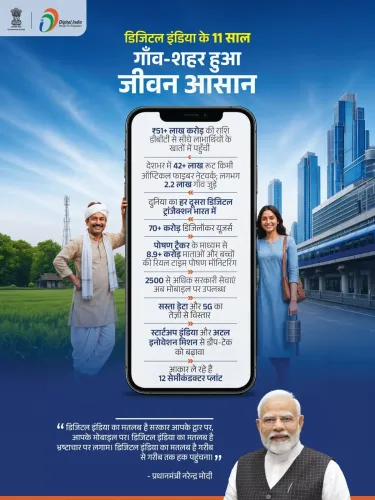
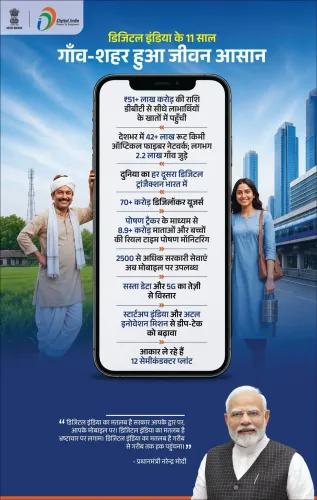
On the eleventh anniversary of Digital India, Union Minister Sarbananda Sonowal credited PM Modi's programme with connecting 2.2 lakh gram panchayats via BharatNet, driving 50% of global real-time transactions through UPI, and delivering ₹51 lakh crore via Direct Benefit Transfer.
Key Takeaways
Digital India completes 11 years on 1 July 2026 , launched by PM Narendra Modi in 2015.
Minister Sarbananda Sonowal cited 103 crore internet connections as a connectivity milestone.
2.2 lakh gram panchayats have been linked via the BharatNet optical fibre network.
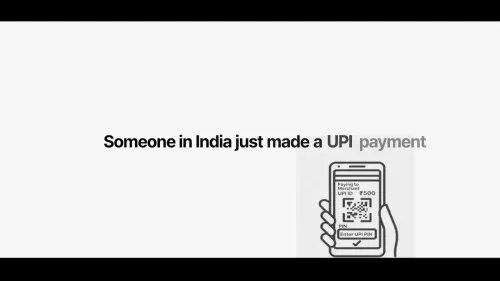
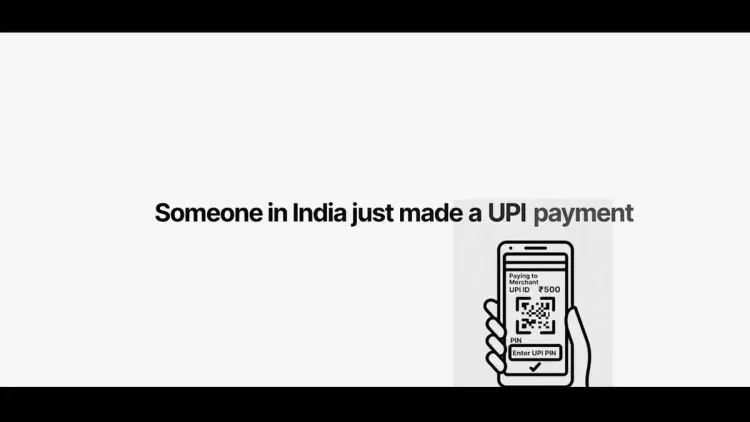
UPI is credited with powering 50% of the world's real-time digital transactions. ₹51 lakh crore has been delivered to beneficiaries transparently through Direct Benefit Transfer .
India is actively promoting its digital public infrastructure as a replicable model for other emerging economies.
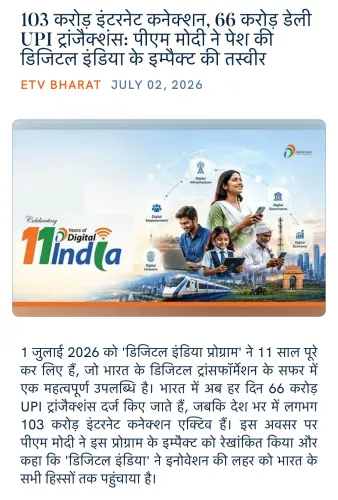
Union Minister of Ports, Shipping and Waterways Sarbananda Sonowal on Wednesday, 1 July 2026 marked the eleventh anniversary of the Digital India programme, crediting Prime Minister Narendra Modi with transforming governance and expanding digital access across the country. Sonowal highlighted milestones including 103 crore internet connections, 2.2 lakh gram panchayats linked via BharatNet, UPI driving half of all real-time transactions globally, and ₹51 lakh crore disbursed through Direct Benefit Transfer.
Context
Digital India was formally launched on 1 July 2015 by Prime Minister Narendra Modi as a flagship programme to integrate technology with public service delivery and bridge the urban-rural digital divide. The anniversary, marked annually, has in recent years become an occasion for the ruling dispensation to catalogue the programme's cumulative achievements. Sonowal, a senior BJP leader and former Chief Minister of Assam, posted on X calling the initiative 'a global benchmark', adding that it has 'transformed governance and empowered millions.'
The four metrics cited in the post span connectivity infrastructure, payments, and welfare delivery — the three pillars around which Digital India's implementation has been organised since its inception.
Policy Backdrop
BharatNet, the national optical fibre network project, was originally approved by the Cabinet in 2011 and was later absorbed into the Digital India infrastructure architecture. Its stated goal is broadband connectivity to every gram panchayat in the country; the claim of 2.2 lakh gram panchayats linked represents a significant share of India's roughly 2.5 lakh gram panchayats.
The Unified Payments Interface was rolled out by the National Payments Corporation of India in 2016 and has since grown into one of the most widely used real-time payment rails in the world. India has actively promoted UPI as a replicable model for other emerging economies, and bilateral linkage agreements with foreign payment systems have expanded its international footprint. The Direct Benefit Transfer mechanism, which routes subsidies and welfare payments directly into beneficiaries' bank accounts, was expanded significantly from 2013 onwards and is now deployed across hundreds of central government schemes.
Stakeholders and Impact
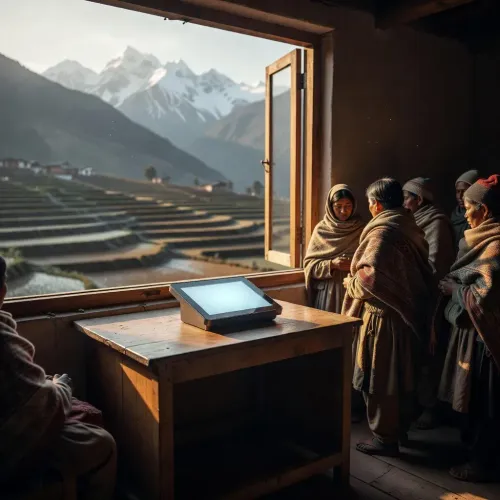
The programme's primary beneficiaries are rural households and low-income bank account holders who previously had limited access to formal financial services or government welfare. Connectivity through BharatNet has enabled telemedicine, e-learning, and digital commerce in villages that lacked reliable internet access, while DBT has reduced intermediary leakages in subsidy delivery.
India's digital public infrastructure stack — built on Aadhaar-linked identity, UPI payments, and broadband networks — has drawn interest from multilateral institutions and developing nations seeking to replicate the model. The G20 presidency India held in 2023 was used in part to advance the case for sharing this architecture globally.
What's Next
Attention will turn to the completion targets for BharatNet Phase III, which aims to upgrade existing connections and extend coverage to remaining villages. On the payments front, new UPI linkage agreements with foreign central banks or payment networks are expected to be announced in the near term. The government is also likely to use the anniversary to announce fresh digital literacy or infrastructure spending, consistent with the pattern of prior anniversary cycles.
As Digital India enters its second decade, the policy challenge shifts from access to quality — ensuring that connected citizens can effectively use digital services — and from domestic scale to international influence as India seeks to export its digital public goods model.
Point of View
Consistent with the BJP's practice of mobilising cabinet ministers to amplify flagship scheme milestones across social media. The four metrics chosen — connectivity, gram panchayat coverage, UPI dominance, and DBT volume — map directly onto the government's preferred narrative of inclusive, technology-driven governance. The framing of UPI as powering half of global real-time transactions signals an intent to shift the programme's identity from a domestic reform story to an international soft-power asset. As elections at various levels remain a constant feature of Indian politics, such anniversaries double as reminders of tangible delivery, making them as much political communication as policy stock-taking.
NationPress
30 Sept 2026
Frequently Asked Questions
When was Digital India launched?
Digital India was formally launched on 1 July 2015 by Prime Minister Narendra Modi , making 2026 its eleventh anniversary.
What is BharatNet and how many panchayats are connected?
BharatNet is a national optical fibre broadband network project. According to the anniversary post by Minister Sonowal, 2.2 lakh gram panchayats have been linked under the project.
What share of global real-time transactions does UPI handle?
Minister Sarbananda Sonowal stated in his post that UPI drives 50% of the world's real-time digital transactions, underlining India's dominance in instant payments.
How much money has been transferred via DBT under Digital India?
The post cites ₹51 lakh crore delivered to beneficiaries through the Direct Benefit Transfer mechanism, which routes welfare payments directly into bank accounts.
Who is Sarbananda Sonowal?
Sarbananda Sonowal is the Union Minister of Ports, Shipping and Waterways, a senior BJP leader, and a former Chief Minister of Assam .