Sonowal Hails 12 Years of Modi's 'Nation First' Foreign Policy
Synopsis
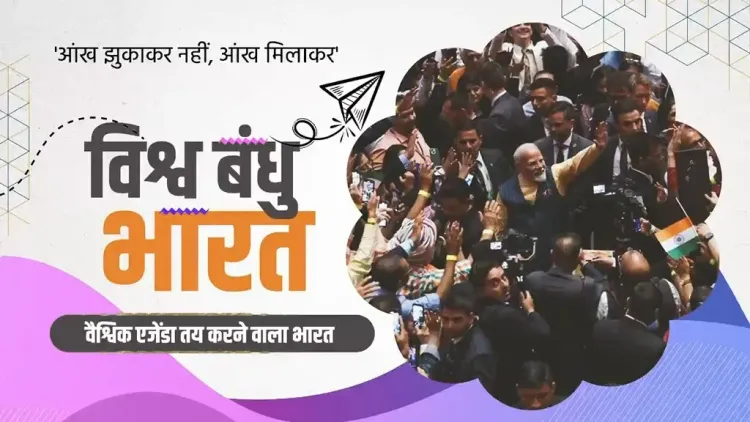
Union Minister Sarbananda Sonowal has hailed PM Narendra Modi's 'Nation First' principle on its 12th anniversary, positioning India as a 'Vishwa Bandhu' — a trusted global partner — and crediting the doctrine with giving India unprecedented diplomatic standing among Global South nations.
Key Takeaways
Union Minister Sarbananda Sonowal posted on June 19, 2026 marking #12YearsOfIndiaFirst under PM Narendra Modi .
The post frames India as a Vishwa Bandhu (friend of the world) with growing global influence, especially among Global South nations.
India hosted the Voice of Global South Summit in January 2023 , convening over 120 developing nations .
India's G20 presidency in 2023 adopted the theme Vasudhaiva Kutumbakam and embedded Global South priorities in the New Delhi Declaration .
Since 2014 , India has pursued multi-alignment — maintaining partnerships with the US, EU, Russia, Japan while expanding engagement across Africa, ASEAN, and Latin America.
Future BRICS and SCO summits will test whether India's Vishwa Bandhu positioning yields concrete multilateral outcomes.
Union Ports and Shipping Minister Sarbananda Sonowal on Friday, June 19, 2026, invoked Prime Minister Narendra Modi's 'Nation First' principle to mark what the ruling BJP is celebrating as 12 years of a transformed Indian foreign policy, asserting that India now stands as a trusted partner to the world under the banner of Vishwa Bandhu (friend of the world).
Context
Sonowal's post, carrying the hashtag #12YearsOfIndiaFirst, reflects a coordinated BJP narrative marking a dozen years since Narendra Modi first assumed office in May 2014. The minister declared that 'India's global rise is unstoppable' and that the country's voice 'now commands unprecedented respect worldwide.' The framing centres on two concepts: 'Nation First' as a governing philosophy and Vishwa Bandhu as India's self-projected identity on the international stage.
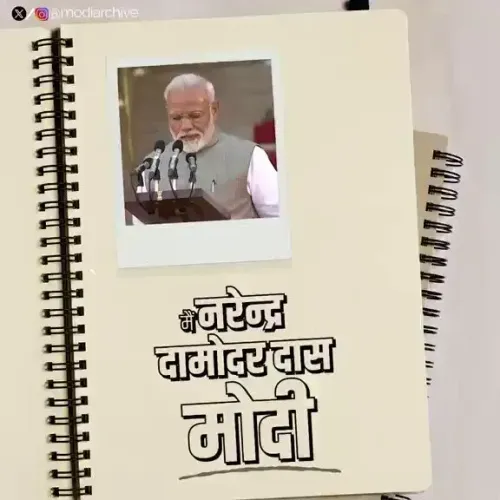
The post accompanies a video, suggesting the party or ministry has produced campaign-style content to mark the occasion — a common BJP practice around political anniversaries.
Policy Backdrop
The Vishwa Bandhu identity has its roots in India's active championing of the Global South since 2014. A concrete institutional expression came in January 2023, when New Delhi hosted the Voice of Global South Summit, bringing together over 120 developing nations to consolidate shared priorities ahead of India's G20 presidency.
That presidency, held through 2023, carried the theme Vasudhaiva Kutumbakam — 'the world is one family' — and the New Delhi Declaration adopted at its conclusion explicitly elevated Global South concerns including debt relief, climate finance, and food security. Analysts widely regarded the summit as a diplomatic high point for Modi's foreign policy brand.
More broadly, since 2014 India has moved from classical non-alignment toward what strategists call multi-alignment — maintaining simultaneous partnerships with the United States, the European Union, Russia, and Japan, while deepening ties with Africa, ASEAN, and Latin America. India has also consistently pushed for UN Security Council reform and a greater voice for developing nations in multilateral bodies.
Stakeholders and Impact
The immediate audience for Sonowal's post is domestic: BJP supporters and a broader Indian public being reminded of the government's foreign policy record ahead of what remains an active political cycle. For Global South nations, India's self-positioning as Vishwa Bandhu carries tangible diplomatic weight — it signals a large democracy willing to amplify their concerns in forums like the G20, BRICS, and the UN General Assembly.
India's diplomatic corps has been central to executing this vision, with New Delhi expanding its embassy footprint across Africa and deepening development partnerships through initiatives such as the India-Africa Forum Summit framework. The sustained emphasis on Global South solidarity has also shaped India's posture in multilateral climate negotiations.
What's Next
India's positioning at upcoming BRICS and SCO (Shanghai Cooperation Organisation) summits will be a key test of whether the Vishwa Bandhu brand translates into durable institutional outcomes. Follow-up ministerial meetings on Global South cooperation mechanisms — particularly around debt restructuring and technology transfer — will indicate whether the rhetoric of the past twelve years is being converted into binding multilateral commitments. As the #12YearsOfIndiaFirst campaign unfolds, the government's ability to point to concrete deliverables for developing nations will determine how the narrative lands both at home and abroad.
Point of View
A distinction that resonates with domestic audiences seeking pride in India's global stature. The 12-year mark also invites scrutiny: while India's G20 presidency and Voice of Global South Summit were genuine diplomatic achievements, critics will ask whether institutional commitments to developing nations have kept pace with the rhetoric. The broader arc here is the BJP's sustained effort to make foreign policy a domestic electoral asset — a strategy that has largely succeeded in shifting public discourse around India's place in the world.
NationPress
19 Sept 2026
Frequently Asked Questions
What is India's Vishwa Bandhu concept in foreign policy?
'Vishwa Bandhu,' meaning 'friend of the world,' is the identity India has projected under PM Narendra Modi's government since 2014, emphasising India's role as a trusted partner to all nations, especially developing countries in the Global South.
What is the #12YearsOfIndiaFirst hashtag about?
The hashtag marks 12 years since Narendra Modi took office in May 2014 and introduced the 'Nation First' principle as the cornerstone of India's domestic and foreign policy. The BJP has used it as a campaign moment to highlight achievements over the period.
What did India do as champion of the Global South?
India hosted the Voice of Global South Summit in January 2023, bringing together over 120 developing nations, and embedded their priorities — including debt relief, climate finance, and food security — in the New Delhi Declaration during its G20 presidency in 2023.
Who is Sarbananda Sonowal?
Sarbananda Sonowal is India's Union Minister of Ports, Shipping and Waterways, a senior BJP leader, and a former Chief Minister of Assam. He is a prominent voice in the ruling party on matters of governance and national development.
What is India's multi-alignment foreign policy strategy?
Multi-alignment refers to India's approach since 2014 of maintaining active partnerships with multiple major powers — including the US, EU, Russia, and Japan — simultaneously, while also expanding ties with Africa, ASEAN, and Latin America, rather than aligning exclusively with any single bloc.