Sonowal: 12 Years of Connectivity Unlocked Northeast's Potential
Synopsis
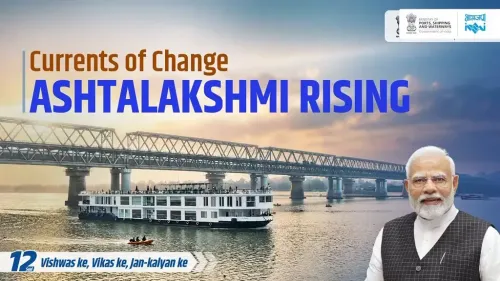
Union Minister Sarbananda Sonowal says 12 years of enhanced connectivity have unlocked the Northeast's economic potential, citing Nagaland coffee exports, Tripura's queen pineapples gaining global recognition, and a tourism surge in Arunachal Pradesh as evidence of the Ashtalakshmi states' transformation.
Key Takeaways
Sarbananda Sonowal credited 12 years of connectivity and mobility improvements for transforming the Ashtalakshmi (eight Northeastern) states.
Nagaland's coffee is now reaching global markets, cited as a direct outcome of improved trade infrastructure.
Tripura's queen pineapples have earned worldwide recognition, reflecting agri-export gains from better logistics.
Tourism in Arunachal Pradesh has grown, driven by improved road and air access to the state's landscapes.
The gains are underpinned by three central schemes: the Act East Policy (2014) , Bharatmala Pariyojana (2015) , and PM Gati Shakti National Master Plan (2021) .
Remaining project stretches and fresh export or tourism data are the key metrics to watch in the next parliamentary session.
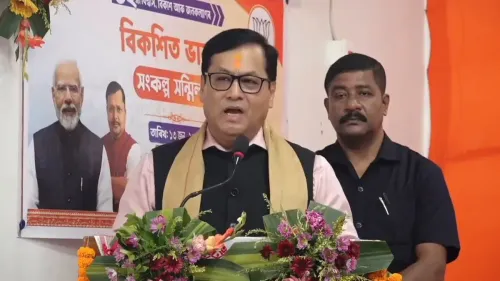
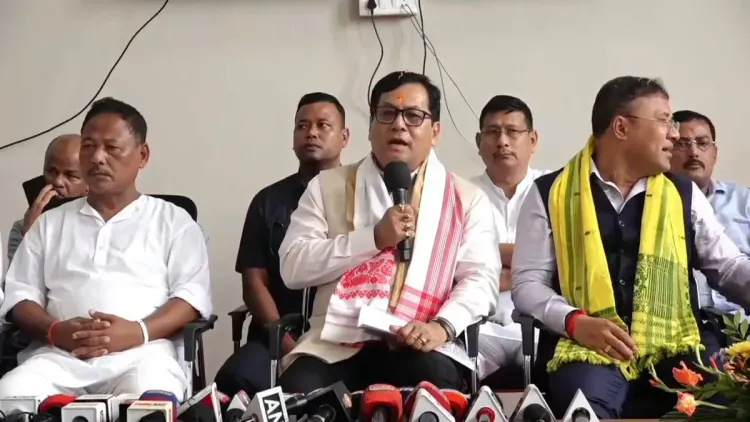
Union Minister of Ports, Shipping and Waterways Sarbananda Sonowal on Friday, June 12, 2026, highlighted the transformative impact of over a decade of infrastructure investment across India's eight Northeastern states, pointing to agricultural exports and tourism growth as concrete outcomes of enhanced connectivity and improved mobility.
Context
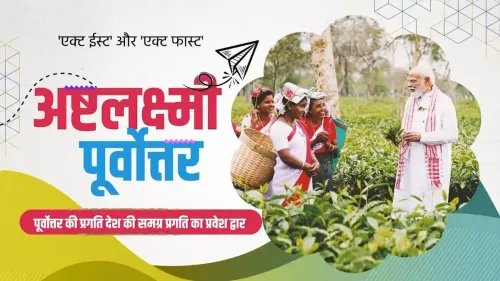
In his post, Sonowal stated: 'Over the past 12 years, enhanced connectivity and improved mobility have unlocked the true potential of our Ashtalakshmi states.' He cited three specific examples — Nagaland's coffee reaching global markets, Tripura's queen pineapples earning worldwide recognition, and a surge in tourists visiting the landscapes of Arunachal Pradesh. The term Ashtalakshmi (eight goddesses of prosperity) is the BJP-led government's collective branding for the eight Northeastern states: Arunachal Pradesh, Assam, Manipur, Meghalaya, Mizoram, Nagaland, Sikkim, and Tripura.
The post accompanied a video, underlining the government's push to present the Northeast as a development success story ahead of what is expected to be a politically significant parliamentary session on regional development.
Policy Backdrop
The '12 years' framing aligns with the Act East Policy, announced in 2014, which reoriented India's strategic and economic engagement eastward, placing the Northeast at the centre of road, rail, and waterway expansion. The policy was a deliberate shift from the earlier 'Look East' approach, designed to move from intent to implementation.
Two flagship programmes reinforced this push: the Bharatmala Pariyojana, launched in 2015 for upgraded highway and border connectivity, and the PM Gati Shakti National Master Plan, introduced in 2021 for multimodal logistics corridors including dedicated Northeast stretches. Together, these schemes have been positioned as the structural backbone enabling the export and tourism gains Sonowal referenced.
Stakeholders and Impact
The direct beneficiaries of improved connectivity span Northeast farmers and agri-exporters, who now have access to cold-chain and road infrastructure needed to move perishable produce — such as Tripura's queen pineapples — to distant markets. Nagaland's coffee growers, historically constrained by poor road links, have found new export pathways as border trade routes with Southeast Asia have matured under the Act East framework.
The tourism sector in states like Arunachal Pradesh has also benefited, with improved road and air connectivity reducing travel time and opening previously inaccessible landscapes to domestic and international visitors. These sectors collectively represent a structural shift in how the Northeast participates in the national and regional economy.
What's Next
Attention will now turn to remaining Bharatmala and PM Gati Shakti stretches in the Northeast that are yet to be completed, as well as any updated export or tourism data expected in the next Union Budget or parliamentary session focused on regional development. Sonowal's post signals that the government intends to keep the Northeast's economic trajectory front and centre in its political messaging, framing connectivity investment as a measurable deliverable rather than an aspirational promise.
Point of View
Using the '12 years' marker to anchor the BJP's Northeast narrative to the Act East Policy era that began in 2014. By naming specific commodities — Nagaland coffee, Tripura pineapples — rather than citing aggregate figures, the messaging trades in tangible, voter-legible proof points that are harder to dispute than macro statistics. As a former Chief Minister of Assam and the government's most prominent Northeast face in the Union Cabinet, Sonowal is also reinforcing his own political equity in the region ahead of assembly cycles. The broader pattern is consistent: the Centre increasingly frames the Northeast not as a security-sensitive periphery requiring subsidy, but as a productive gateway economy whose growth validates infrastructure-first governance.
NationPress
26 Oct 2026
Frequently Asked Questions
What are the Ashtalakshmi states of India?
The Ashtalakshmi states are India's eight Northeastern states — Arunachal Pradesh, Assam, Manipur, Meghalaya, Mizoram, Nagaland, Sikkim , and Tripura . The term, meaning 'eight goddesses of prosperity,' is used by the BJP-led government to highlight the region's economic potential.
What is the Act East Policy and how does it affect the Northeast?
The Act East Policy , announced in 2014 , replaced the earlier 'Look East' approach and placed the Northeastern states at the centre of India's connectivity push toward Southeast Asia , funding roads, railways, and waterways to reduce the region's historical isolation.
Why is Nagaland coffee becoming popular globally?
Nagaland's coffee has gained access to global markets primarily because improved road and trade infrastructure under central schemes like Bharatmala and the Act East Policy has made it easier for producers to move goods to ports and border trade points.
What makes Tripura queen pineapples special?
Tripura's queen pineapple variety is prized for its sweetness and aroma. Enhanced logistics connectivity has enabled exporters to move this perishable fruit to national and international markets, earning the variety wider recognition.
Who is Sarbananda Sonowal?
Sarbananda Sonowal is the Union Minister of Ports, Shipping and Waterways in the BJP -led central government and a senior party leader. He previously served as Chief Minister of Assam and remains one of the most prominent political figures from India's Northeast.