Sonowal pitches India's maritime rise at CII Summit in Vizag
Synopsis
Union Minister Sarbananda Sonowal addressed the 31st CII Partnership Summit in Visakhapatnam, unveiling an ₹80 lakh crore maritime investment roadmap, a top-5 shipbuilding target and Andhra Pradesh's ₹30,000 crore Dugarajapatnam cluster as India's gateway to the Indo-Pacific.
Key Takeaways
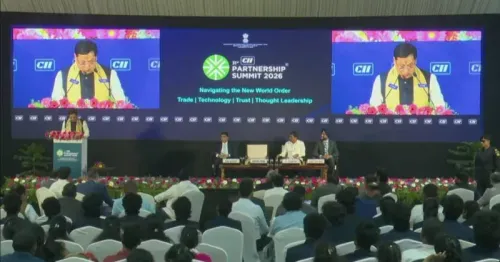
Union Minister Sarbananda Sonowal addressed the 31st CII Partnership Summit 2026 in Visakhapatnam on November 12, 2026 .
India has set a goal to rank among the top 5 global shipbuilding nations , backed by an ₹80 lakh crore maritime sector investment roadmap.
Andhra Pradesh is positioned as India's 'Maritime Gateway to the East,' facing the Bay of Bengal toward Southeast Asia.
The state is developing four new greenfield ports and a ₹30,000 crore shipbuilding cluster at Dugarajapatnam .
India's maritime policy rests on the Sagarmala Project (2015) and Maritime India Vision 2030 as long-term policy anchors.
Sonowal called on global investors, technology providers and shipping companies to partner with India through the CII platform.
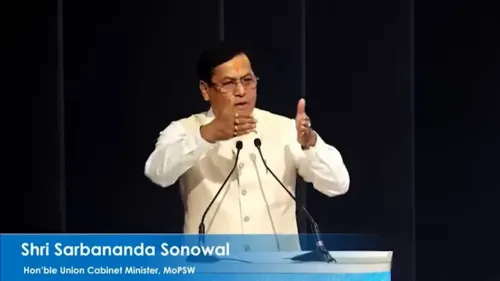
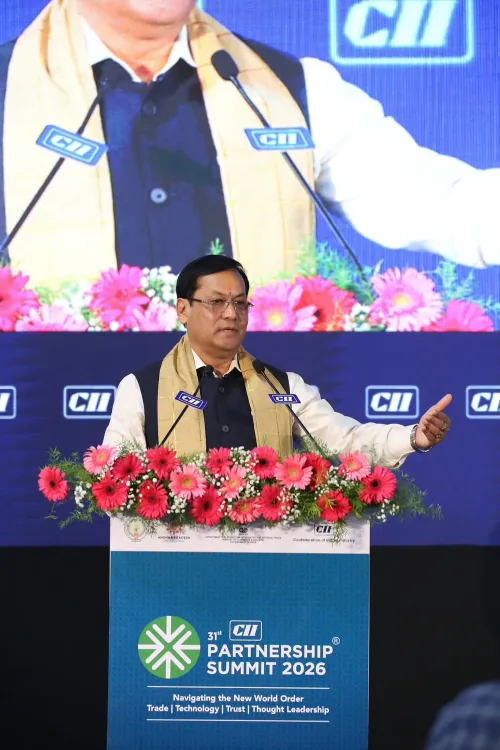
India's maritime ambitions arrived in full force at Visakhapatnam on Thursday, November 12, 2026, as Union Minister of Ports, Shipping and Waterways Sarbananda Sonowal addressed the 31st CII Partnership Summit — calling on global investors, technology providers and shipping companies to anchor themselves to what he described as India's 'incredible journey' toward becoming a top-five shipbuilding nation.
Sonowal laid out a sweeping vision: a national investment roadmap of ₹80 lakh crore across the maritime sector, with India targeting a place among the world's five largest shipbuilding nations. 'We are building a futuristic blue economy,' the minister declared, framing the summit as a live deal-making floor, not a ceremonial gathering.
Andhra Pradesh as India's Maritime Gateway to the East
At the heart of Sonowal's pitch sat Andhra Pradesh — a state he positioned as the country's 'ultimate Maritime Gateway to the East.' The reference carries strategic weight: the state's coastline faces the Bay of Bengal, the natural corridor into Southeast Asia and the broader Indo-Pacific, a region that successive Indian governments have identified as central to trade growth.
Chief Minister N. Chandrababu Naidu, who was present at the summit venue, has been accelerating coastal infrastructure as part of the state's post-bifurcation development push. Sonowal cited two headline projects under Naidu's watch: four new greenfield ports and a ₹30,000 crore shipbuilding cluster at Dugarajapatnam — a coastal site on Andhra's northern coast that the state government has identified for heavy maritime-industrial development.
The Policy Architecture Behind the Pitch
The ambition on display in Visakhapatnam did not emerge overnight. The Sagarmala Project, launched in 2015, laid the groundwork for port-led economic development along India's roughly 7,500-kilometre coastline. Maritime India Vision 2030, unveiled around 2021, then set hard targets for port capacity expansion, domestic shipbuilding growth and blue economy integration — giving the sector a decade-long policy spine.
The Confederation of Indian Industry (CII) summit, held annually to stitch together domestic industrial intent with foreign investment, is itself a preferred stage for announcing maritime MoUs and project commitments. Sonowal's direct call to 'global investors' from the podium suggests the government expects concrete follow-through — MoUs, joint ventures, technology tie-ups — to emerge from this edition.
What Visakhapatnam Signals for India's Blue Economy Push
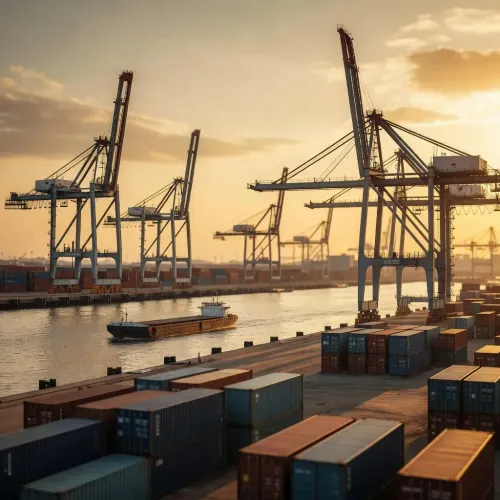
Visakhapatnam — home to one of India's busiest major ports and the Eastern Naval Command — is itself a symbol of this dual civilian-strategic maritime identity. Hosting the Partnership Summit here sends a pointed message to foreign investors: the infrastructure is not aspirational, it is already operating at scale, and the expansion is the next chapter.
India currently accounts for a small fraction of global shipbuilding output, dwarfed by South Korea, China and Japan. Breaking into the top five would require sustained capital, technology transfer and skilled-workforce investment — precisely the coalition Sonowal was building a room for in Visakhapatnam on Thursday.
The next measure of success will be counted in signed agreements and state budget line-items — not podium pledges. Watch for investor commitments and central or state allocations targeting the Dugarajapatnam cluster in the months ahead.
Point of View
Particularly toward the Indo-Pacific. The real test is whether the Dugarajapatnam cluster and the four greenfield ports move from announcement to ground-breaking before the next electoral cycle in Andhra Pradesh.
NationPress
12 Nov 2026
Frequently Asked Questions
What is the CII Partnership Summit 2026 and where was it held?
The 31st CII Partnership Summit 2026 is an annual investment and business conference organised by the Confederation of Indian Industry , held this year in Visakhapatnam, Andhra Pradesh on November 12, 2026 . It serves as a platform to connect Indian industry with global investors and technology partners.
What is the Dugarajapatnam shipbuilding cluster?
Dugarajapatnam is a coastal site in Andhra Pradesh identified for a proposed ₹30,000 crore shipbuilding cluster , announced as part of the state's maritime development drive under Chief Minister N. Chandrababu Naidu .
What is India's target for the shipbuilding industry?
India has set a goal to rank among the top 5 global shipbuilding nations , supported by an ₹80 lakh crore investment roadmap across the maritime sector, as outlined by Union Minister Sarbananda Sonowal at the CII summit.
What is the Sagarmala Project and how does it relate to India's maritime push?
The Sagarmala Project , launched in 2015 , is a central government programme for port-led economic development along India's coastline. It forms the foundational policy framework for India's current maritime expansion, complemented by Maritime India Vision 2030 which set capacity and shipbuilding targets.
How many new ports is Andhra Pradesh building?
Andhra Pradesh is planning four new greenfield ports as part of its maritime infrastructure expansion, in addition to the proposed ₹30,000 crore shipbuilding cluster at Dugarajapatnam , according to Union Minister Sonowal's address at the CII Partnership Summit.