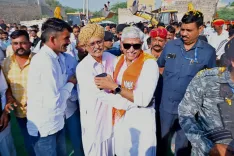
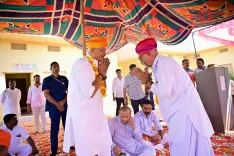
Jal Shakti Minister Paatil meets Tamil Nadu water minister in Tiruchirappalli
Synopsis
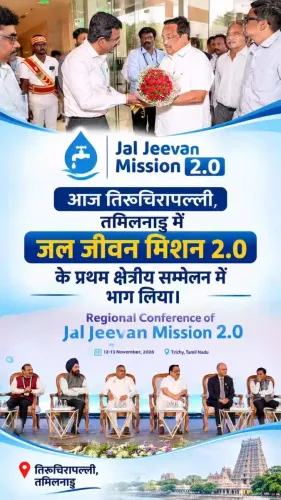
Union Jal Shakti Minister C. R. Paatil visited Tiruchirappalli on 12 November 2026 to meet Tamil Nadu's Rural Development and Water Resources Minister N. Anand, with both leaders affirming water conservation and rural prosperity as a shared cross-party priority.
Key Takeaways
Union Jal Shakti Minister C.
Paatil held a courtesy meeting with Tamil Nadu Minister N.
Anand in Tiruchirappalli on 12 November 2026 .
Both ministers identified 'conservation and sustainable management of water resources' as a shared priority for rural welfare.
The meeting is a cross-party engagement — BJP at the Centre and DMK in Tamil Nadu — underscoring the non-partisan urgency of water security.
The Jal Jeevan Mission , launched in 2019 , is the central scheme under Paatil's ministry that directly concerns Tamil Nadu's rural households.
Tiruchirappalli lies on the Cauvery river , making it a symbolically significant location for a water-resource dialogue.
Specific project outcomes from the meeting have not been officially announced yet.
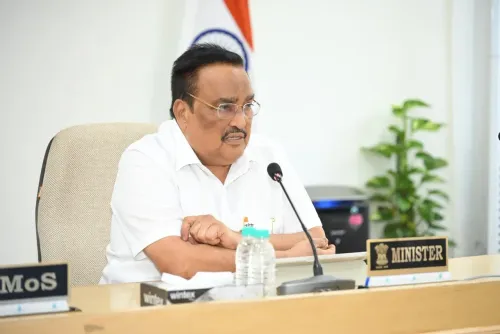
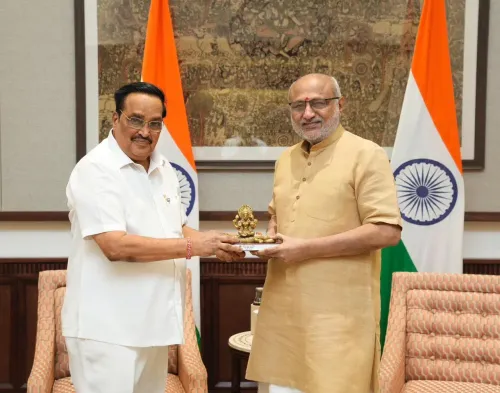
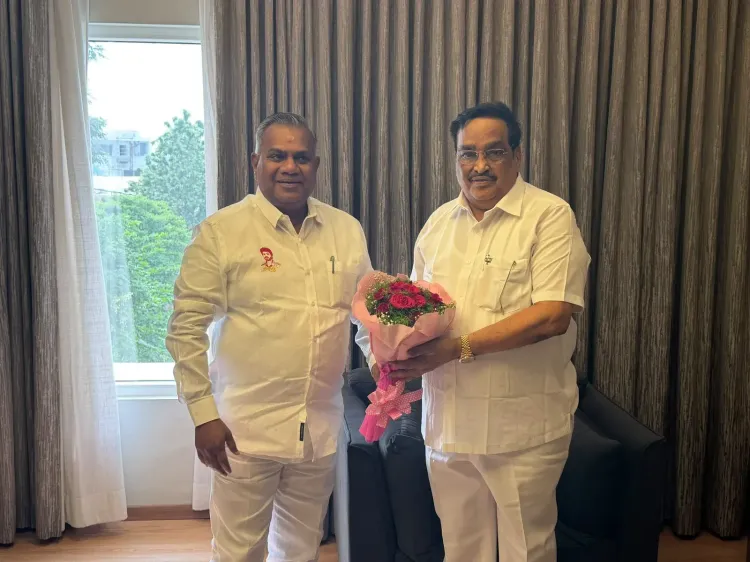
Water knows no political boundary — and on Thursday, 12 November 2026, Union Jal Shakti Minister C. R. Paatil made that point in action, travelling to Tiruchirappalli for a courtesy meeting with Tamil Nadu's Rural Development and Water Resources Minister N. Anand, in a cross-party engagement that places rural water security squarely on the national agenda.
Paatil shared the development on X, posting in Hindi: 'आज तिरुचिरापल्ली में तमिलनाडु के ग्रामीण विकास एवं जल संसाधन मंत्री श्री एन. आनंद जी से सौजन्य भेंट की।' ('Today in Tiruchirappalli I had a courtesy meeting with Tamil Nadu's Rural Development and Water Resources Minister Shri N. Anand.') He added that 'conservation and sustainable management of water resources for public welfare and rural prosperity is our shared priority.'
BJP's Paatil and DMK's Anand find common ground on water
The meeting is notable for who sat across the table. Tamil Nadu is governed by the DMK, a party in the Opposition camp at the Centre, yet Minister Anand — widely known by his handle Bussy Anand — engaged with the senior BJP minister with an explicit statement of shared priorities. Central and state water ministries coordinate regularly on scheme convergence, but such visible, bilateral engagements carry diplomatic weight precisely when the two governments sit on opposite sides of the political fence.
The Jal Shakti Ministry is the nodal body for the flagship Jal Jeevan Mission, launched in 2019, which aims to deliver tap-water connections to every rural household in India, with a strong emphasis on source sustainability. Tamil Nadu's rural districts — where farmers and rural households depend heavily on groundwater and surface-water bodies — are directly within that mission's ambit. Any convergence between the state's own water-resource programmes and centrally funded schemes could accelerate delivery on the ground.
Tiruchirappalli as the stage for a water-security conversation
Tiruchirappalli, situated on the banks of the Cauvery river in central Tamil Nadu, is itself a symbol of the water pressures that define the state. The Cauvery has been the subject of decades-long inter-state disputes; managing it sustainably while expanding rural water access is the precise challenge that makes coordination between New Delhi and Chennai essential. Paatil's choice to travel to Tiruchirappalli — rather than a meeting in the capital — signals a willingness to engage on Tamil Nadu's turf.
Specific outcomes from the 12 November meeting have not been officially detailed, but the broader pattern is clear: the Centre is investing political capital to bring even Opposition-governed states into alignment on water conservation and rural supply targets.
The next indicator to watch will be whether this courtesy call translates into joint announcements on groundwater recharge projects or scheme convergence in Tamil Nadu districts — outcomes that would validate the symbolism of today's handshake with hard delivery numbers.
Point of View
And the Centre clearly calculates that visible, on-ground engagement with Opposition-governed states strengthens the political case for Jal Jeevan Mission's national targets. For Tamil Nadu, participating publicly signals that the DMK-led government is willing to access central resources even at the cost of some optics. The meeting also reflects a broader pattern of the Jal Shakti Ministry using bilateral state engagements — rather than purely top-down directives — to push scheme convergence. If concrete joint projects emerge from this interaction, it would become a model for how Centre-state water diplomacy can bypass political friction.
NationPress
12 Nov 2026
Frequently Asked Questions
Why did C. R. Paatil visit Tiruchirappalli in November 2026?
Union Jal Shakti Minister C. R. Paatil visited Tiruchirappalli on 12 November 2026 to hold a courtesy meeting with Tamil Nadu's Rural Development and Water Resources Minister N. Anand, focusing on shared priorities for water conservation and rural water supply.
What is the Jal Jeevan Mission and how does it relate to Tamil Nadu?
The Jal Jeevan Mission, launched in 2019 under the Jal Shakti Ministry, aims to provide tap-water connections to every rural household in India. Tamil Nadu's rural districts and their dependence on groundwater make convergence with this central scheme a key topic for the state's water ministry.
Who is N. Anand, the Tamil Nadu water minister?
N. Anand, also known as Bussy Anand, is Tamil Nadu's Minister for Rural Development and Water Resources and a member of the ruling DMK party.
Is it unusual for the Centre and Tamil Nadu to cooperate on water policy?
Central and state water ministries coordinate regularly on national schemes, but visible bilateral meetings like this one carry extra significance when the two governments belong to opposing political camps, as is the case with BJP at the Centre and DMK in Tamil Nadu.
What outcomes came out of the Paatil-Anand meeting in Tiruchirappalli?
No specific project outcomes or joint announcements have been officially detailed yet. The meeting focused on affirming shared priorities around water conservation and sustainable management for rural welfare.