Sonowal shares Kovind's piece on India's shift from colonial mindset
Synopsis
Union Minister Sarbananda Sonowal has shared a piece by former President Ram Nath Kovind arguing India has shed its colonial mindset under PM Modi. The share, tagged #LongestServingElectedPMModi, reflects the BJP government's decade-long push to reframe national identity through policy, nomenclature, and legal reform.
Key Takeaways
Union Minister Sarbananda Sonowal shared a piece by former President Ram Nath Kovind on June 10, 2026 .
Kovind's piece argues India has transitioned from a colonial mindset to a confident Bharat under PM Narendra Modi .
The post was tagged #LongestServingElectedPMModi , linking the share to BJP's celebration of Modi's tenure.
The BJP government's decolonisation drive since 2014 has included renaming Rajpath to Kartavya Path and replacing British-era criminal codes.
Further bills amending colonial-era laws are expected in Parliament's upcoming monsoon session .
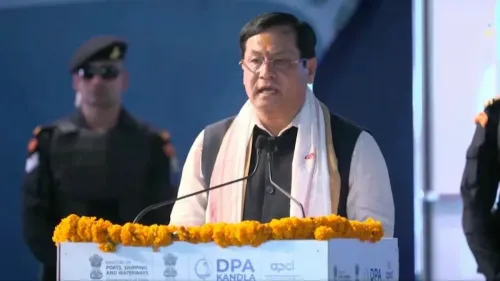
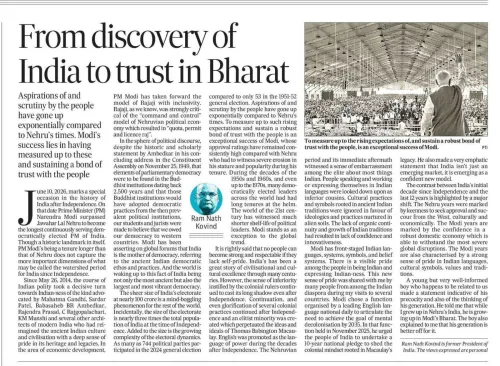
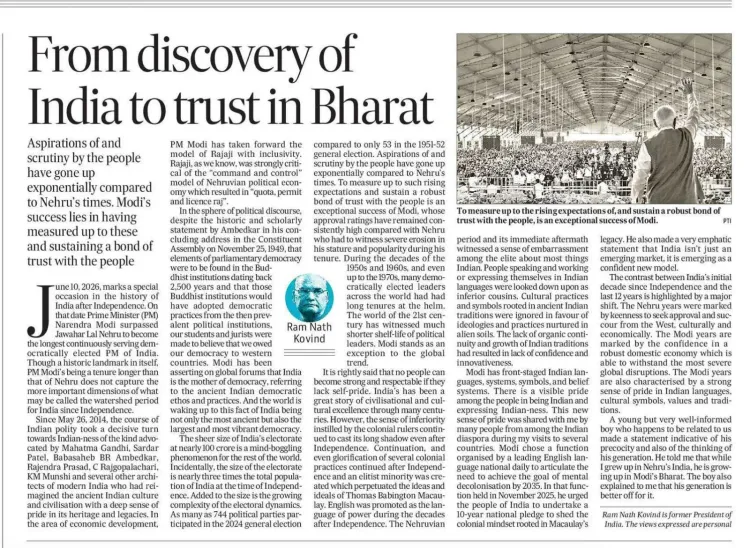
Union Ports and Shipping Minister Sarbananda Sonowal on Wednesday, June 10, 2026, shared a piece authored by former President Ram Nath Kovind that examines India's civilizational transition — from what Kovind describes as a colonial mindset to a confident, self-assured Bharat — crediting the shift to the governance of Prime Minister Narendra Modi.
Context
Sonowal shared the opinion piece with the note that it offers 'an insightful' reading of 'our nation's shift from a colonial mindset to a confident, proud Bharat' under PM Modi. The post carried the hashtag #LongestServingElectedPMModi, situating the share within a broader BJP celebration of Modi's tenure as India's longest-serving elected Prime Minister.
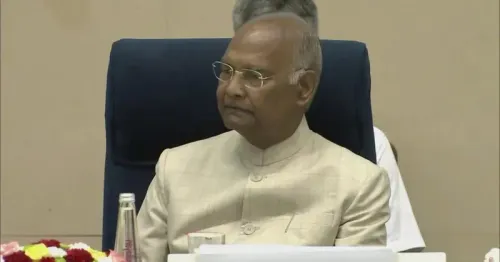
Ram Nath Kovind served as the 14th President of India from 2017 to 2022. Since leaving office he has periodically engaged in public discourse on questions of national identity and India's civilizational heritage.
Policy Backdrop
The ideas Kovind articulates are consistent with a decade-long policy and cultural project pursued by the BJP-led government since 2014. That project has included official nomenclature changes — most visibly the renaming of Rajpath to Kartavya Path in 2022 — the removal of certain colonial-era statutes, revisions to the national education policy, and the replacement of British-era criminal codes with new domestic legislation.
The framing positions the post-2014 era as a departure from what government voices describe as a gulami ki mansikta (colonial or slavish mindset) inherited from British rule and, in the BJP's telling, perpetuated through Nehruvian institutional choices. Kovind's piece, as cited by Sonowal, appears to locate this arc within a longer civilizational narrative — referencing the contrast between Jawaharlal Nehru's 'Discovery of India' and what is described as a renewed 'trust in Bharat.'
Stakeholders and Impact
The audience for this kind of discourse is broad: it speaks to voters and commentators invested in questions of national identity, historical memory, and the pace of institutional reform. For the BJP's political base, the endorsement by a former constitutional head of state lends added weight to a narrative the party has championed electorally and legislatively.
Critics of the decolonisation framing argue that selective erasure of institutional history risks obscuring democratic continuities and pluralist traditions that also define independent India. The debate over what constitutes a 'colonial mindset' versus legitimate inherited governance structures remains active in academic and policy circles.
What's Next
Parliament's monsoon session is expected to bring further bills amending or replacing colonial-era administrative and criminal laws, which would add legislative substance to the rhetorical arc that Kovind's piece and Sonowal's share represent. Whether the government's decolonisation agenda accelerates in the session will be closely watched by legal reformers, opposition benches, and constitutional scholars alike.
Point of View
And its restatement by a former President signals the party's intent to keep that narrative central. With the monsoon session approaching, such discourse also primes public opinion for further legislative decolonisation moves.
NationPress
26 Oct 2026
Frequently Asked Questions
What did Sarbananda Sonowal post about Ram Nath Kovind?
Sonowal shared an opinion piece by former President Ram Nath Kovind arguing that India has moved from a colonial mindset to a confident Bharat under PM Modi, calling it 'an insightful piece.'
What is the #LongestServingElectedPMModi hashtag about?
The hashtag refers to Narendra Modi's status as India's longest-serving elected Prime Minister, and is used by BJP leaders to mark and celebrate his extended tenure in office.
What decolonisation steps has the Modi government taken?
Key steps include renaming Rajpath to Kartavya Path in 2022, replacing British-era criminal codes with new domestic legislation, and revisions to the national education policy, among other nomenclature and legal changes since 2014.
Who is Ram Nath Kovind?
Ram Nath Kovind served as the 14th President of India from 2017 to 2022. A BJP-backed candidate, he has since engaged in public discourse on national identity and India's civilizational heritage.
What colonial-era law changes are expected next in Parliament?
Further bills amending or replacing colonial-era administrative and criminal laws are expected to be introduced during Parliament's upcoming monsoon session, continuing the government's legislative decolonisation agenda.