Sonowal visits Hanwha Ocean shipyard in South Korea
Synopsis
Union Ports Minister Sarbananda Sonowal toured the Hanwha Ocean shipyard in Geoje, South Korea, meeting executive VP Chang-yong Kim and citing PM Modi's Maritime Amrit Kaal vision as India seeks global shipbuilding partnerships to close a vast capacity gap.
Key Takeaways
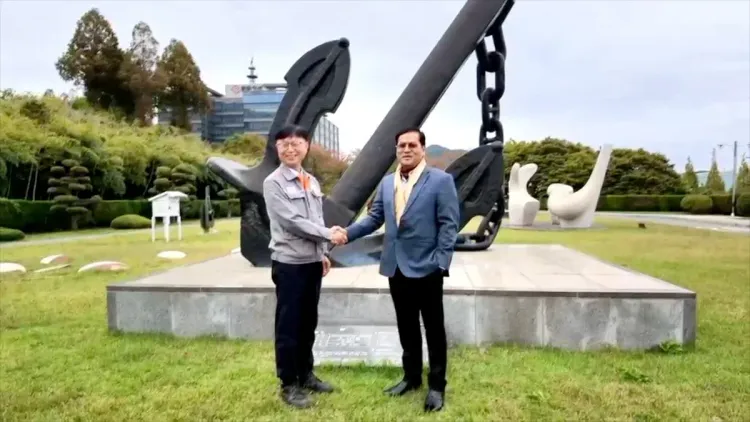
Sarbananda Sonowal visited the Hanwha Ocean shipyard in Geoje, South Korea on 29 October 2026 .
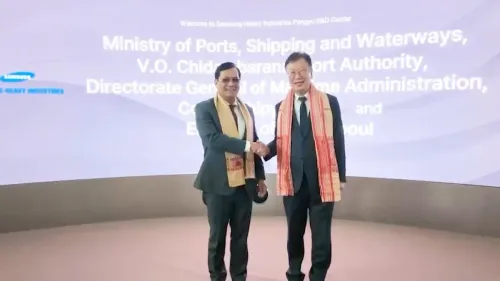
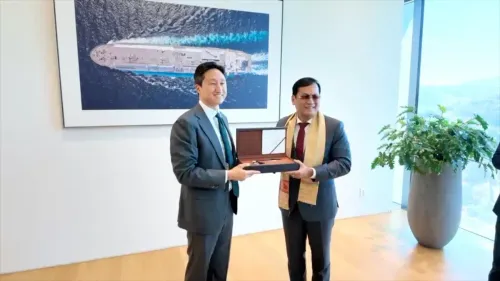
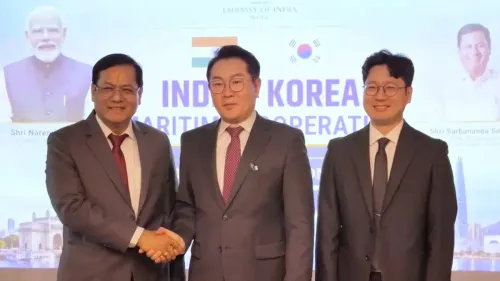
He met Executive Vice President of Manufacturing Chang-yong Kim and toured the facility's large-scale operations.
The visit is anchored in PM Modi's Maritime Amrit Kaal vision targeting a globally competitive Indian maritime sector by 2047 .
Hanwha Ocean , formerly Daewoo Shipbuilding and Marine Engineering, is one of the world's leading builders of commercial and naval vessels.
India holds only a small share of global shipbuilding orders, making technology partnerships a strategic priority under Atmanirbhar Bharat .
Possible MoUs or technology agreements with Indian shipyards could follow from the visit, though none have been announced.
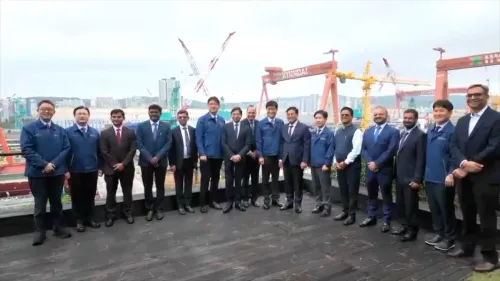
Inside one of the world's largest shipyards, Union Ports and Shipping Minister Sarbananda Sonowal got a firsthand look at what India's maritime ambitions must measure up to. On Thursday, 29 October 2026, Sonowal visited the Hanwha Ocean shipyard on Geoje island, South Korea, meeting Executive Vice President of Manufacturing Chang-yong Kim and touring a facility whose sheer scale — vast dry docks, advanced fabrication halls, and a seamlessly integrated design-to-production chain — left a visible impression on the minister.
Sonowal described being 'deeply impressed by the massive scale of operations, advanced manufacturing and seamless integration of design and production at the Geoje facility.' The visit was framed squarely within Prime Minister Narendra Modi's Maritime Amrit Kaal vision — India's long-horizon programme to build a globally competitive maritime ecosystem by 2047. 'Insights from global leaders like Hanwha Ocean,' Sonowal wrote, 'will strengthen our journey.'
Why Hanwha Ocean, and why Geoje
Hanwha Ocean — previously known as Daewoo Shipbuilding and Marine Engineering before its acquisition by the Hanwha Group — ranks among the top commercial and naval shipbuilders on the planet. The Geoje shipyard, sprawled across the southern tip of Korea, handles everything from ultra-large container vessels and LNG carriers to defence platforms. For an Indian delegation scouting best-in-class partners, it is an instruction manual in industrial scale.
India currently commands a tiny fraction of global shipbuilding orders — a gap the government has flagged repeatedly as a strategic vulnerability. The Sagarmala Project, launched in 2015, first put port-led development and shipbuilding modernisation on a policy footing. Maritime Amrit Kaal builds on that base with a more ambitious target: capacity, technology, and export capability that can compete on the world stage.
India's play — knowledge, capital, and Atmanirbhar ambitions
The India-South Korea maritime corridor is not new, but it is accelerating. Under the Atmanirbhar Bharat framework, the government has actively sought technology partnerships with advanced shipbuilding nations to compress the decades it would normally take to climb the value chain organically. South Korea — alongside Japan — sits at the top of that list.
Visits like this one typically scout the terrain for memoranda of understanding, joint ventures, or design-licensing arrangements that can be transplanted to Indian yards, most of them clustered along the coasts of Gujarat, Andhra Pradesh, and Kerala. The details of any follow-up agreements from the Geoje meeting have not been announced, but the minister's public framing — 'global leaders like Hanwha Ocean will strengthen our journey' — signals active intent rather than a courtesy call.
India wants a shipbuilding sector that can eventually service its own Navy, Coast Guard, and merchant fleet domestically. The Geoje visit is a reminder of how far that road runs — and of exactly what a finished destination looks like.
Point of View
Not one-off diplomatic tourism. South Korea is a deliberate choice — its yards built global dominance on exactly the combination of scale, technology integration, and state support that India is now trying to replicate. Whether the visit translates into concrete agreements will determine whether it is a milestone or merely a marker.
NationPress
29 Oct 2026
Frequently Asked Questions
Why did Sarbananda Sonowal visit South Korea?
Sonowal visited South Korea to tour the Hanwha Ocean shipyard in Geoje and meet its manufacturing leadership, seeking insights to support India's shipbuilding capacity expansion under the Maritime Amrit Kaal vision.
What is Hanwha Ocean and where is its Geoje shipyard?
Hanwha Ocean is a major South Korean shipbuilder, formerly known as Daewoo Shipbuilding and Marine Engineering. Its Geoje facility, located on an island in southern South Korea, is one of the largest shipyards in the world.
What is India's Maritime Amrit Kaal vision?
Maritime Amrit Kaal is the Indian government's long-term framework for building a globally competitive maritime sector, encompassing port capacity, shipbuilding, and repair industries, with a horizon extending to 2047.
How does India plan to grow its shipbuilding industry?
India is pursuing technology partnerships with advanced shipbuilding nations like South Korea and Japan, backed by schemes such as Sagarmala and the Atmanirbhar Bharat framework, to increase its share of global shipbuilding orders and reduce dependence on foreign vessels.
Will India and Hanwha Ocean sign an MoU after Sonowal's visit?
No formal agreement has been announced following the Geoje visit, though such ministerial engagements typically explore MoUs, joint ventures, or technology-licensing arrangements between Indian shipyards and their overseas counterparts.