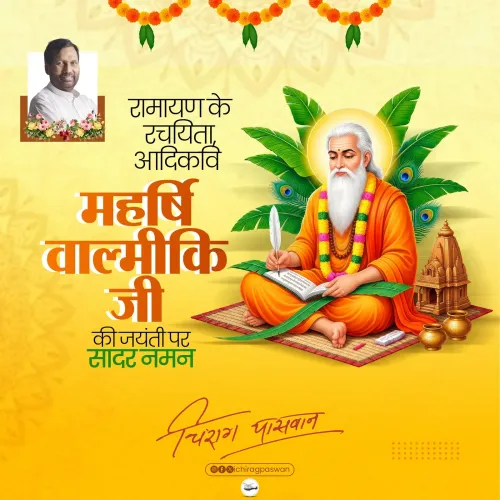
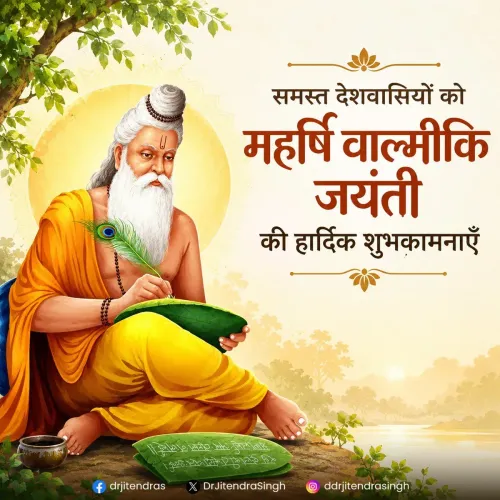
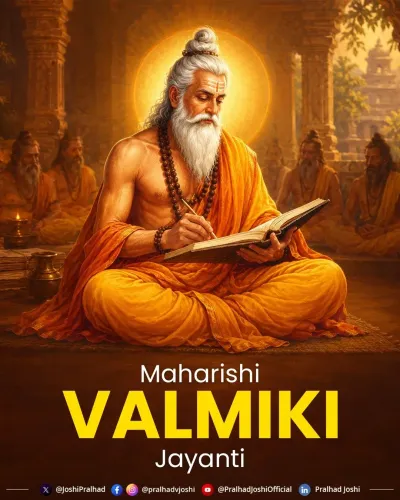
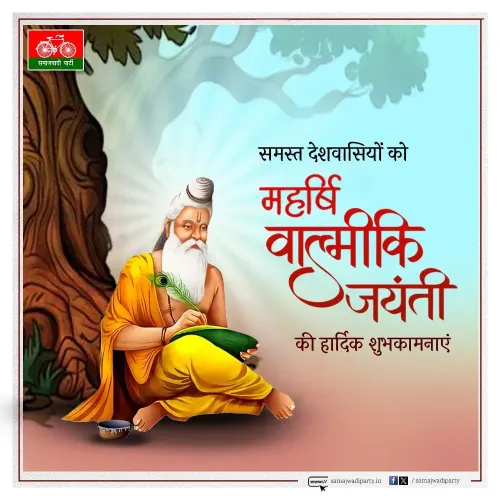
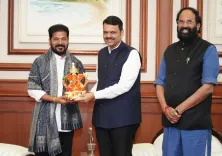
CM Hemant Soren greets nation on Valmiki Jayanti

Synopsis
Jharkhand CM Hemant Soren marked Valmiki Jayanti on 26 October 2026 with a national greeting, drawing on the sage's transformative life story to call for a society built on dignity, equal opportunity, and justice.
Key Takeaways
Jharkhand CM Hemant Soren posted Valmiki Jayanti greetings on 26 October 2026 , wishing all citizens in Hindi on X.
Soren used the traditional Jharkhand salutation Johar alongside standard festival wishes, grounding the national message in local identity.
He cited Maharshi Valmiki's life journey — a transformation from darkness to wisdom — as proof that resolve, knowledge, and righteous action can redirect any life.
The post described the Ramayana as an eternal guide toward truth, compassion, and the dharma of justice.
Soren framed Valmiki's ideals as inspiration for building a society where every person receives dignity, equal opportunity, and justice .
On the occasion of Valmiki Jayanti, Jharkhand Chief Minister Hemant Soren extended warm greetings to the nation on Monday, 26 October 2026, invoking the ancient sage's life as a timeless lesson in resolve, knowledge, and righteous action.
Posting in Hindi on X, Soren wrote: 'गुरु महर्षि वाल्मीकि जयंती के पावन अवसर पर समस्त देशवासियों को हार्दिक बधाई, शुभकामनाएँ और जोहार।' — 'On the auspicious occasion of Guru Maharshi Valmiki Jayanti, heartfelt congratulations, good wishes, and Johar to all fellow countrymen.' The word Johar is a traditional Jharkhand greeting, grounding a national message in distinctly local warmth.
Valmiki's journey — from darkness to the Adi Kavi
Maharshi Valmiki is venerated across India as the Adi Kavi — the first poet — and is traditionally credited as the author of the Ramayana, one of Hinduism's foundational epics. His own life story, a transformation from a figure of moral darkness into a sage of extraordinary wisdom, is itself the text of the message Soren chose to amplify. 'The life journey of Maharshi Valmiki teaches us that through resolve, knowledge, and good deeds, life can be given a new direction,' the Chief Minister wrote.
That narrative of personal transformation resonates far beyond religious observance. It is the reason Valmiki Jayanti carries particular weight among communities — especially Scheduled Caste communities who revere him as a patron saint — across northern and central India, including in Jharkhand.
The Ramayana's message and a vision for equal society
Soren's post did not stop at reverence. He tied the epic's teachings directly to a social vision: 'The immortal Ramayana will continue to inspire humanity to walk the path of truth, compassion, and the dharma of justice for ages to come.' He then extended that into a contemporary frame — Valmiki's ideals, he said, inspire the building of a society 'where every person receives dignity, equal opportunity, and justice.'
The framing — dignity, equal opportunity, justice — echoes the constitutional language that underpins Soren's political identity as leader of the Jharkhand Mukti Morcha, a party rooted in the rights of tribal and marginalised communities. The message is ceremonial, but the vocabulary is deliberate.
Elected officials across party lines routinely issue such greetings on major Hindu observances. What distinguishes this one is the consistent thread from ancient teaching to present-day social equity — a rhetorical bridge Soren has long favoured in public communication.
The Ramayana, composed over two millennia ago, remains one of the most widely read and performed texts in South and Southeast Asia. Its author's own reinvention keeps it permanently relevant to conversations about change, second chances, and the possibility of justice.
Point of View
But the language Soren chose here is worth noting. By anchoring Valmiki Jayanti wishes in the vocabulary of dignity, equal opportunity, and justice rather than purely devotional terms, he signals the constituency he is speaking to — communities who revere Valmiki as a symbol of social emancipation, not just literary heritage. For the JMM, which draws much of its base from tribal and marginalised communities in Jharkhand, that framing is consistent political positioning. The use of Johar — a greeting specific to Jharkhand's indigenous cultural identity — in a message addressed to 'all countrymen' is equally deliberate: local roots, national reach.
NationPress
26 Oct 2026
Frequently Asked Questions
When is Valmiki Jayanti celebrated in 2026?
Valmiki Jayanti 2026 falls on 26 October . It marks the birth anniversary of Maharshi Valmiki , the sage traditionally credited as the author of the Ramayana, and is observed on the full moon day of the Ashwin month in the Hindu calendar.
Who is Maharshi Valmiki and why is he important?
Maharshi Valmiki is venerated as the Adi Kavi — the first poet of Sanskrit literature — and is traditionally regarded as the author of the Ramayana . His life story, a dramatic transformation from a wayward figure to an enlightened sage, makes him a symbol of redemption and personal reinvention across many communities in India.
What did Hemant Soren say on Valmiki Jayanti 2026?
Jharkhand CM Hemant Soren greeted the nation in Hindi, saying Valmiki's life teaches that 'resolve, knowledge, and good deeds can give life a new direction.' He also called for a society where every person receives dignity, equal opportunity, and justice, drawing on Valmiki's ideals.
What does 'Johar' mean in Hemant Soren's message?
Johar is a traditional greeting used by the indigenous communities of Jharkhand . CM Soren regularly uses it in public messages as an expression of his connection to the state's tribal cultural identity.
Which communities celebrate Valmiki Jayanti prominently in India?
Valmiki Jayanti is observed widely across India, with particular significance for Scheduled Caste communities — especially those who revere Maharshi Valmiki as a patron saint and symbol of social emancipation. Processions, community gatherings, and recitations of the Ramayana are common.