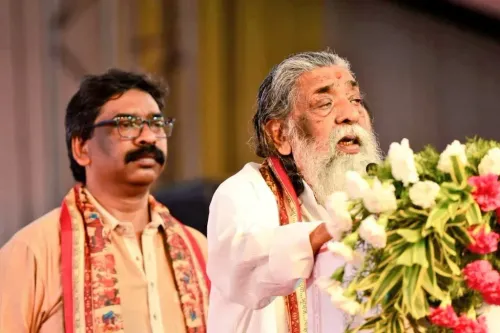
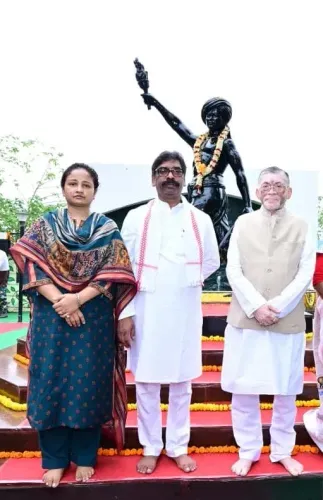
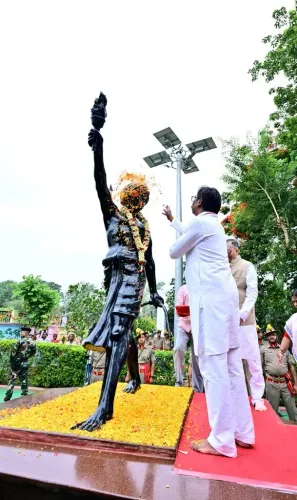
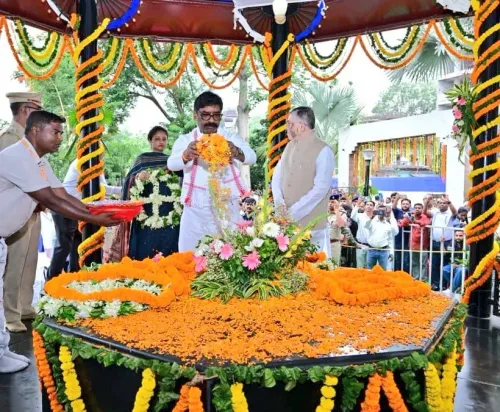
CM Hemant Soren Marks Jharkhand Foundation Day and Birsa Munda Jayanti
Synopsis
On Jharkhand's 26th Statehood Day and Birsa Munda Jayanti, CM Hemant Soren honoured tribal martyrs and the statehood movement's architects, pledging continued work on education, employment, and tribal rights as the truest tribute to their sacrifices.
Key Takeaways
Jharkhand's 26th Statehood Day falls on 15 November 2026 , coinciding with Birsa Munda Jayanti .
CM Hemant Soren named over a dozen tribal martyrs and freedom fighters, from Tilka Manjhi (18th century) to Sidhu-Kanhu (1855 Santhal Hul) to Birsa Munda's Ulgulan of 1899–1900.
He credited the modern statehood movement to Shibu Soren , Nirmal Mahto , and Vinod Bihari Mahto , calling their legacy 'an invaluable heritage.' The state government's governance agenda — education, healthcare, employment, women's and farmers' rights — was framed as the practical fulfilment of ancestral sacrifice.
Jharkhand was established on 15 November 2000 , carved out of Bihar as India's 28th state .
Soren called Jharkhand's youth its 'greatest strength' and committed to expanding skill development and entrepreneurship opportunities.
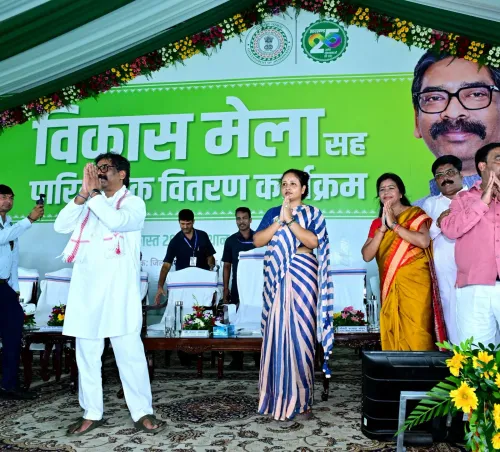
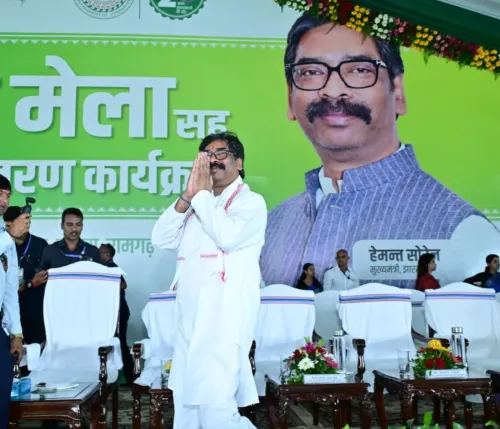
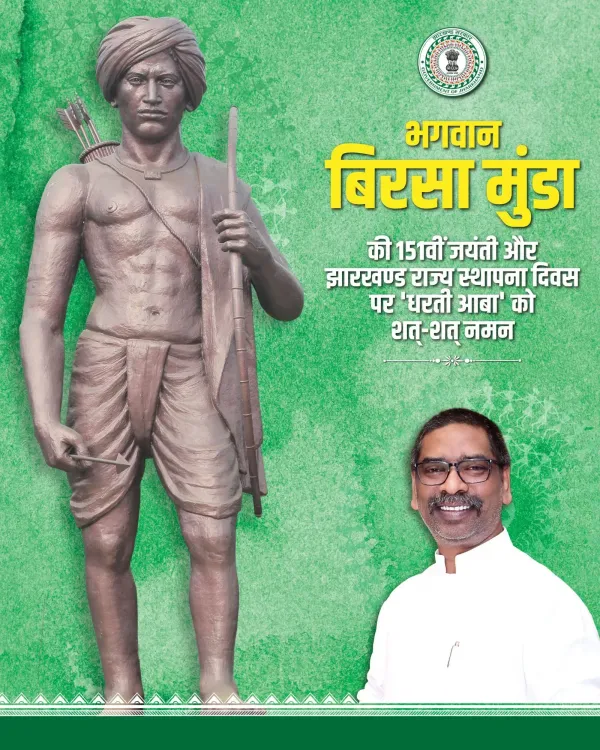
On the day that belongs to both a revolutionary and a state, Jharkhand Chief Minister Hemant Soren on Sunday, 15 November 2026 extended greetings to every resident of Jharkhand, marking the twin observance of Bhagwan Birsa Munda Jayanti and Jharkhand Statehood Day — the 26th founding anniversary of India's 28th state.
Posting in Hindi on X, Soren called the day one of 'gaurav, swabhimaan aur sankalp' — 'pride, self-respect, and resolve' — and offered the traditional tribal salutation Johar to the state's people. He invoked a long roll of tribal martyrs and freedom fighters: Bhagwan Birsa Munda, Baba Tilka Manjhi, Veer Sidhu-Kanhu, Chand-Bhairav, Phulo-Jhano, Poto Ho, Veer Budhu Bhagat, Telanga Khadia, Jatra Tana Bhagat, Nilambr-Pitambr, Sheikh Bhikhari, Pandey Ganpat Rai, and Tikait Umrao Singh — a deliberate, almost liturgical recitation of sacrifice.
Birsa Munda and the roots of Jharkhand's identity
Bhagwan Birsa Munda, born in 1875 in the Chota Nagpur plateau region, led the Ulgulan ('The Great Tumult') uprising of 1899–1900, demanding the restoration of tribal land rights and an end to forced labour under British colonial administration. He died in custody in 1900, aged just 25, but his image — that of a defiant young man with a bow — became the defining symbol of tribal assertion in the region. His birth anniversary on 15 November was chosen deliberately as Jharkhand's founding date when the state was carved out of Bihar on 15 November 2000, fusing historical memory with modern statehood in a single calendar moment.
Baba Tilka Manjhi, the 18th-century Santhal leader, and the brothers Sidhu-Kanhu, who led the Santhal Hul (rebellion) of 1855–56 against British land policies, are the other towering figures in this tradition. Soren's post named all of them in a single breath — a political act as much as a commemorative one, reminding Jharkhand's large tribal population of a shared genealogy of resistance.
The statehood movement and Shibu Soren's legacy
The Chief Minister also paid tribute to the architects of the modern statehood movement. He named Baba Dishom Guru Shibu Soren — founder of the Jharkhand Mukti Morcha (JMM) and the Chief Minister's father — alongside Shaheed Nirmal Mahto and Vinod Bihari Mahto, calling their contributions 'an invaluable heritage of Jharkhand's history.' The five-decade-long statehood agitation, which eventually produced the state in 2000, is itself a central plank of JMM's political identity.
Governance priorities framed as the fulfilment of a promise
Soren did not leave the tribute at history. He explicitly linked the memory of past sacrifices to present governance commitments: education, healthcare, employment, social security, rights of women, farmers, and labourers, and the strengthening of the local economy. 'Making the Jharkhand that our ancestors dreamed of a reality is our truest tribute to them,' he wrote. The state's youth, he said, are the 'greatest strength' of Jharkhand, and the government's goal is to convert their talent and energy into the state's prosperity through better education, skills, employment, and entrepreneurship.
The post closed with a collective call to action — 'Jharkhand ke veer amar rahein! Jai Jharkhand! Johar Jharkhand!' ('May Jharkhand's brave ones be immortal! Long live Jharkhand! Johar, Jharkhand!') — the traditional triple salute that every Jharkhand Foundation Day address ends with, but whose weight, Soren made clear, must be carried forward into policy, not just ceremony.
Point of View
He reinforces the party's claim to be the authentic custodian of Jharkhand's tribal identity — a claim that remains central to electoral mobilisation in a state where tribal communities make up roughly a quarter of the population. Framing governance priorities (employment, education, land rights) as the 'fulfilment of ancestors' dreams' also insulates welfare policy from routine political criticism. The dual observance of Birsa Munda Jayanti and Statehood Day on the same date was no accident of history; it was a founding design choice, and Soren's annual invocation of that design keeps the emotional contract between the JMM and Jharkhand's tribal electorate renewed. With a focus on youth employment and skill development, the speech also signals where the government expects its next political dividend to come from.
NationPress
15 Nov 2026
Frequently Asked Questions
Why is Jharkhand Statehood Day celebrated on 15 November?
15 November was chosen as Jharkhand's founding date to coincide with the birth anniversary of tribal icon Bhagwan Birsa Munda , linking the new state's identity to his legacy. Jharkhand was carved out of Bihar and became India's 28th state on 15 November 2000 .
Who was Birsa Munda and why is he called 'Dharthi Aaba'?
Birsa Munda (born 1875 ) was a tribal leader from the Chota Nagpur region who led the Ulgulan uprising of 1899–1900 against British colonial land policies. Dharthi Aaba means 'Father of the Earth' in Mundari, a title of deep reverence given to him by tribal communities for his role as a protector of their land and rights.
What is the Santhal Hul and who were Sidhu-Kanhu?
The Santhal Hul (rebellion) of 1855–56 was an uprising by the Santhal tribal community against British land revenue policies and exploitation by moneylenders. Sidhu and Kanhu Murmu were brothers who led the rebellion and are venerated as martyrs in Jharkhand's historical memory.
Who is Shibu Soren and what is his role in Jharkhand's history?
Shibu Soren , known as Baba Dishom Guru ('Teacher of the Nation'), founded the Jharkhand Mukti Morcha and was a leading force in the decades-long agitation for a separate Jharkhand state. He is also the father of current Chief Minister Hemant Soren .
What governance pledges did Hemant Soren make on Jharkhand Statehood Day 2026?
On 15 November 2026 , CM Hemant Soren pledged continued government focus on education, healthcare, employment, social security, rights of women, farmers and labourers, and strengthening the local economy. He specifically highlighted youth skill development and entrepreneurship as priorities for the state's future.