Srinagar shivers at minus 2°C, season's coldest night so far
Synopsis
Srinagar dipped to minus 2°C on Friday, its coldest night this season, with Pahalgam even colder at minus 2.8°C. The Met office expects further dips under clear skies before two western disturbances bring wet weather until 10 December, all ahead of Chillai Kalan, when costly heating leaves many still reliant on the charcoal-filled Kangri.
Key Takeaways
Srinagar recorded minus 2 degrees Celsius on 27 November , the coldest night of the season so far.
Pahalgam logged minus 2.8°C and Gulmarg 1°C ; Jammu city recorded 10.9°C .
The Met Department expects generally dry weather till 3 December , followed by two western disturbances.
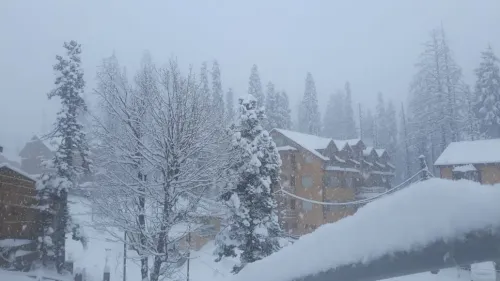
Weather is forecast to remain inclement and wet until 10 December .
Chillai Kalan , the Valley's 40-day harshest winter spell, runs from 21 December to 30 January .
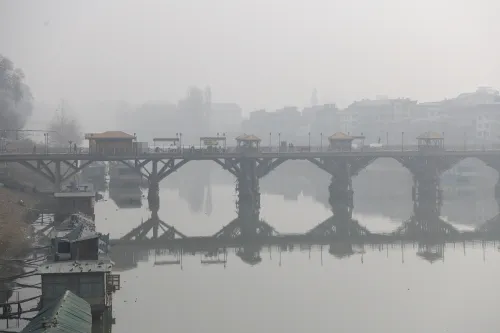
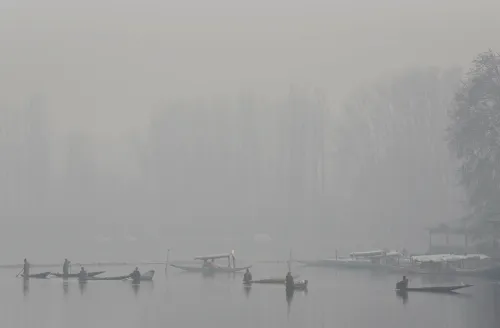
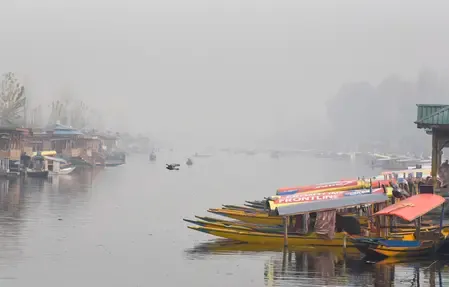
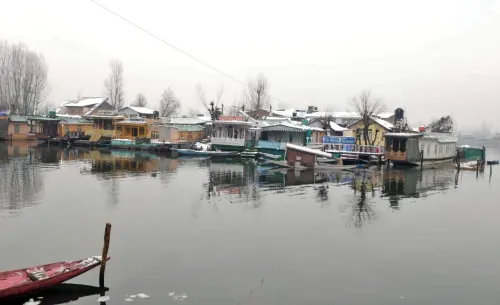
Srinagar recorded a minimum temperature of minus 2 degrees Celsius on Friday, 27 November, the coldest night of the season so far in Jammu and Kashmir's summer capital. The Meteorological Department said clear night skies could push temperatures lower still in the coming days, as the Kashmir Valley moves closer to its harshest winter stretch.
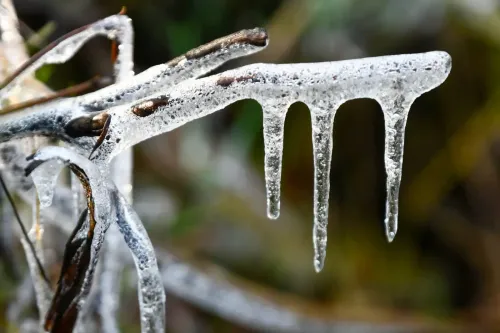
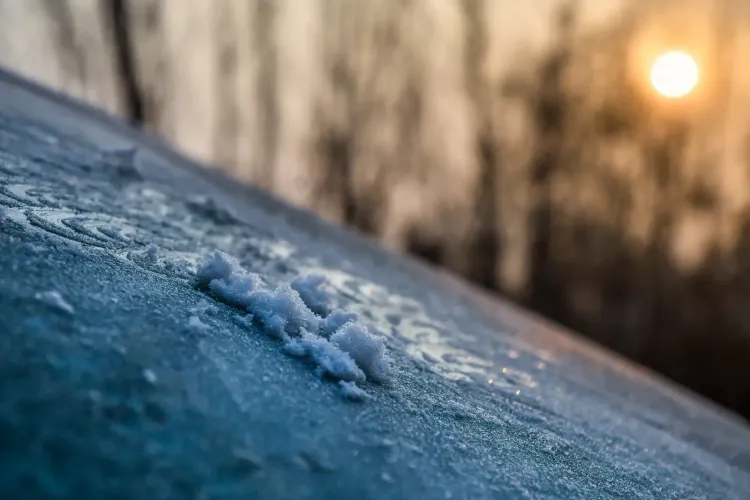
Frost formed overnight on vehicle windshields and other exposed surfaces in Srinagar and at several other places across the Valley.
What the Met Department Said
A Met Department official confirmed the reading and warned of further cooling. “Minimum temperature dropped to minus 2 degrees Celsius in Srinagar today, which is the lowest so far this season. Due to a clear night sky, minimum temperatures are likely to drop further in the coming days,” the official said.
The official also outlined the outlook for the next two weeks. “Weather is expected to remain generally dry till December 3. A western disturbance (WD) is expected after December 3, which will be followed by another WD. Weather would remain inclement and wet till December 10,” the official added.
Temperatures Across Jammu and Kashmir
In the Valley, the ski resort of Gulmarg recorded a minimum of 1 degree Celsius, while Pahalgam was colder than Srinagar at minus 2.8 degrees Celsius.
The Jammu division remained considerably warmer. Jammu city logged a minimum of 10.9 degrees Celsius, Katra town 10, Batote 6.6, Banihal 4.8, and Bhaderwah 2.8 degrees Celsius.
Why Western Disturbances Matter
A western disturbance is an extra-tropical storm originating in the Mediterranean Sea that brings rain and snow to India, Pakistan, Nepal and Bangladesh. Notably, the prospects of the Rabi crop in these countries depend largely on WD activity, making the forecast systems after 3 December significant beyond the Valley's weather alone.
The predicted back-to-back disturbances are expected to keep conditions inclement and wet until around 10 December, according to the Met Department.
Chillai Kalan and How Kashmir Copes
The current cold snap comes ahead of Chillai Kalan, the 40-day period of harsh winter that begins each year on 21 December and ends on 30 January. It is the coldest phase in the Kashmir Valley, when night temperatures can plunge to minus 7 degrees Celsius and daytime temperatures hardly rise above 7 degrees.
To brave the season, Kashmiris rely on the Pheran, a loose tweed overgarment that traps body heat. In rural areas, the Kangri, an earthen pot woven in willow wicker and filled with live charcoal, remains the most dependable source of warmth.
This reliance persists because electricity supply remains erratic, and since the installation of smart meters, the tariff for running heating appliances has reportedly gone beyond the means of the average Kashmiri household.
What Comes Next
With dry weather forecast until early December and clear skies favouring further dips, residents can expect colder nights before the first western disturbance arrives. All eyes will now be on whether the December systems bring the snowfall the region's farmers and winter tourism depend on.
Point of View
But if they push households back to open-fire heating, the policy needs a winter tariff relief mechanism. With Chillai Kalan weeks away, the administration has a narrow window to act.
NationPress
27 Nov 2026
Frequently Asked Questions
What was Srinagar's minimum temperature on 27 November?
Srinagar recorded a minimum of minus 2 degrees Celsius on Friday, 27 November, the coldest night of the season so far. The Met Department said temperatures could drop further due to clear night skies.
What is the weather forecast for Kashmir in December?
The Met Department expects generally dry weather till 3 December, after which a western disturbance followed by another is likely. Conditions are forecast to remain inclement and wet until 10 December.
What is a western disturbance?
A western disturbance is an extra-tropical storm originating in the Mediterranean Sea that brings rain and snow to India, Pakistan, Nepal and Bangladesh. The Rabi crop in these countries depends largely on WD activity.
When does Chillai Kalan start in Kashmir?
Chillai Kalan begins on 21 December and ends on 30 January each year. It is the coldest period in the Kashmir Valley, when night temperatures can drop to minus 7 degrees Celsius.
What were the temperatures in Gulmarg and Pahalgam?
Gulmarg recorded a minimum of 1 degree Celsius, while Pahalgam was colder at minus 2.8 degrees Celsius on Friday.