Stalin visits Murasoli office, greets it on 85th birthday
Synopsis
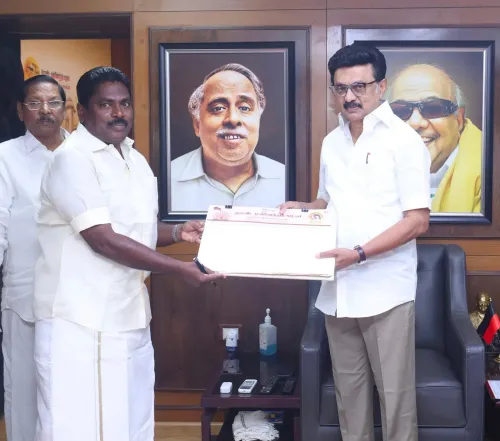
DMK president M. K. Stalin visited the Murasoli office on 10 August 2026 to mark the Tamil party publication's 85th anniversary, honouring a lineage built by Karunanidhi, Murasoli Maran, and Murasoli Selvam — and pledging it a journey beyond a hundred years.
Key Takeaways
Stalin visited the Murasoli office on 10 August 2026 to mark the publication's 85th anniversary in person.
Stalin described Murasoli as 'the heartbeat of party comrades' and 'the diary of Tamil Nadu's political history,' calling it his 'elder brother.' He credited M.
Karunanidhi , Murasoli Maran , and Murasoli Selvam with building and sustaining the publication across generations.
Stalin stated he has served Murasoli at every level, saying 'there is no work I have not done for it.' He distinguished Murasoli from other party organs for its substantive articles, translations, and special editions, calling it 'the intellectual weapon of a house of knowledge.' Stalin's closing wish — that Murasoli's journey continue beyond a hundred years — signals the party's intent to mark an upcoming centenary milestone.
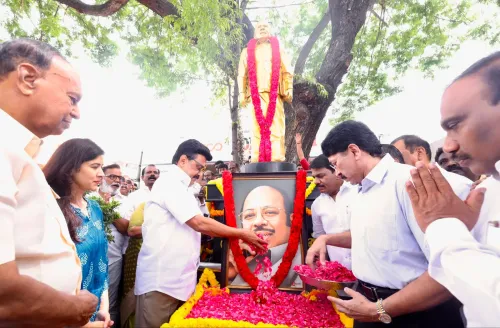
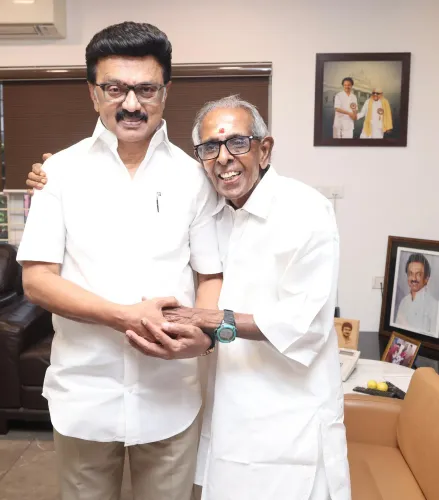
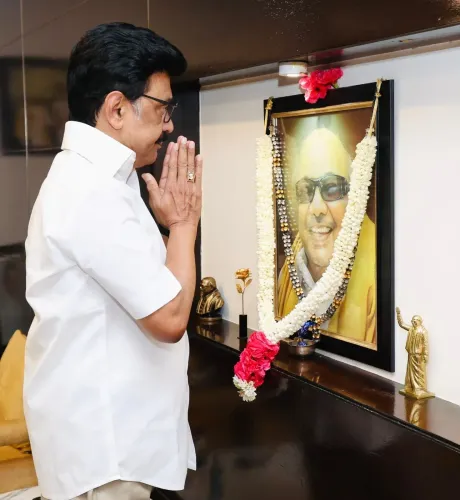
Eight decades and five years of ink, ideology, and institutional memory — and DMK president M. K. Stalin marked the occasion in person. On Monday, 10 August 2026, Stalin visited the office of Murasoli, the DMK's Tamil party publication, to personally convey birthday greetings on its 85th anniversary.
The elder sibling Stalin never stopped serving
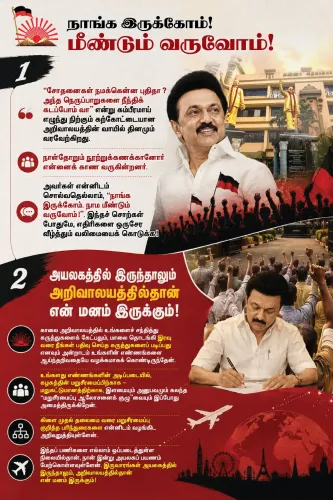
Stalin's tribute was anything but ceremonial. Writing in Tamil, he called Murasoli 'கழக உடன்பிறப்புகளின் இதயத்துடிப்பு' — 'the heartbeat of party comrades' — and described it as 'the diary of Tamil Nadu's political history.' He went further, acknowledging his own deep personal bond with the publication: 'There is no work I have not done for Murasoli,' he wrote, noting he had served it at every level.
He addressed the publication directly as his 'elder brother' — 'என் மூத்த சகோதரன்' — a phrase that signals not sentiment alone, but the Dravidian political tradition of treating party institutions as living kin, bound by blood and duty.
Three generations who built Murasoli's voice
Stalin's post traced a lineage of stewardship. M. Karunanidhi — the late DMK patriarch, five-time Chief Minister, and celebrated Tamil scholar — is credited with founding and nurturing Murasoli, described here as 'the eldest child he raised by shedding his own blood.' After him, Murasoli Maran, the senior Union minister and party stalwart, and Murasoli Selvam continued to grow the publication.
Stalin's tribute singled out what makes Murasoli distinct: while many party publications function as little more than notice boards, Murasoli has sustained a tradition of substantive articles, translations, the annual Pongal Malar (festival special edition), and the Pasarai Pakkam (cadre column) — positioning it, in Stalin's words, as 'the intellectual weapon of a house of knowledge.'
Approaching a century — and what comes next
The #முரசொலி85 #Murasoli milestone lands as the publication moves within striking distance of its centenary. Regional parties across Tamil Nadu have long maintained dedicated publications to propagate Dravidian ideology and hold cadres together outside the mainstream media ecosystem — Murasoli remains the most prominent of these. Stalin closed with a forward-looking benediction: 'May Murasoli's journey continue beyond a hundred years. May it triumph in its work.'
For a party that has always treated its press organ as institutional backbone, that is less a wish and more a directive.
Point of View
He reinforces a succession narrative that keeps the Karunanidhi legacy alive and legible. With Murasoli approaching its centenary, this tribute also sets the stage for a larger commemorative moment the party will want to own publicly. In a media environment increasingly hostile to party organs, Stalin's framing of Murasoli as an 'intellectual weapon' rather than a propaganda sheet is a pointed claim about the DMK's self-image.
NationPress
24 Sept 2026
Frequently Asked Questions
What is Murasoli and why is it significant?
Murasoli is the official Tamil-language publication of the DMK party, founded and nurtured by former Chief Minister M. Karunanidhi. It serves as the party's primary ideological and organisational voice, known for substantive articles, translations, and special editions beyond routine party announcements.
Why did MK Stalin visit the Murasoli office on 10 August 2026?
Stalin visited the Murasoli office to personally convey birthday greetings on the publication's 85th anniversary, marking the occasion with a tribute on X that recalled his own service to the journal at every level.
Who founded Murasoli?
Murasoli was founded and closely associated with DMK patriarch M. Karunanidhi, who is credited with raising it as a party institution. Murasoli Maran and Murasoli Selvam later continued its growth.
What did Stalin say about Murasoli in his post?
Stalin called Murasoli 'the heartbeat of party comrades' and 'the diary of Tamil Nadu's political history,' described it as his 'elder brother,' and said there was no work he had not done for it. He wished it a journey beyond a hundred years.
How is Murasoli different from other party publications in Tamil Nadu?
According to Stalin's tribute, while many party publications function only as announcement boards, Murasoli has maintained a tradition of in-depth articles, translations, a Pongal special edition, and a cadre column — making it an intellectual organ rather than a mere mouthpiece.