Stalin salutes press freedom on National Press Day
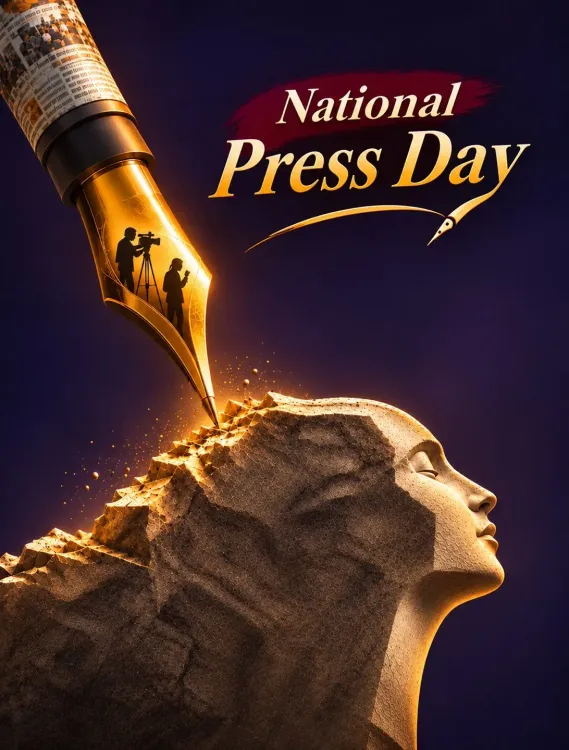
Synopsis
DMK president M. K. Stalin marked National Press Day on 16 November 2026 with a Tamil-language tribute calling journalism democracy's most vital pillar, urging reporters to uphold honesty, fearlessness, and truth-seeking above personal bias.
Key Takeaways
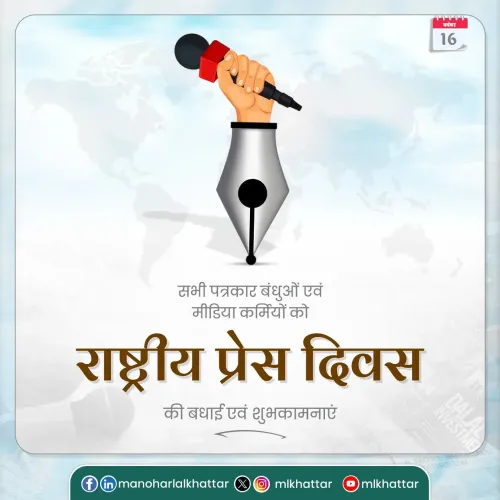
Stalin posted a National Press Day message on 16 November 2026 .
He argued that journalism's role supersedes that of the legislature, executive, and judiciary in safeguarding democracy.
He warned against journalists forming opinions from personal biases or 'common sense' assumptions.
He praised journalists who work with honesty, fearlessness, a drive to uncover truth, hard work, and patience.
National Press Day marks the founding of the Press Council of India on 16 November 1966 under the Press Council Act, 1965.
On National Press Day, 16 November 2026, DMK president M. K. Stalin posted a pointed tribute to India's journalists — not just a ceremonial greeting, but a sharp articulation of what journalism is, and what it must never become.
Writing in Tamil, Stalin drew a clear line: a journalist's duty is not to form opinions from 'common sense' assumptions or personal biases, but to sculpt and refine the direction of public thought — especially when that direction is in danger of going astray. 'சமூகத்தின் சிந்தனைப் போக்கே சீரழியும் நிலையிலும் அதனைச் செதுக்கி, பக்குவப்படுத்தும் பெரும் பணி' — 'the great task of chiselling and maturing society's very thought process, even when it is on the verge of decay' — was how he described the press's role.
The fourth pillar and why Stalin ranks it first
Stalin invoked the familiar metaphor of the media as democracy's fourth pillar — but went a step further, arguing that the press is more important than the other three (legislature, executive, and judiciary) precisely because of this civilising, corrective function. The claim is provocative but deliberately so: it frames independent journalism not as a watchdog but as the conscience of democratic life itself.
He closed by wishing journalists who carry out their duties with 'honesty, fearlessness, a hunger to uncover truth, hard work, and patience' — five qualities that read less like praise and more like a quietly stated standard.
National Press Day and the Press Council that gave it meaning
National Press Day is observed every year on 16 November, marking the date in 1966 when the Press Council of India was constituted under the Press Council Act, 1965. The council was designed as a statutory, autonomous body with a dual mandate: preserve press freedom, and raise journalistic standards. The two goals exist in tension — and that tension is precisely what gives the day its edge.
Across parties, Indian leaders issue messages on this date invoking the fourth-pillar metaphor. What sets today's message apart is its diagnostic undertone: the acknowledgment that society's 'thought process' can itself 'decay', and that it falls to journalists — not politicians, not courts — to arrest that slide.
Point of View
The message gestures at a broader anxiety about partisan media — without naming anyone. Framing the press as more critical than the other three constitutional pillars is a rhetorical escalation beyond routine greetings, one that implicitly raises the stakes for journalistic accountability. For a party leading Tamil Nadu's government, the statement also carries an implicit expectation that the same standard applies to coverage of the state.
NationPress
16 Nov 2026
Frequently Asked Questions
What is National Press Day in India?
National Press Day is observed every year on 16 November to mark the establishment of the Press Council of India on that date in 1966. It celebrates press freedom and highlights the responsibilities of the journalism profession.
What did MK Stalin say on National Press Day 2026?
DMK president M. K. Stalin posted a Tamil-language tribute calling the media more important than the other three pillars of democracy — the legislature, executive, and judiciary — and urged journalists to report with honesty, fearlessness, and patience rather than personal bias.
When was the Press Council of India established?
The Press Council of India was constituted on 16 November 1966 under the Press Council Act, 1965, as a statutory autonomous body to protect press freedom and improve journalistic standards.
Why is the media called the fourth pillar of democracy?
The media is called the fourth pillar of democracy because it functions as a watchdog over the other three pillars — the legislature, executive, and judiciary — holding them accountable through independent, public-interest reporting.
What is DMK's stance on press freedom?
The Dravida Munnetra Kazhagam has historically positioned itself as a champion of free expression, and party president M. K. Stalin's National Press Day messages consistently emphasise editorial independence, truth-seeking, and impartiality as core journalistic values.