Stalin Invokes Justice Party Centenary, Warns on State Rights
Synopsis
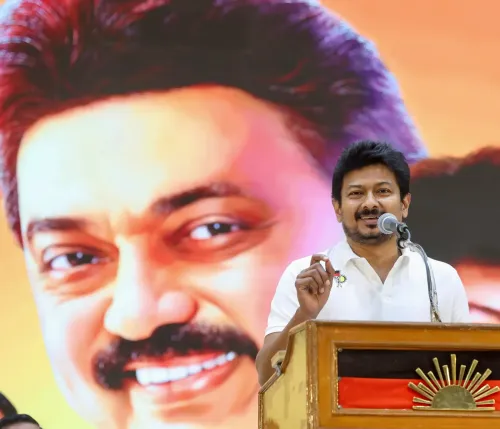
DMK president M. K. Stalin invoked the Justice Party's 1916 founding on 20 November 2026, tracing a century-long Dravidian lineage through Periyar, Annadurai and Karunanidhi, and warned that state rights and social justice must be defended against centralising rollback.
Key Takeaways
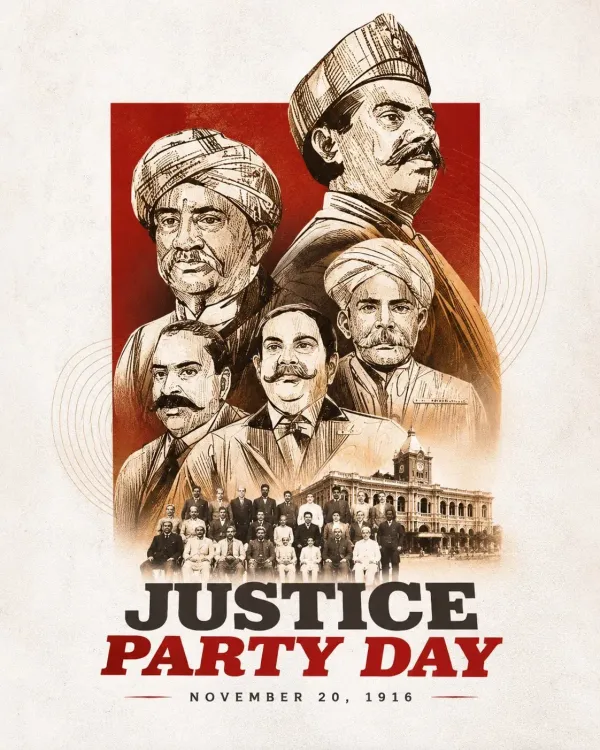
Stalin posted on 20 November 2026 marking the founding legacy of the Justice Party (1916) .
He traced the Dravidian movement's arc: Periyar's Self-Respect Movement (1925) , Annadurai's DMK (1949) , and Karunanidhi's 69% reservation framework .
Stalin warned that an unnamed government coming to power 'in the name of change' is attempting to roll back state rights and social justice.
He declared the Dravidian movement's relevance is 'greater than ever before' in the current political climate.
The post ends with three pledges: protect existing rights, win denied rights, and strengthen Dravidian thought across generations.
Tamil Nadu has been governed by Dravidian parties uninterruptedly since 1967 , with social equity policies as a defining pillar.
A century of struggle, one unyielding warning: DMK president M. K. Stalin marked the founding legacy of the Justice Party on Friday, 20 November 2026, with a sharply worded message that the Dravidian movement's relevance has never been greater — and that the rights won over a hundred years must not be surrendered to any government's missteps.
Posting in Tamil under the hashtag #நீதிக்கட்சி (Needhi Katchi — Justice Party), Stalin drew a direct line from the Justice Party's founding in 1916 through Periyar E. V. Ramasamy's Self-Respect Movement, the state-autonomy crusade of DMK founder C. N. Annadurai, and the social-justice architecture built by former Chief Minister M. Karunanidhi. 'The Dravidian movement,' he wrote, 'rewrote the history of Tamil Nadu and the future of every family.' That is not rhetoric — it is a lineage claim being planted like a flag.
From 1916 to Today: A Movement's Unbroken Thread
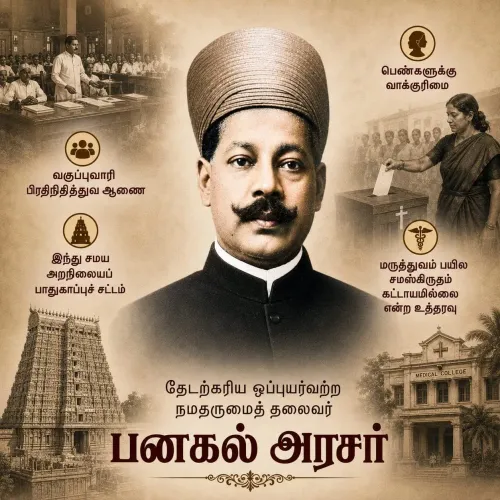
The Justice Party was born in Madras Presidency in 1916, a direct challenge to Brahmin dominance in public services and education. Nine years later, Periyar launched the Self-Respect Movement in 1925, pressing deeper into the architecture of caste itself. By 1949, Annadurai had channelled that energy into the DMK, adding linguistic pride and federalism to the mix. Karunanidhi then institutionalised the gains — most concretely through Tamil Nadu's 69% reservation policy, one of the highest such frameworks in India, sustained through decades of legal and political battles.
Stalin's post is not nostalgia. It is a genealogy invoked under pressure. Each name — Periyar, Annadurai, Karunanidhi — is a pillar being cited precisely because, Stalin argues, those pillars are under stress.
The 'Change' Government Warning
At the core of Stalin's message is a pointed, if unspecified, adversary: those who 'came to power in the name of change' and are now 'attempting to push back state rights and social justice.' He stops short of naming the government, but the frame is unmistakable — a centralising force threatening the federal and reservations compact that Dravidian politics has defended for generations.
'The rights won through a century of struggle must not be sacrificed for one government's mistakes,' Stalin wrote, before closing with three declarative pledges: protect the rights already secured; win the rights still denied; and strengthen Dravidian thought across generations. Three sentences. Escalating register. A political programme compressed into a paragraph.
Why the Dravidian Argument Still Lands
Tamil Nadu has been governed by Dravidian parties without interruption since 1967 — a streak rooted in exactly the social equity policies Stalin is now defending. The state's 69% reservation framework, protected by the Ninth Schedule of the Constitution, has repeatedly faced legal challenges and federal friction. Centre-state negotiations over education funding, fiscal transfers, and the reservation ceiling have kept this fault-line active across administrations.
When Stalin frames contemporary federal disputes as a continuation of the movement's century-old fight, he is doing something specific: collapsing the distance between 1916 and 2026 so that any threat to state autonomy reads as an attack on every family that has benefited from Dravidian governance. That is a mobilising frame, not merely a historical footnote.
One hundred and ten years after the Justice Party's founding, the argument it began — that power must be distributed, not concentrated; that merit must be redefined to include the excluded — is still the loudest line in Tamil Nadu's political vocabulary. Stalin is making sure it stays that way.
Point of View
Stalin makes any challenge to Tamil Nadu's reservation framework or state autonomy feel like a civilisational regression, not a policy dispute. The move is strategically timed: invoking Periyar, Annadurai and Karunanidhi simultaneously neutralises intra-movement competition while projecting DMK as the sole custodian of that inheritance. Watch this framing intensify as Centre-state negotiations on education and fiscal transfers heat up.
NationPress
20 Nov 2026
Frequently Asked Questions
What is the Justice Party and why is it significant in Tamil Nadu?
The Justice Party was founded in 1916 in the Madras Presidency to represent non-Brahmin communities against caste dominance in public services and education. It is considered the ideological ancestor of the Dravidian movement, which has governed Tamil Nadu since 1967.
What did M. K. Stalin say about state rights on 20 November 2026?
Stalin warned that those who 'came to power in the name of change' are attempting to push back state rights and social justice, and urged that the rights won through a century of Dravidian struggle must not be sacrificed for any government's mistakes.
What is Tamil Nadu's 69% reservation policy?
Tamil Nadu maintains a 69% reservation in education and public employment for backward, most-backward, Scheduled Caste, and Scheduled Tribe communities. It was institutionalised during M. Karunanidhi's tenure and is protected under the Ninth Schedule of the Indian Constitution.
Who were Periyar, Annadurai, and Karunanidhi in the Dravidian movement?
Periyar E. V. Ramasamy founded the Self-Respect Movement in 1925. C. N. Annadurai established the DMK in 1949, championing state autonomy. M. Karunanidhi was the long-time DMK chief minister who institutionalised social justice policies including the 69% reservation.
How long have Dravidian parties governed Tamil Nadu?
Dravidian parties — primarily the DMK and AIADMK — have governed Tamil Nadu without interruption since 1967 , making it one of the longest-running regional political dominances in India.