Stalin slams arrest of ex-minister Anita Radhakrishnan
Synopsis
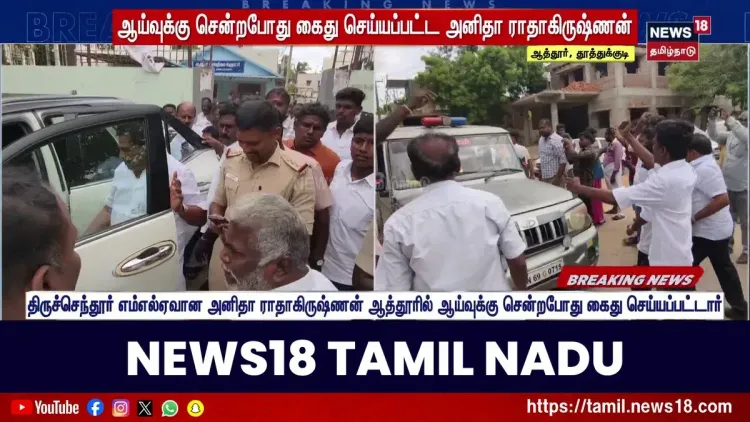
DMK president M. K. Stalin on 3 July 2026 attacked the ruling Tamil Nadu government over the arrest of former minister Anita Radhakrishnan on defamation charges, contrasting the swift police action with the government's inaction on a gang sexual assault complaint against one of its own MLAs.
Key Takeaways
Former minister Anita Radhakrishnan was arrested by Tamil Nadu police on charges of making defamatory remarks against the Chief Minister.
Stalin called the arrest politically motivated and accused the government of running a 'police kingdom' against the opposition.
Stalin highlighted that a woman's gang sexual assault complaint against a TVK MLA from the ruling alliance had seen no police action, contrasting it with the swift defamation arrest.
Stalin accused the ruling government of destabilising the opposition through horse-trading of MLAs while failing to deliver governance to voters.
Stalin warned the Chief Minister: 'Arrogance leads to ruin' , signalling sustained political pressure from the DMK.
The dual issues — the defamation arrest and the unaddressed assault complaint — are set to dominate Tamil Nadu 's political discourse in the coming weeks.
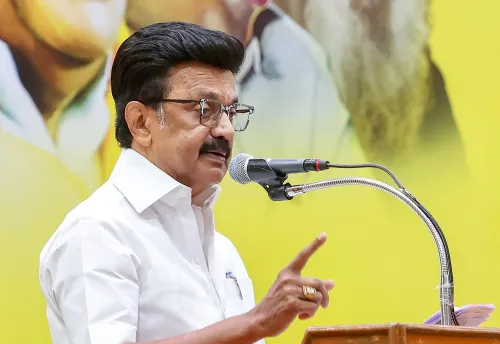
DMK president M. K. Stalin on Friday, 3 July 2026, sharply condemned the arrest of former minister Anita Radhakrishnan by the ruling state government, calling it an act of political vendetta and accusing the administration of running a 'police raj' against opposition voices in Tamil Nadu.
Context
Anita Radhakrishnan, a former cabinet minister active in Tamil Nadu politics, was arrested by police on charges of allegedly making defamatory remarks against the sitting Chief Minister. Stalin questioned the urgency of the arrest, noting that she had been engaged in constituency work and public service at the time of her detention.
Stalin wrote on X: 'சினிமா ஆக்ஷன் பாணியில் போலீஸ் ராஜ்ஜியம் நடத்திக் கொண்டிருக்கிறார் முதலமைச்சர்!' ['The Chief Minister is running a police kingdom in the style of a cinema action sequence!'], underlining what he described as a disproportionate and theatrical use of police power.
Policy Backdrop
Tamil Nadu has a documented history of ruling parties deploying defamation cases and police action against opposition legislators. This pattern has recurred across both DMK and AIADMK-led governments since the 1990s, with each side accusing the other of weaponising state machinery when in power.
Stalin drew a pointed contrast: a woman who reportedly filed a complaint of gang sexual assault against a legislator from the ruling alliance had seen no police action, while the government moved swiftly to arrest an opposition politician for alleged speech offences. He asked why the same urgency was absent in the sexual violence case.
Stakeholders and Impact
The arrest has drawn attention from opposition MLAs across Tamil Nadu and from women's safety advocates who have flagged the apparent disparity in police response times between political speech cases and crimes against women. Stalin specifically referenced rising incidents of murder, robbery, and sexual offences across the state, arguing that police resources were being misdirected.
Stalin also raised the issue of political horse-trading, alleging that the ruling government had been inducting opposition MLAs to shore up its majority while simultaneously arresting critics — a combination he described as self-serving governance rather than public service. He warned: 'ஆணவம் அழிவிற்கு வழி!' ['Arrogance leads to ruin!']
On the defamation arrest itself, Stalin posed a rhetorical challenge: if remarks deemed defamatory warranted immediate arrest, the same standard applied to sitting ministers' own public statements would require the detention of many more individuals.
What's Next
Legal observers and opposition groups will watch whether Anita Radhakrishnan is produced before a court promptly and whether bail is granted. Equally significant is the status of the pending sexual assault complaint against the TVK MLA — any further delay in that case will intensify opposition pressure on the ruling administration.
Stalin's intervention signals that the DMK intends to keep both issues — the arrest and the unaddressed assault complaint — at the centre of Tamil Nadu's political discourse in the weeks ahead, raising the stakes for the government's credibility on law-and-order governance.
Point of View
He shifts the moral burden onto the ruling government and makes a law-and-order argument that resonates beyond party lines. The 'police raj' framing is a deliberate echo of language Dravidian parties have historically deployed against each other, reminding voters that the current administration once suffered under similar accusations. The horse-trading allegation adds a legitimacy dimension — suggesting the government is more focused on political survival than public welfare. If the TVK MLA case remains stalled, the contrast Stalin has drawn will only sharpen as an electoral liability for the ruling party.
NationPress
3 Jul 2026
Frequently Asked Questions
Why was Anita Radhakrishnan arrested in Tamil Nadu?
Anita Radhakrishnan, a former Tamil Nadu minister, was arrested on charges of making defamatory remarks against the sitting Chief Minister. DMK president M. K. Stalin condemned the arrest as politically motivated.
What did M. K. Stalin say about the arrest of Anita Radhakrishnan?
Stalin called the arrest an act of 'police raj', questioned the urgency of detaining a politician engaged in constituency work, and drew a contrast with the government's inaction on a gang sexual assault complaint against one of its own MLAs.
What is the TVK MLA sexual assault case Stalin mentioned?
Stalin referred to a complaint filed by a woman alleging gang sexual assault against a TVK legislator from the ruling alliance. He pointed out that police had taken no action on this complaint while moving swiftly to arrest an opposition politician for a speech offence.
What does 'horse-trading' mean in Tamil Nadu politics?
Horse-trading refers to the alleged practice of inducing opposition legislators to switch sides or support the ruling government, typically to maintain a legislative majority. Stalin alleged the current Tamil Nadu government was doing this while simultaneously arresting critics.
Is defamation of a Chief Minister a criminal offence in Tamil Nadu?
Criminal defamation under the Indian Penal Code can be invoked if statements are deemed to harm reputation. However, opposition leaders and legal experts frequently argue that such provisions are selectively applied against political critics in Tamil Nadu.