Stalin slams TN CM over Karnataka visit, demands all-party meet on Cauvery
Synopsis
DMK president M. K. Stalin publicly rebuked Tamil Nadu's Chief Minister on August 1, 2026, for pursuing bilateral talks with Karnataka over the Cauvery dispute despite widespread warnings. After Karnataka rebuffed the visit and called its own all-party meeting, Stalin demanded Tamil Nadu convene a similar cross-party front and return to legal channels.
Key Takeaways
Stalin on August 1, 2026 condemned Tamil Nadu's Chief Minister for travelling to Karnataka over the Mekedatu Dam and Cauvery water dispute against collective advice.
Karnataka refused the visit after the CWMA ordered it to release water to Tamil Nadu, telling the Tamil Nadu side not to come.
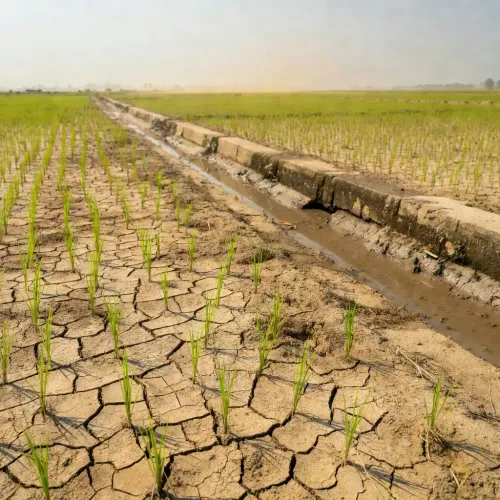
Stalin argues Tamil Nadu is seen by Karnataka as a 'drainage outlet for surplus water,' making bilateral talks structurally futile.
The Supreme Court's 2018 order and the creation of the CWMA underline that legal mechanisms — not negotiations — are the established route for Tamil Nadu.
Karnataka's Chief Minister called an all-party meeting for August 2 , projecting unity, while Stalin challenged Tamil Nadu's CM to do the same.
Stalin demanded the Chief Minister approach the Cauvery issue 'with consultations' and publicly asked whether an all-party meet is even possible.
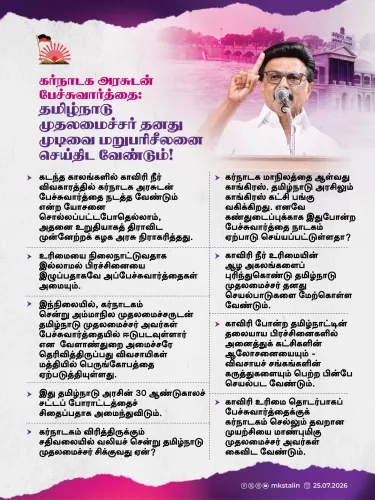
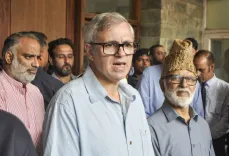
Karnataka shut the door — literally — on Tamil Nadu's Chief Minister, and DMK president M. K. Stalin wants to know why the state walked into that room in the first place. On Saturday, August 1, 2026, Stalin took to X to deliver a sharp rebuke of the Tamil Nadu Chief Minister's decision to engage Karnataka in bilateral talks over the Mekedatu Dam and the broader Cauvery water dispute, calling the visit a costly miscalculation that ignored a chorus of warnings from across the political spectrum.
A door closed before the visit began
Stalin's post lays out the sequence with surgical precision. Political party leaders, farmer union heads, and voices from across Tamil Nadu had warned that negotiating with Karnataka over the Mekedatu project would yield nothing. The advice was explicit: do not travel to Karnataka. Yet the Chief Minister, Stalin writes, dispatched an envoy anyway — apparently believing, as Stalin puts it with a pointed edge, that a visit could 'bring the Cauvery back in hand.'
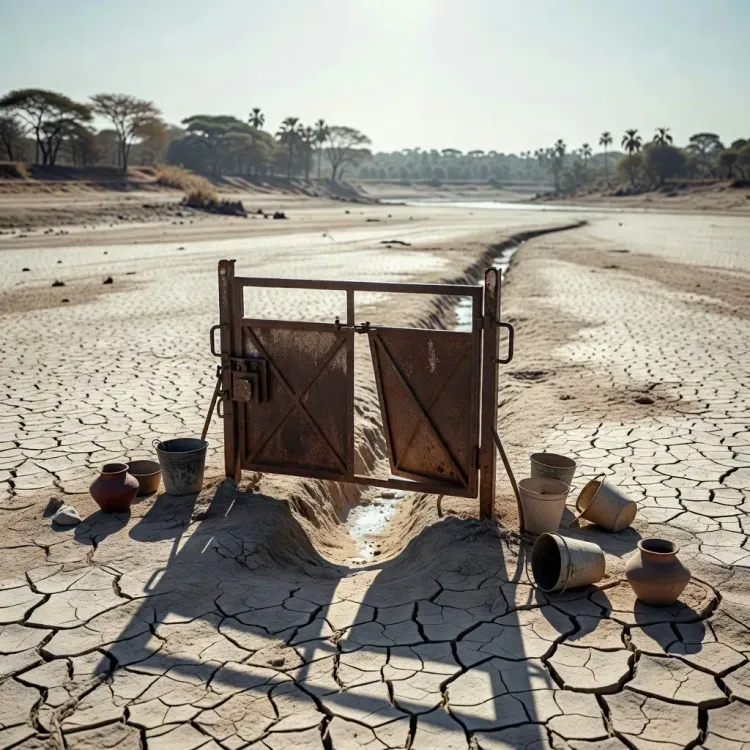
The outcome was swift and humiliating. When the Cauvery Water Management Authority (CWMA) ordered Karnataka to release water to Tamil Nadu, Karnataka's response was blunt: 'Don't come right now.' The gates, figuratively and perhaps literally, were shut.
The lesson Cauvery's history keeps teaching
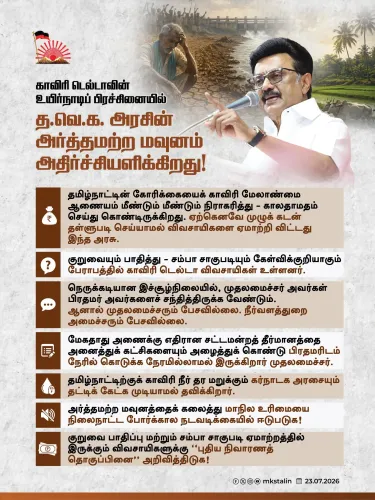
This moment did not arrive without precedent. The Cauvery Water Disputes Tribunal, which issued its final award in 2007 after decades of adjudication, and the Supreme Court's 2018 modification of that award — which also created the CWMA to enforce release schedules — exist precisely because bilateral goodwill between Tamil Nadu and Karnataka has historically evaporated under pressure. Every time upstream Karnataka has declared it cannot release water, Tamil Nadu has been forced back to legal and central-authority mechanisms.
Stalin invokes this lineage directly. Tamil Nadu, he argues, is viewed by Karnataka not as a co-riparian but as a 'drainage outlet for surplus water' — உபரிநீரை வெளியேற்றும் வடிகால் பகுதி (a drain zone for excess flows). Against that posture, he insists, only the legal route holds any leverage.
Karnataka's all-party unity — and Stalin's challenge to Chennai
The sting in Stalin's post sharpens at the end. Even as Karnataka told Tamil Nadu's Chief Minister to stay away, the Karnataka Chief Minister called an all-party meeting for August 2 — a display of internal unity that Stalin says Karnataka's own actions have now broadcast to the world. The implicit contrast is damning: Karnataka is consolidating across party lines; Tamil Nadu, in Stalin's telling, is isolated and improvising.
His closing challenge is direct, addressed to the Chief Minister's Office: 'அனைத்துக் கட்சிக் கூட்டத்தைக் கூட்டுவது எப்போது? முடியுமா முடியாதா?' — 'When will you call an all-party meeting? Can you, or can't you?' It is less a question than a gauntlet.
With Karnataka's all-party meeting set for August 2 and Tamil Nadu yet to signal a coordinated legal or political response, the Cauvery dispute has entered one of its periodic flashpoints — and the pressure on Chennai to move from diplomacy to litigation is now loudly, publicly on the record.
Point of View
Legal mechanisms are invoked, and the cycle restarts. By invoking that history, Stalin positions the DMK as the custodian of Tamil Nadu's water interests even from the opposition benches. The deeper pressure is structural — Karnataka's demonstrated cross-party unity on August 2 makes Tamil Nadu's absence of a similar front politically untenable, and Stalin knows it.
NationPress
1 Aug 2026
Frequently Asked Questions
Why is Stalin criticising Tamil Nadu's Chief Minister over the Cauvery issue?
Stalin says the Chief Minister ignored warnings from all political parties and farmer unions and visited Karnataka for talks, only to be turned away after the CWMA ordered Karnataka to release water to Tamil Nadu. He argues bilateral talks have historically failed and the legal route is the only effective strategy.
What is the Mekedatu Dam and why does Tamil Nadu oppose it?
The Mekedatu Dam is a proposed Karnataka project on the Cauvery river. Tamil Nadu opposes it on the ground that it would reduce downstream water flows into the state, worsening an already contested water-sharing arrangement.
What did the CWMA order Karnataka to do?
According to Stalin's post, the Cauvery Water Management Authority issued an order directing Karnataka to release water to Tamil Nadu. Karnataka responded by telling the Tamil Nadu side not to visit, effectively rejecting engagement at that point.
What is Karnataka's all-party meeting on August 2 about?
Karnataka's Chief Minister called an all-party meeting on August 2, 2026, signalling a unified state position on the Cauvery dispute. Stalin highlighted this as evidence of Karnataka's political cohesion, contrasting it with what he sees as Tamil Nadu's isolated approach.
What is Stalin demanding from Tamil Nadu's Chief Minister?
Stalin is demanding that the Chief Minister call an all-party meeting in Tamil Nadu to build a unified front on the Cauvery issue, and that the government pursue legal channels through the CWMA and courts rather than bilateral diplomacy with Karnataka.