Mekedatu dam row: TN Minister Aadhav Arjuna hits back at Stalin over Cauvery rights
Synopsis
Tamil Nadu's political battle over Cauvery water rights has sharpened, with TVK Minister Aadhav Arjuna directly targeting DMK's M.K. Stalin over what he calls misleading allegations — while laying out a paper trail of letters, assembly resolutions, and bilateral meetings that the Vijay government says proves its commitment to blocking the Mekedatu dam.
Key Takeaways
TVK Minister Aadhav Arjuna on 26 July defended the Vijay government's record on the Mekedatu dam dispute and accused DMK president M.K.
Stalin of making factually incorrect allegations.
Joseph Vijay raised Tamil Nadu's objections with Prime Minister Narendra Modi in a meeting on 27 May , citing the Cauvery Water Disputes Tribunal award and the Supreme Court's 2018 verdict.
Vijay wrote again to the PM on 19 June after reports of Karnataka planning a bhoomi pooja for the reservoir, stressing that clearance requires consent from Tamil Nadu , Kerala , and Puducherry .
The Tamil Nadu Legislative Assembly unanimously passed a resolution opposing the Mekedatu project and forwarded it to the Prime Minister.
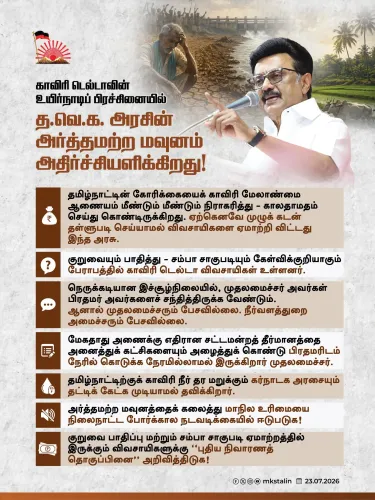
Aadhav alleged the previous DMK government's legal shortcomings had made the Cauvery dispute harder to resolve.
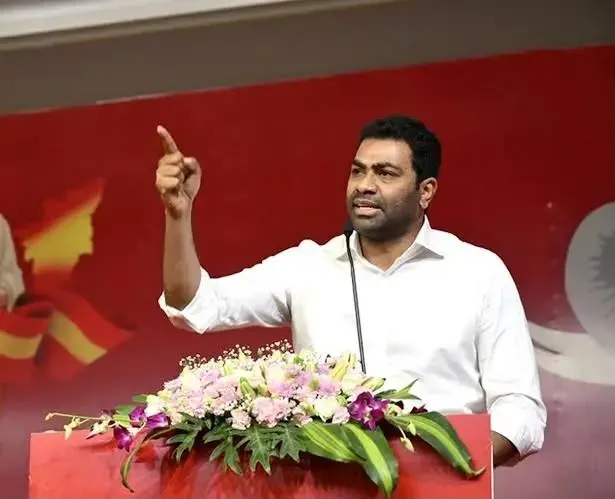
Tamil Nadu Public Works and Sports Development Minister Aadhav Arjuna, the TVK leader, on Sunday, 26 July mounted a sharp defence of the Vijay government's record on the Cauvery River dispute, accusing Dravida Munnetra Kazhagam (DMK) president and former Chief Minister M.K. Stalin of making misleading and factually incorrect allegations against the current administration over the Mekedatu dam issue. The minister's remarks mark a fresh escalation in the political battle over Tamil Nadu's water rights.
What the Government Has Done
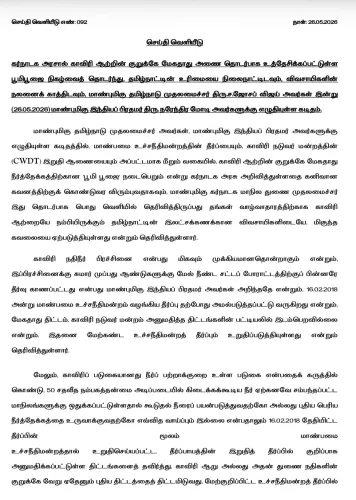
Aadhav maintained that the state had pursued legal, administrative, and political channels to protect its rightful share of Cauvery waters. He highlighted that Chief Minister C. Joseph Vijay personally raised Tamil Nadu's objections with Prime Minister Narendra Modi during a meeting on 27 May, urging the Centre to ensure implementation of the Cauvery Water Disputes Tribunal's final award and the Supreme Court's verdict of 16 February 2018, while firmly opposing any clearance for the Mekedatu reservoir.
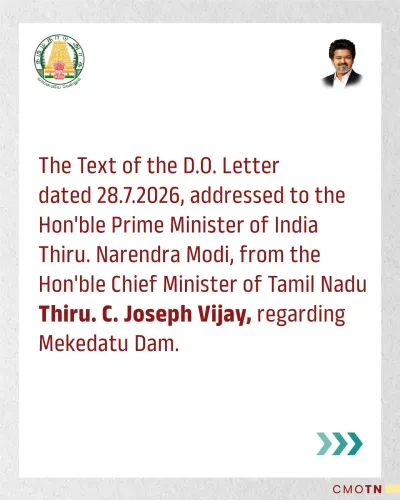
Following reports that Karnataka was preparing to perform a bhoomi pooja for the proposed reservoir, Chief Minister Vijay wrote again to the Prime Minister on 19 June, reiterating that the project could not receive clearance without the consent of all co-basin states — Tamil Nadu, Kerala, and Puducherry. The letter also requested the Centre to issue suitable directions to the Union Ministry of Jal Shakti and the Central Water Commission.
Legislative and Regulatory Pressure
The minister pointed out that the Tamil Nadu Legislative Assembly had unanimously passed a resolution opposing the Mekedatu project and forwarded it to the Prime Minister, seeking immediate intervention. The state has also consistently pressed its case before the Cauvery Water Management Authority and the Cauvery Water Regulation Committee, demanding timely release of Tamil Nadu's allocated water share and objecting to Karnataka's unilateral actions.
Counter-Attack on DMK
Turning the criticism on the DMK, Aadhav alleged that the previous government had failed to effectively defend Tamil Nadu's interests following adverse developments in the Supreme Court. He claimed that legal shortcomings during the earlier regime had made both the Cauvery and Mekedatu disputes harder to resolve — a charge the DMK has not yet formally responded to.
What the Government Says Next
Describing the Cauvery issue as one concerning Tamil Nadu's fundamental rights rather than political rivalry, Aadhav said the Vijay administration would continue to pursue every constitutional and legal avenue to protect the state's water rights. He added that the government remained open to constructive criticism, provided it was directed at safeguarding Tamil Nadu's long-term interests. The dispute is likely to intensify as Karnataka's proposed project timeline draws closer to ground-level activity.
Point of View
Which is the more uncomfortable question the minister did not address. The Cauvery dispute has outlasted multiple governments precisely because it sits at the intersection of federal water law, inter-state politics, and electoral arithmetic in both Tamil Nadu and Karnataka. Framing it as a matter of 'fundamental rights' rather than political rivalry is rhetorically effective, but the structural impasse remains unchanged.
NationPress
25 Oct 2026
Frequently Asked Questions
What is the Mekedatu dam dispute between Tamil Nadu and Karnataka?
The Mekedatu dam is a proposed reservoir project by Karnataka on the Cauvery River. Tamil Nadu opposes it, arguing the project cannot receive clearance without the consent of all co-basin states — Tamil Nadu, Kerala, and Puducherry — and that it threatens the state's rightful share of Cauvery waters as determined by the Cauvery Water Disputes Tribunal and the Supreme Court's 2018 verdict.
What steps has the Vijay government taken on the Mekedatu issue?
Chief Minister C. Joseph Vijay met Prime Minister Narendra Modi on 27 May to raise Tamil Nadu's objections, followed by a letter on 19 June opposing any clearance for the project. The Tamil Nadu Legislative Assembly also unanimously passed a resolution against Mekedatu and forwarded it to the Prime Minister seeking intervention.
Why did Minister Aadhav Arjuna criticise M.K. Stalin?
Aadhav accused DMK president M.K. Stalin of making misleading and factually incorrect allegations against the Vijay-led administration over its handling of the Cauvery dispute. He also alleged that the previous DMK government's legal shortcomings had made the Cauvery and Mekedatu disputes more difficult to resolve.
What is the Cauvery Water Disputes Tribunal's role in this dispute?
The Cauvery Water Disputes Tribunal issued a final award allocating Cauvery water shares among co-basin states. The Supreme Court upheld and modified this allocation in its 16 February 2018 verdict. Tamil Nadu has consistently demanded that the Centre ensure implementation of both the tribunal's award and the court's ruling.
What happens next in the Mekedatu dispute?
The dispute is likely to intensify as Karnataka's proposed project timeline moves closer to ground-level activity, including a reported bhoomi pooja. Tamil Nadu has urged the Centre to direct the Union Ministry of Jal Shakti and the Central Water Commission to block any clearance without co-basin state consent.