Stalin Writes to Tamil Nadu CM on Mekedatu Dam Threat

Synopsis
DMK president M. K. Stalin publicly wrote to Tamil Nadu's Chief Minister on 14 November 2026, urging urgent action on the Cauvery dispute after Karnataka's CM reportedly declared before the Prime Minister that the Mekedatu dam cannot be stopped.
Key Takeaways
Stalin wrote an open letter to the Tamil Nadu Chief Minister on 14 November 2026 demanding immediate action on the Cauvery water dispute.
Karnataka's Chief Minister reportedly stated in the Prime Minister's presence that 'no one can stop' the Mekedatu dam project .
The Mekedatu dam is a proposed multi-purpose reservoir on the Cauvery river that Karnataka has been pursuing clearances for since 2017 .
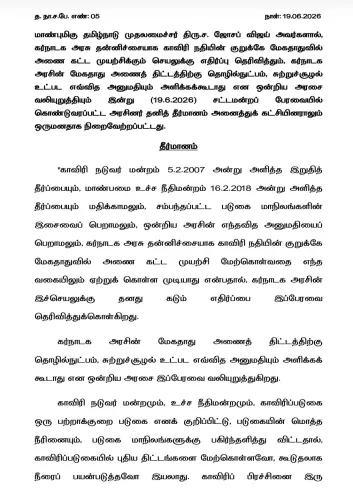
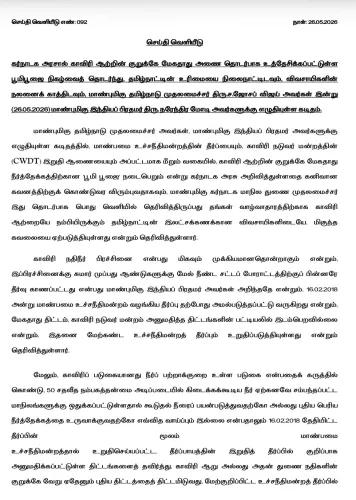
The Cauvery Water Disputes Tribunal's 2007 award and the Supreme Court's 2018 ruling form the legal framework protecting Tamil Nadu's water share.
Stalin specifically invoked the interests of Cauvery delta farmers , calling the dispute a life-and-death issue for Tamil Nadu.
The letter challenges the Tamil Nadu government to escalate the matter rather than maintain silence.
With Karnataka's Chief Minister reportedly declaring before the Prime Minister that no one can stop the Mekedatu dam, DMK president M. K. Stalin has fired off a sharp letter to Tamil Nadu Chief Minister on 14 November 2026, demanding the state government stop staying silent on the Cauvery water dispute — a crisis he calls a 'life-and-death issue for Tamil Nadu.'
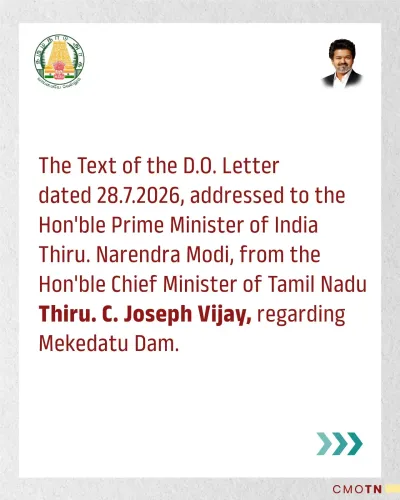
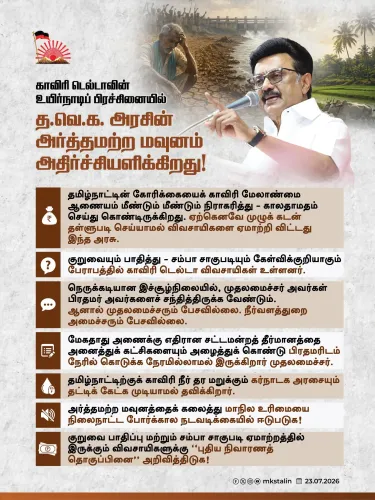
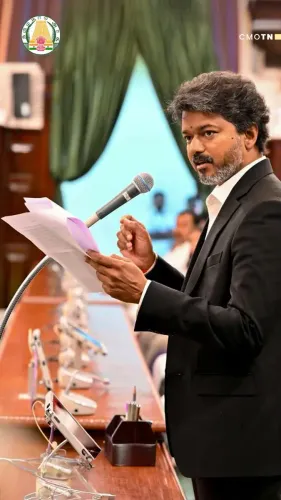
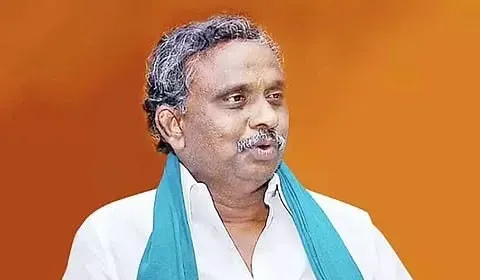
Posting on X in Tamil, Stalin wrote: 'தமிழ்நாட்டின் உயிர்ப் பிரச்சினையான காவிரி விவகாரத்தில், இனியும் அமைதி காக்காமல் தமிழ்நாடு அரசு செய்ய வேண்டியவற்றை வலியுறுத்தி' — urging the Tamil Nadu government to press forward with every necessary step in the Cauvery matter without further quiet. The letter, shared publicly along with three images, is addressed directly to the Chief Minister's Office of Tamil Nadu and hashtagged #Cauvery, #Mekedatu, and #DeltaFarmers.
What the Mekedatu project would mean for Tamil Nadu's delta
The Mekedatu dam is Karnataka's proposed multi-purpose reservoir on the Cauvery river, designed for hydropower generation and drinking water supply to Bengaluru. Karnataka has been seeking central clearances since 2017. Tamil Nadu has consistently opposed it, arguing that any upstream storage project threatens the regulated flow that sustains the Cauvery delta — one of the country's most productive rice-growing belts, feeding millions of farmers who have no alternative water source.
The legal architecture protecting Tamil Nadu's share is not trivial. The Cauvery Water Disputes Tribunal, established in 1990, issued its final award in 2007 apportioning annual flows among Tamil Nadu, Karnataka, Kerala and Puducherry. The Supreme Court of India upheld that framework in February 2018, modifying allocations marginally and ordering the creation of a permanent Cauvery Water Management Authority to oversee compliance. Any new upstream structure that changes storage dynamics, Tamil Nadu has argued, runs counter to that settled order.
Stalin's challenge to the ruling government in Chennai
The political weight of the letter lies in its target. Stalin is writing not to Karnataka, not to the Centre — but to the government of Tamil Nadu itself, which is not led by the DMK. By going public with the letter, he is placing the ruling administration on notice: act now, or own the consequences for delta farmers.
The trigger is the Karnataka Chief Minister's reported statement in the Prime Minister's presence — that the Mekedatu dam cannot be stopped by anyone. If that posture has been voiced at the highest level of the central government without a sharp Tamil Nadu rebuttal, Stalin's letter is a pointed political and constitutional prod. He is essentially asking: where is Tamil Nadu's voice at the table?
The Cauvery dispute's long trail to this moment
The Cauvery conflict is among the oldest inter-state water disputes in independent India, with roots stretching back to colonial-era agreements between Madras Presidency and Mysore State. It has triggered protests, strikes, and even communal violence in past decades. The pattern is familiar: Karnataka proposes upstream infrastructure; Tamil Nadu protests; central bodies attempt mediation; legal battles follow. What is different now is the boldness of Karnataka's framing — 'no one can stop it' — and the fact that it was reportedly said in front of the Prime Minister, lending it political gravity that cannot be dismissed.
For Tamil Nadu's delta farmers, the stakes are existential. The Cauvery delta districts depend on regulated seasonal flows for samba and kuruvai paddy cultivation. Any reduction in downstream availability, particularly in deficit monsoon years, translates directly into crop failure and rural debt.
Stalin's public letter ensures the pressure will not dissolve quietly. The question now is whether the Tamil Nadu government responds — and how urgently it escalates the matter to the Cauvery Water Management Authority or seeks central intervention.
Point of View
And Karnataka's increasingly assertive framing — especially if voiced at the Prime Minister's level — raises the constitutional stakes for the Cauvery Water Management Authority's relevance. How the Tamil Nadu government responds will signal whether statutory oversight bodies established by the Supreme Court carry real deterrent weight.
NationPress
14 Nov 2026
Frequently Asked Questions
What is the Mekedatu dam and why is Tamil Nadu opposed to it?
The Mekedatu dam is a proposed multi-purpose reservoir that Karnataka wants to build on the Cauvery river for hydropower and drinking water supply to Bengaluru. Tamil Nadu opposes it because any upstream storage could reduce water flows to the Cauvery delta, threatening irrigation for farmers in Tamil Nadu's rice-growing districts.
What did M. K. Stalin's letter to the Tamil Nadu CM say?
Stalin urged the Tamil Nadu government to stop maintaining silence on the Cauvery water issue and to take every necessary step urgently, calling the dispute a life-and-death matter for the state. The letter was triggered by the Karnataka CM's reported statement before the Prime Minister that the Mekedatu dam cannot be stopped.
What is the legal status of the Cauvery water dispute?
The Cauvery Water Disputes Tribunal issued a final award in 2007 allocating annual water shares among Tamil Nadu, Karnataka, Kerala and Puducherry. The Supreme Court upheld this framework in February 2018 and ordered the creation of the Cauvery Water Management Authority to monitor compliance.
Has Karnataka received clearance for the Mekedatu dam?
Karnataka has been seeking central clearances for the Mekedatu project since 2017 but has faced consistent objections from Tamil Nadu. As of the available information, the project has not received all necessary approvals.
Why are Cauvery delta farmers affected by Mekedatu?
Cauvery delta farmers in Tamil Nadu depend entirely on regulated seasonal flows from the river for paddy cultivation. A new upstream dam could alter storage and release patterns, reducing downstream availability during critical crop seasons and leading to harvest failures.