Children's Day: Stalin calls for nurturing young talent beyond digital screens
Synopsis
On Children's Day, Tamil Nadu CM M.K. Stalin used an X post to call for a society that nurtures children's talents beyond screens — and to spotlight DMK's welfare record, from the Chief Minister's Breakfast Scheme to cervical cancer vaccinations for girls. The message is part welfare advocacy, part political branding ahead of a competitive electoral cycle.
Key Takeaways
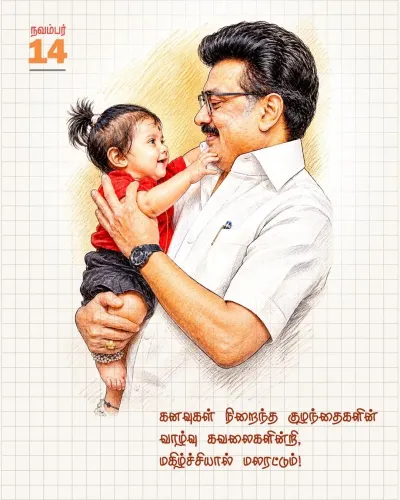
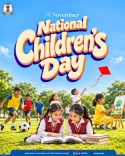
Stalin marked Children's Day on 14 November with an appeal to nurture children's unique talents and ensure a happy present as the foundation for a better future.
He called on children to explore 'beyond the glow of screens into the light of knowledge.' Stalin highlighted DMK welfare schemes including the Chief Minister's Breakfast Scheme , Illam Thedi Kalvi , Ennum Ezhuthum , Anbu Karangal , and Vaanavil Mandram .
He also cited a cervical cancer vaccination programme for adolescent girls among key healthcare measures introduced under the Dravidian Model administration.
Stalin appealed to society to support children in identifying and pursuing their individual strengths and aspirations.
Tamil Nadu Chief Minister and Dravida Munnetra Kazhagam (DMK) President M.K. Stalin on 14 November 2026 urged society to actively support children in discovering their unique strengths and pursuing their aspirations, calling a happy childhood the essential first step toward a better future. His message was shared on Children's Day, observed across India on 14 November every year.
Stalin's Core Message
In a post on X, Stalin placed children's immediate well-being at the centre of his appeal. "The first step towards creating a better future for children is ensuring that they have a happy present," he said. He concluded with the wish that children's world grow "beyond the glow of screens into the light of knowledge," urging families and communities to encourage curiosity and discovery over passive digital consumption.
DMK's Welfare Record for Children
Stalin used the occasion to highlight welfare and educational initiatives introduced during successive DMK administrations. He cited vaccination programmes, the inclusion of eggs in nutritious meal schemes, and free bus travel for students as foundational measures. These, he said, reflected the party's long-standing commitment to children's health and access to learning.
Key Schemes Under the Dravidian Model
Among the programmes he listed were Anbu Karangal, the Chief Minister's Breakfast Scheme, Illam Thedi Kalvi, Ennum Ezhuthum, and Vaanavil Mandram. These initiatives, according to Stalin, collectively address nutrition, foundational literacy, schooling support, healthcare, and the development of children's individual capabilities. He also cited a cervical cancer vaccination programme for adolescent girls as part of the broader preventive healthcare agenda extended to children.
Appeal to Society
Stalin appealed for responsible community support to help children identify and nurture their individual talents, emphasising that enabling them to follow their chosen paths was a shared social responsibility. His message linked children's future prospects directly to the care, opportunities, and freedom to learn available to them today. This comes amid growing concern among educators and child welfare advocates about the impact of prolonged screen exposure on learning outcomes among school-age children in India.
Point of View
He frames the party's governance record as the practical expression of child welfare — useful optics ahead of Tamil Nadu's next electoral test. The screen-time caution is timely given national discourse on digital addiction among children, but whether it translates into policy initiatives beyond symbolic messaging remains to be seen. The inclusion of the cervical cancer vaccination for adolescent girls is notably progressive and deserves more than a footnote — it represents a genuinely impactful public health intervention that rarely gets prominent coverage in routine Children's Day coverage.
NationPress
14 Nov 2026
Frequently Asked Questions
What did M.K. Stalin say on Children's Day 2026?
DMK President M.K. Stalin urged society to support children in nurturing their unique talents and pursuing their aspirations, stressing that a happy present is the first step toward a better future. He also called on children to explore knowledge beyond digital screens.
Which welfare schemes did Stalin highlight on Children's Day?
Stalin listed several DMK-era programmes including Anbu Karangal, the Chief Minister's Breakfast Scheme, Illam Thedi Kalvi, Ennum Ezhuthum, and Vaanavil Mandram, alongside vaccination drives, egg inclusion in mid-day meals, and free bus travel for students.
Why did Stalin mention digital screens in his Children's Day message?
Stalin encouraged children to move beyond passive screen use and embrace knowledge and discovery, reflecting growing concern among educators about digital dependency affecting learning outcomes among school-age children in India.
What healthcare initiative for girls did Stalin reference?
Stalin cited a cervical cancer vaccination programme for adolescent girls as part of the Dravidian Model administration's preventive healthcare agenda, placing it alongside nutrition and education in his Children's Day message.
When is Children's Day celebrated in India?
Children's Day is celebrated across India on 14 November every year, coinciding with the birth anniversary of India's first Prime Minister Jawaharlal Nehru, who was known for his affection for children.