Southern states deserve fair funds share, says Karnataka CM Shivakumar at Zonal Council
Synopsis
At a high-stakes Southern Zonal Council meeting chaired by Home Minister Amit Shah, Karnataka CM D.K. Shivakumar put numbers to a political argument: five southern states produce a third of India's GDP but receive a shrinking share of central funds. With ₹65,000 crore in estimated losses under the 15th Finance Commission and delimitation anxiety looming, the South's fiscal federalism battle is no longer a quiet grievance — it is a coordinated demand.
Key Takeaways
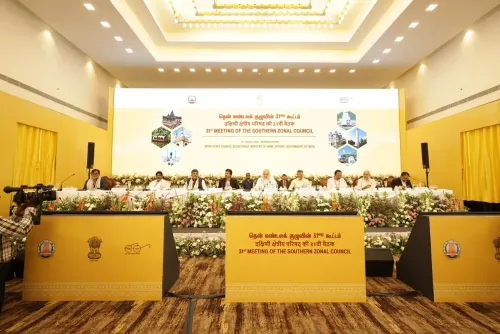
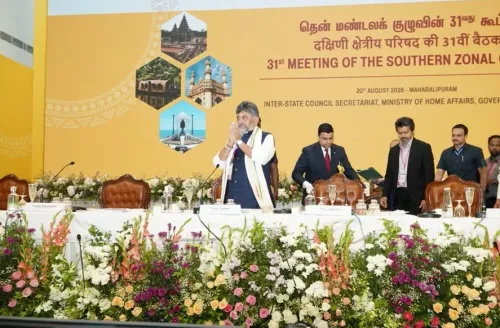
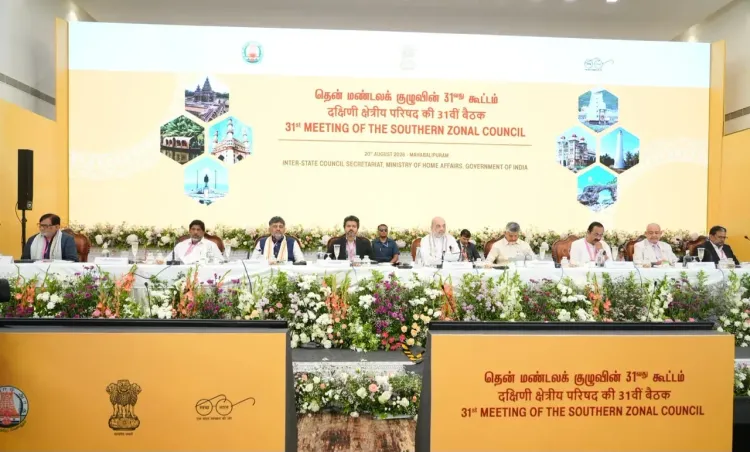
Shivakumar addressed the 31st Southern Zonal Council meeting in Mahabalipuram on 20 August , chaired by Home Minister Amit Shah .
Five southern states contribute nearly 33 per cent of India's GDP while holding only about 20 per cent of its population.
Karnataka's share in the divisible tax pool fell from 4.7 per cent to 3.6 per cent under the 15th Finance Commission , causing an estimated loss of ₹65,000 crore over six years.
Recommended grants of ₹5,495 crore (special) and ₹6,000 crore (state-specific) for Karnataka remain unreleased, according to Shivakumar.
Shivakumar urged that delimitation use the 1971 population basis and called for women's reservation without waiting for a fresh census.
The meeting was attended by the chief ministers of Tamil Nadu, Kerala, Andhra Pradesh and the deputy CM of Telangana .
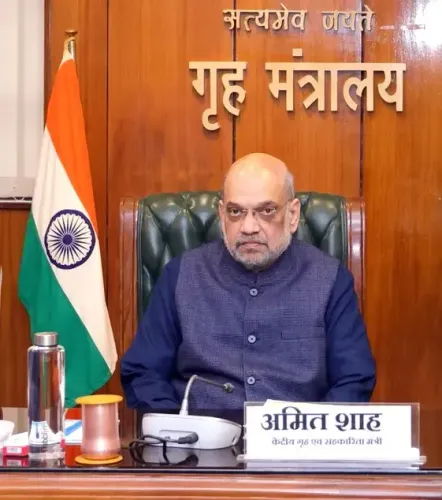
Karnataka Chief Minister D.K. Shivakumar on Thursday, 20 August made a forceful pitch at the 31st Southern Zonal Council meeting in Mahabalipuram, Tamil Nadu, urging the Centre to restore a fair share of tax revenues and political representation to southern states. Chaired by Union Home Minister Amit Shah, the meeting brought together the chief ministers of all five southern states and became a platform for airing long-standing grievances over fiscal federalism and delimitation.
The Core Argument: South Contributes, South Must Count
Shivakumar framed his address around a single thesis — that the southern states' economic outperformance should translate into proportional political and financial weight, not a penalty. Five southern states, he noted, account for roughly 20 per cent of India's population yet contribute nearly 33 per cent of the country's GDP. 'Karnataka becoming stronger makes South India stronger, and a stronger South India makes India stronger. We are partners in India's development. We want fairness in our funds and in our voice. Give us our fair share of resources,' he said.
He was careful to position the intervention not as dissent but as a constitutional claim. 'I am not here to complain but to highlight the legitimate concerns of states that are driving the country's economy,' he said, adding that he spoke 'as a proud Indian and as a proud Kannadiga' representing a state with over 16 centuries of linguistic and cultural history.
Karnataka's Economic Case
Shivakumar laid out a detailed economic profile of Karnataka to buttress his demand. The state, despite comprising only about 5.5 per cent of India's population, contributes approximately 9 per cent to national GDP. It ranks first in software exports, accounting for around 42 per cent of India's total software export earnings. The state hosts nearly 1,100 Global Capability Centres — the highest of any state — and attracted more than 21 per cent of India's total FDI equity inflows between 2019 and 2025.
Beyond the technology sector, Karnataka accounts for approximately 60 per cent of India's aerospace industry output, nearly 70 per cent of the country's coffee production, and 90 per cent of processed gherkin exports. 'A state that performs well in growth and revenue should be incentivised, not penalised,' he said, noting that Karnataka is the second-largest contributor to both GST and income tax.
The Finance Commission Grievance
Shivakumar said Karnataka's share in the divisible pool of central taxes fell from 4.7 per cent to 3.6 per cent during the 15th Finance Commission period, resulting in an estimated revenue loss of around ₹65,000 crore over six years. He further stated that the 15th Finance Commission had recommended a special grant of ₹5,495 crore and state-specific grants of ₹6,000 crore for Karnataka, neither of which had been released.
While welcoming the 16th Finance Commission's revision of Karnataka's share upward from 3.64 per cent to 4.131 per cent, he argued this was still insufficient and called for a full restoration to the earlier 4.7 per cent level. He also sought additional central projects for Karnataka, including the Bengaluru–Mumbai high-speed rail project, the southern section of the Satellite Town Ring Road, an AIIMS in Raichur, and a special development package for the Kalyana Karnataka region.
Delimitation, Women's Reservation, and Water Cooperation
Shivakumar raised concerns over the proposed delimitation of Lok Sabha constituencies, warning that southern states — which have successfully managed population growth — risk losing political influence under any population-based reallocation. While welcoming assurances that no state would lose existing seats, he insisted that 'representation is not just about numbers. It is about our influence and our voice.' He urged that the 1971 population basis be maintained as the reference point for delimitation.
On women's reservation, he called on the council to pass a resolution implementing it without waiting for a fresh census or any change in the existing number of Lok Sabha seats. 'Women have waited long enough for their rightful representation,' he said.
On inter-state water disputes, Shivakumar advocated a shift 'from water sharing to water cooperation,' citing the Cauvery, Krishna, Tungabhadra, Pennar, and Palar rivers as regional lifelines. He referenced a joint meeting held on 25 June with the chief ministers of Andhra Pradesh and Telangana as a model of cooperative engagement. He also called on the Centre to reconsider the Mines and Minerals (Development and Regulation) Act, 2026, arguing it encroaches on states' rights to levy taxes on major minerals, and sought stronger central support for combating drug trafficking.
Who Was in the Room
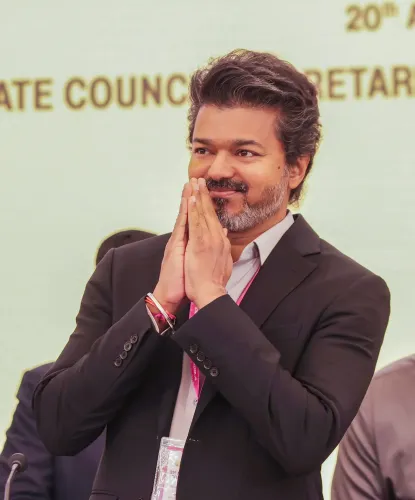
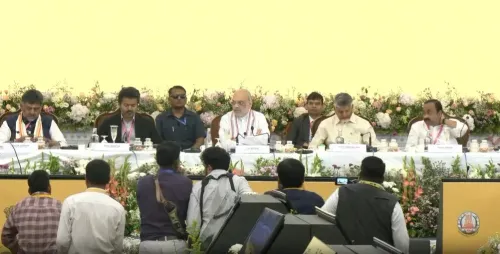
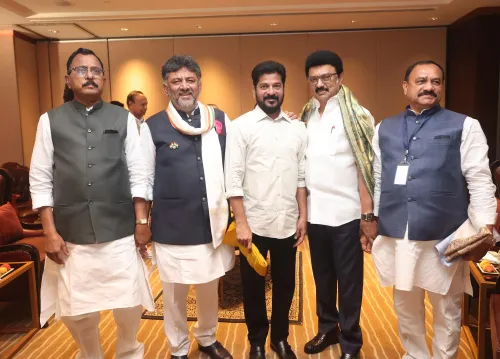
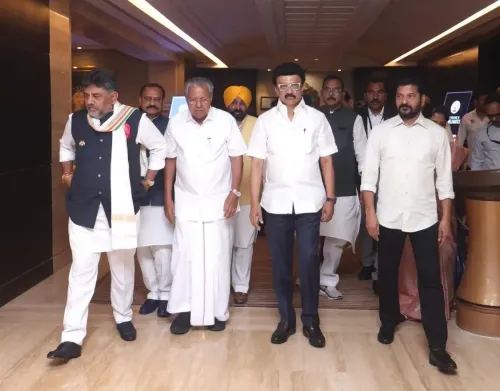
The meeting was attended by Tamil Nadu Chief Minister C. Joseph Vijay, Kerala Chief Minister V.D. Satheesan, Andhra Pradesh Chief Minister N. Chandrababu Naidu, Telangana Deputy Chief Minister Bhatti Vikramarka, and Karnataka Home and IT-BT Minister Priyank Kharge, along with ministers and senior officials from across the southern states. The gathering underscores a growing consensus among southern leaderships — across party lines — that the current federal fiscal architecture needs recalibration. How the Centre responds, particularly on the Finance Commission share and delimitation safeguards, will set the tone for Centre-state relations ahead of the next general election cycle.
Point of View
Not just rhetoric. But the structural tension he describes is real and deepening: states that have invested in human development, controlled population growth, and built export-led economies are being penalised by a devolution formula that rewards population size over fiscal performance. The delimitation question compounds this, threatening to reduce southern influence in Parliament just as these states are peaking economically. What is missing from the room is a credible federal mechanism to resolve these disputes — the Zonal Council is consultative, not binding, and Amit Shah's chairmanship, while symbolically significant, carries no guarantee of policy change. The South's coordinated voice is louder than it has been in years; whether Delhi is listening is another matter.
NationPress
20 Aug 2026
Frequently Asked Questions
What is the Southern Zonal Council and why did it meet in Mahabalipuram?
The Southern Zonal Council is a statutory inter-state body that facilitates coordination between the Centre and southern states on shared concerns. Its 31st meeting was held in Mahabalipuram, Tamil Nadu, on 20 August, chaired by Union Home Minister Amit Shah, with chief ministers of all five southern states in attendance.
Why is Karnataka demanding a larger share of central tax funds?
Karnataka's share in the divisible pool of central taxes fell from 4.7 per cent to 3.6 per cent under the 15th Finance Commission, resulting in an estimated loss of ₹65,000 crore over six years. CM Shivakumar argues that a state contributing 9 per cent of national GDP and 42 per cent of software exports should not receive a diminishing fiscal share.
What are the southern states' concerns about Lok Sabha delimitation?
Southern states fear that a delimitation exercise based on current population figures would reduce their parliamentary representation, since they have successfully controlled population growth. CM Shivakumar urged that the 1971 population basis be retained and that southern states' political voice not be weakened as a consequence of their demographic success.
What specific projects did Shivakumar seek from the Centre for Karnataka?
He sought approval for the Bengaluru–Mumbai high-speed rail project, the southern section of the Satellite Town Ring Road, an AIIMS in Raichur, and a special development package for the Kalyana Karnataka region.
What did Shivakumar say about women's reservation at the meeting?
Shivakumar called on the Southern Zonal Council to pass a resolution implementing women's reservation in Parliament without waiting for a fresh census or any change in the existing number of Lok Sabha seats, saying 'women have waited long enough for their rightful representation.'