SAIL backs Mines Amendment Act 2026, sees mining viability boost
Synopsis
India's largest steelmaker has thrown its weight behind the Centre's Mines and Minerals Amendment Act 2026, and the reason is specific: the law finally resolves retrospective levy uncertainty that had hung over captive mining operations for years. For SAIL, this is not just regulatory relief — it is a signal to unlock mine investment and push more iron ore into a domestic market that needs it.
Key Takeaways
SAIL welcomed the Mines and Minerals (Development and Regulation) Amendment Act, 2026 , notified on 17 August 2026 .
The amendment provides clarity on mineral taxation and resolves pending retrospective levies .
SAIL operates substantial captive iron ore and coal mines and expects improved viability from the fiscal reforms.
The company said it would make additional iron ore available for domestic sale, subject to regulatory approvals.
The reforms are projected to reduce import dependence, boost investment, and strengthen India's mineral and energy security .
Steel Authority of India Limited (SAIL) on Thursday, 20 August 2026, formally welcomed the Mines and Minerals (Development and Regulation) Amendment Act, 2026, notified by the Central Government on 17 August, stating the reform would bring greater predictability to the fiscal regime and deliver long-term policy certainty to India's mineral sector.
What the Amendment Addresses
According to SAIL, the amendment introduces greater clarity and uniformity in mineral taxation and levies. Crucially, it also resolves pending retrospective levies — a longstanding concern for mining companies operating under uncertain liability exposure. The company said the resolution of these retrospective claims would provide 'greater certainty and confidence to the mining industry.'
Impact on SAIL's Captive Mining Operations
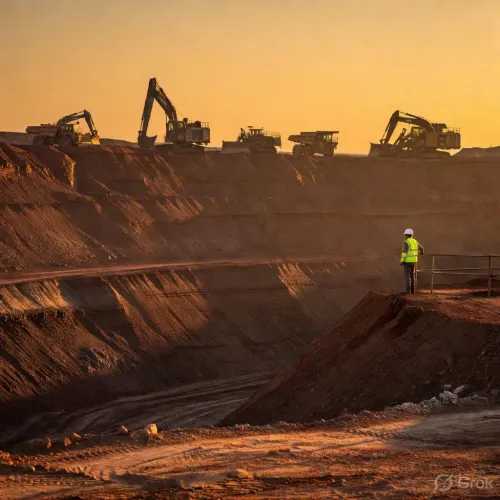
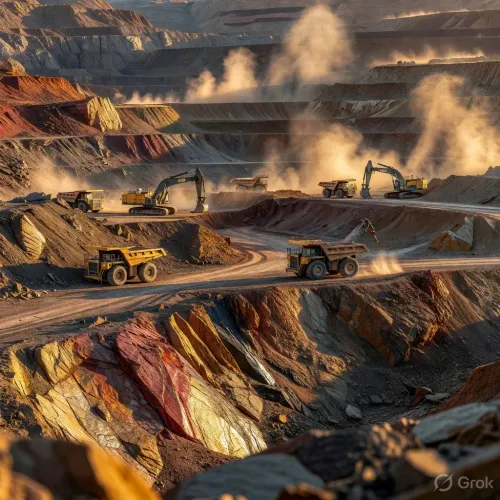
SAIL operates substantial captive iron ore and coal mines, making the reform directly consequential for its raw-material strategy. The company said improved viability from the amended fiscal framework would facilitate investment and development across its mine portfolio. 'Greater predictability in the fiscal regime will support efficient utilisation and development of SAIL's mineral resources and will boost iron ore mining,' the company stated.
With enhanced mine viability, SAIL said it would be positioned to make additional iron ore available for sale in the domestic market, subject to the applicable regulatory framework — a move that could ease supply constraints for downstream steel producers.
Broader Implications for the Steel and Minerals Sector
Higher availability of domestically produced iron ore, according to SAIL, would strengthen domestic supply chains and improve access to indigenous raw materials for the Indian steel industry. The reforms are expected to encourage higher investment and production, reduce dependence on imports, and improve the competitiveness of mineral-based industries. This comes amid India's broader push to secure critical mineral and energy supply chains as part of its industrial self-reliance agenda.
Notably, the amendment's clarity on fiscal levies addresses a structural uncertainty that had reportedly dampened private investment appetite in the mining sector over recent years.
SAIL's Commitment to Sustainable Mining
The steel major reaffirmed its commitment to responsible and sustainable development of its mineral resources. The company framed its support for the amendment within the larger national goals of an Atmanirbhar Bharat and Viksit Bharat, signalling alignment with the Centre's self-reliance policy framework.
With the amendment now notified, industry observers will watch whether other mining and steel companies follow SAIL's lead in announcing investment plans tied to the improved regulatory environment.
Point of View
But it is also self-interested in the best possible sense — the company directly benefits from retrospective levy resolution and a more predictable fiscal regime on its captive mines. The more important question is whether the amendment's clarity is sufficient to draw private capital into greenfield mining, where India's supply gap is most acute. Captive mine operators like SAIL gaining confidence is a necessary first step, but not sufficient. India's iron ore supply security ultimately depends on whether independent miners and new entrants find the amended framework investable enough to expand production beyond existing captive blocks.
NationPress
5 Oct 2026
Frequently Asked Questions
What is the Mines and Minerals (Development and Regulation) Amendment Act, 2026?
It is a legislative amendment notified by the Central Government on 17 August 2026, aimed at bringing greater clarity and uniformity to mineral taxation and levies, and resolving pending retrospective levy disputes in the mining sector.
Why did SAIL welcome the Mines and Minerals Amendment Act 2026?
SAIL welcomed the amendment because it resolves retrospective levy uncertainty, improves fiscal predictability for its captive iron ore and coal mining operations, and is expected to facilitate further investment and mine development.
How does the amendment affect iron ore availability in India?
With improved mining viability, SAIL has indicated it can make additional iron ore available for domestic sale, which could strengthen supply chains and reduce import dependence for the Indian steel industry.
What are retrospective levies and why do they matter to miners?
Retrospective levies are back-dated financial charges imposed on mining companies for past operations, creating uncertain and often large liabilities. Their resolution removes a significant overhang that had discouraged investment in the sector.
What is the broader significance of the amendment for India's mineral sector?
The amendment is expected to encourage higher investment and production across mineral-based industries, reduce import dependence, and support India's mineral and energy security goals under the Atmanirbhar Bharat framework.