G.V. Raja Stadium: ₹100 crore Olympic makeover backed by Suresh Gopi
Synopsis
A nearly 90-year-old stadium in Thiruvananthapuram — long neglected, its synthetic track in disrepair — is now at the centre of a ₹100 crore Centre-backed revival push tied directly to India's 2036 Olympic hosting ambitions. Union Minister Suresh Gopi's personal intervention has given the proposal fresh political momentum.
Key Takeaways
Union Minister Suresh Gopi has backed a ₹100 crore Central outlay to revamp G.V.
Raja Stadium in Thiruvananthapuram .
The proposal emerged from a meeting on 11 August with Kerala University Vice-Chancellor Dr Mohanan Kunnummal and Finance Member R.S.
Kerala University will prepare a master plan and detailed project report as the next step.
The makeover is linked to India's bid to host the 2036 Summer Olympics , with Ahmedabad as the primary host city; the IOC decision is expected in mid-2029 .
The stadium, built in 1937 , has suffered years of neglect, with its synthetic track and facilities in deteriorated condition.
It is named after Colonel Godavarma Raja , founding president of the Kerala Sports Council and a pioneer of Kerala's sporting movement.
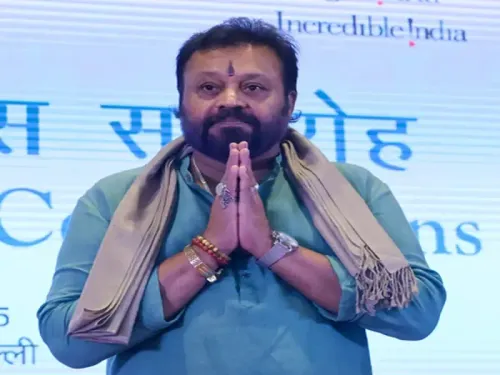
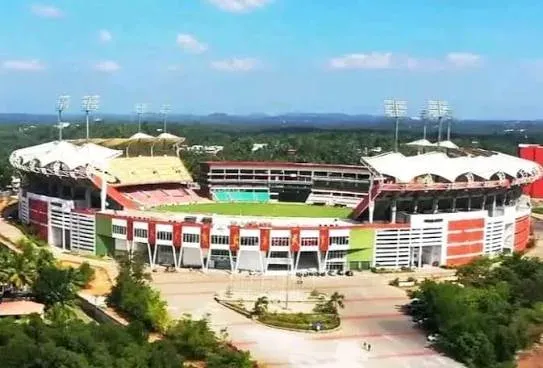
The historic G.V. Raja Stadium in Thiruvananthapuram, Kerala's capital, is set for a potential ₹100 crore overhaul aimed at bringing it up to international standards and positioning it as an Olympic-capable venue, with Union Minister of State for Tourism Suresh Gopi driving the initiative following discussions with senior Kerala University officials on 11 August.
What Was Discussed
Gopi visited the stadium alongside Kerala University Vice-Chancellor Dr Mohanan Kunnummal and R.S. Sasikumar, Finance Member of the University Syndicate. The meeting centred on the feasibility of a large-scale revamp, with Gopi indicating that the Centre would be in a position to allocate ₹100 crore for the project. Kerala University has been tasked with preparing a master plan and a detailed project report as the immediate next step.
'Gopi pointed out that the Centre will be in a position to spare ₹100 crore to revamp the G.V. Raja Stadium and make it fit for the Olympics, for which India has expressed its desire. Kerala University will soon prepare a master plan for a massive revamp of the stadium. With Gopi also very positive, we are expecting that this stadium will be converted into a world-class sporting centre,' Sasikumar said.
India's Olympic Ambitions and the Stadium's Role
The proposed makeover is directly linked to India's bid to host the 2036 Summer Olympics. India has formally submitted a Letter of Intent to the International Olympic Committee (IOC), with Ahmedabad named as the primary host city. The IOC is expected to announce its decision on the host in mid-2029. A revamped G.V. Raja Stadium could potentially give Thiruvananthapuram a credible international athletics venue within that broader framework.
Decades of Neglect
The stadium, which once hosted an international One Day International (ODI) cricket match, has suffered years of deterioration. Its synthetic track and other core facilities are reportedly in poor condition, underscoring the urgency of the proposed intervention. Built in 1937 as part of the erstwhile University of Travancore, the stadium is approaching nine decades of existence — a legacy that lends additional weight to the case for restoration.
The Legacy of G.V. Raja
The stadium is named after Colonel Godavarma Raja, widely regarded as a pioneer of Kerala's sporting movement. A member of the Travancore royal family and founding president of the Kerala Sports Council, he played a formative role in popularising athletics, cricket, and football across the state. He was also associated with the early development of Thiruvananthapuram's airport and tourism sector — making the stadium a symbol of the city's broader civic heritage.
With the master plan yet to be finalised, the pace at which Kerala University moves on the detailed project report will determine how quickly the ₹100 crore proposal can be translated into ground-level action.
Point of View
And Central funds cannot flow without one. The timing is telling: India's 2036 Olympic bid has created a window for cities outside Ahmedabad to claim a slice of the infrastructure narrative. Thiruvananthapuram's case is legitimate — a historic venue with genuine deterioration — but the gap between a minister's endorsement and a sanctioned Central grant is wide. Kerala University's pace on the project report will be the real test of whether this becomes a stadium revival or another headline that fades before the foundation is laid.
NationPress
25 Sept 2026
Frequently Asked Questions
What is the proposed ₹100 crore makeover of G.V. Raja Stadium?
It is a proposed Central government-funded overhaul of the historic G.V. Raja Stadium in Thiruvananthapuram, aimed at upgrading it to international and Olympic standards. Union Minister Suresh Gopi indicated the Centre could allocate ₹100 crore, with Kerala University tasked to prepare a master plan and detailed project report.
Why is G.V. Raja Stadium being upgraded now?
The push is linked to India's formal bid to host the 2036 Summer Olympics, for which a Letter of Intent has been submitted to the IOC. A revamped stadium would give Thiruvananthapuram a credible international athletics venue. The stadium has also suffered years of neglect, with its synthetic track and facilities in poor condition.
Who is involved in the G.V. Raja Stadium renovation plan?
Union Minister of State for Tourism Suresh Gopi is the key political driver. He met Kerala University Vice-Chancellor Dr Mohanan Kunnummal and Finance Member R.S. Sasikumar on 11 August to discuss the proposal. The university will now prepare the master plan.
When will the IOC decide on the 2036 Olympics host?
The International Olympic Committee is expected to select the host city for the 2036 Summer Olympics in mid-2029. India has submitted a Letter of Intent with Ahmedabad as the proposed primary host city.
Who was Colonel Godavarma Raja, after whom the stadium is named?
Colonel Godavarma Raja was a member of the Travancore royal family and the founding president of the Kerala Sports Council. He is widely credited with popularising athletics, cricket, and football in Kerala and is regarded as a pioneer of the state's sporting movement.