SVEP backs 4.32 lakh rural enterprises; 86% from SC, ST, OBC, minority groups

Synopsis
A government programme designed for India's most marginalised rural communities has quietly crossed the 4.32 lakh enterprise mark — with 86% of beneficiaries from SC, ST, OBC and minority groups. Central funding has surged 738% since launch, signalling a serious scale-up of a grassroots model that links mentorship, credit, and community institutions to first-generation rural entrepreneurs.
Key Takeaways
The Start-up Village Entrepreneurship Programme (SVEP) has supported 4.32 lakh rural enterprises as of June 2026 .
86 per cent of SVEP entrepreneurs belong to SC, ST, OBC, and minority communities .
Assam, Bihar, Jharkhand, West Bengal , and Madhya Pradesh lead in enterprise numbers supported.
Cumulative central funding reached ₹942.09 crore by February 2026 — up 738% from ₹112.39 crore disbursed between 2016 and January 2018 .
The programme allocates ₹6.50 crore per block with an average enterprise investment of ₹27,083 .
At least 60 per cent of CRP-EPs must be women; 90 per cent are drawn from SHG households.
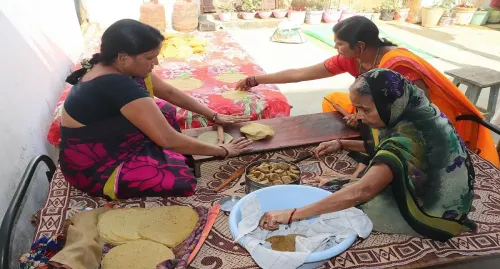
The Start-up Village Entrepreneurship Programme (SVEP) has supported 4.32 lakh rural enterprises as of June 2026, the government announced on Saturday, 25 July, highlighting measurable gains in profitability, household incomes, and social inclusion — with 86 per cent of beneficiaries drawn from Scheduled Caste (SC), Scheduled Tribe (ST), Other Backward Class (OBC), and minority communities. The programme, which operates through State Rural Livelihoods Missions (SRLMs), has emerged as one of India's most targeted grassroots models for rural economic development.
States Leading Enterprise Growth
Assam, Bihar, Jharkhand, West Bengal, and Madhya Pradesh recorded the highest numbers of enterprises supported under SVEP, according to an official statement. These states, which collectively represent a significant share of India's rural poor, have channelled the programme's non-farm enterprise support — covering training, finance, mentoring, and community-led institutional frameworks — to first-generation entrepreneurs at the block level.
SVEP operates with a provision of ₹6.50 crore per block and an average investment of ₹27,083 per enterprise, making it a lean but structurally deep intervention compared with larger capital-intensive schemes.
Funding Growth: A 738% Jump Since Launch
The Centre has released a cumulative central share of ₹942.09 crore up to February 2026 — a figure that is nearly 738 per cent higher than the ₹112.39 crore disbursed between the programme's launch in 2016 and January 2018. This steep funding trajectory signals sustained political and administrative commitment to scaling the model beyond its pilot-phase footprint.
The programme has expanded its outreach through Self-Help Groups (SHGs), Community Resource Person-Enterprise Promoters (CRP-EPs), bank linkages, and convergence with schemes such as Pradhan Mantri Mudra Yojana.
The CRP-EP Model: Community-Driven Mentorship
CRP-EPs are selected jointly by SRLMs and Project Implementing Agencies through a process of testing, training, and certification, with preference given to local residents who possess basic business and mathematical skills. At least 90 per cent of CRP-EPs are drawn from SHG households, and women must constitute a minimum of 60 per cent of the cadre.
Each CRP-EP provides mentoring, training, and credit facilitation support to up to 50 enterprises — a peer-embedded structure that keeps transaction costs low while ensuring localised accountability.
Broader Impact on Rural Inclusion
The official statement described SVEP as a demonstration that rural entrepreneurship can serve as a powerful driver of inclusive economic growth when underpinned by strong community institutions. By targeting women, SC and ST communities, and first-generation business owners, the programme has, according to the government, converted local aspirations into sustainable livelihoods — resulting in higher incomes, increased savings, and improved household well-being.
Notably, this is not a standalone welfare transfer but a structured enterprise-support ecosystem, distinguishing SVEP from direct-benefit schemes. As the Centre continues scaling the programme, the focus will likely shift to measuring enterprise survival rates and income sustainability beyond the initial support window.
Point of View
But the more consequential number is 86% — the share of SVEP entrepreneurs from SC, ST, OBC and minority communities. That figure suggests the programme is reaching people that most credit and skilling schemes structurally miss. The real test, however, is enterprise longevity: government statements cite enterprise creation and income gains, but survival rates beyond the mentorship window are not disclosed. A scheme averaging ₹27,083 per enterprise must demonstrate that these businesses are still operating — and growing — three to five years out, not just at the point of initial support. Without that data, the headline numbers, impressive as they are, remain incomplete.
NationPress
23 Oct 2026
Frequently Asked Questions
What is the Start-up Village Entrepreneurship Programme (SVEP)?
SVEP is a centrally supported rural entrepreneurship scheme implemented through State Rural Livelihoods Missions, providing non-farm enterprises with training, finance, mentoring, and community-led institutional support. It was launched in 2016 and operates at the block level with a provision of ₹6.50 crore per block.
How many enterprises has SVEP supported so far?
SVEP has supported 4.32 lakh rural enterprises as of June 2026, according to a government statement released on 25 July 2026. Assam, Bihar, Jharkhand, West Bengal, and Madhya Pradesh recorded the highest numbers.
Who are the primary beneficiaries of SVEP?
Around 86 per cent of SVEP entrepreneurs belong to SC, ST, OBC, and minority communities. The programme specifically targets women, first-generation entrepreneurs, and marginalised groups through its CRP-EP mentorship model.
How much has the government invested in SVEP?
The Centre has released a cumulative central share of ₹942.09 crore up to February 2026 — nearly 738% higher than the ₹112.39 crore released between the programme's 2016 launch and January 2018, reflecting significant scale-up in funding.
What is the role of CRP-EPs in SVEP?
Community Resource Person-Enterprise Promoters (CRP-EPs) are locally selected and certified mentors who provide training, mentoring, and credit facilitation to up to 50 enterprises each. At least 90% are drawn from SHG households, and women must make up a minimum of 60% of the cadre.