Swamy Renews Rahul Gandhi Citizenship Allegation, Targets Modi
Synopsis
Dr. Subramanian Swamy on 14 July 2026 alleged on X that Rahul Gandhi has held British citizenship since 2002, making him ineligible as an Indian citizen, and accused PM Modi of engineering a Home Ministry reshuffle to kill a Show Cause Notice issued on his complaint — charges that remain unverified by public records.
Key Takeaways
Subramanian Swamy posted on 14 July 2026 alleging Rahul Gandhi has been a British citizen since 2002 , rendering him ineligible for Indian citizenship under the Citizenship Act, 1955 .
He claimed Rajnath Singh , as Home Minister, issued a Show Cause Notice to Rahul Gandhi based on Dr.
Swamy 's formal complaint.
Swamy alleged PM Modi transferred Rajnath Singh out of the Home Ministry and installed Amit Shah , resulting in no further action on the notice.
The specific claims of a 2002 British citizenship, the show-cause notice, and the alleged motive behind the reshuffle are unverified by established public records.
Under the Representation of the People Act, 1951 , non-citizens are disqualified from contesting elections or holding parliamentary seats in India.
No court or statutory authority has disqualified Rahul Gandhi on citizenship grounds to date.
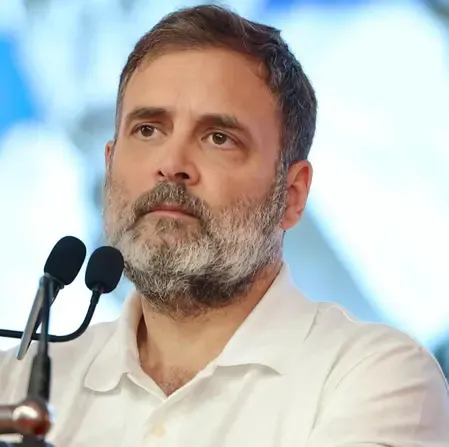
Veteran politician Dr. Subramanian Swamy on Tuesday, 14 July 2026, renewed his long-standing allegation that Rahul Gandhi holds British citizenship and is therefore ineligible to be an Indian citizen, while also accusing Prime Minister Narendra Modi of deliberately stalling action on the matter by transferring then-Home Minister Rajnath Singh out of the portfolio.
Context
In his post on X, Dr. Swamy alleged that Rahul Gandhi 'cannot be an Indian Citizen since he is a British Citizen since 2002.' He further claimed that when Rajnath Singh served as Home Minister, a Show Cause Notice was issued to Rahul Gandhi based on a complaint filed by Dr. Swamy himself. According to Dr. Swamy, PM Modi subsequently transferred Rajnath Singh out of the Home Ministry and replaced him with Amit Shah, whom he described pointedly as a 'Chumcha of Modi' — a Hindi colloquialism for a close loyalist — resulting in no further action being taken.
It is important to note that the specific claims regarding a 2002 British citizenship acquisition, the details of any internal show-cause notice, and the alleged link between the cabinet reshuffle and the complaint's outcome have not been verified from established public records. Dr. Swamy's post reflects his own stated account of events.
Policy Backdrop
The Citizenship Act, 1955 explicitly bars Indian citizens from holding dual nationality; acquisition of a foreign citizenship results in automatic termination of Indian citizenship. Separately, the Representation of the People Act, 1951 disqualifies any individual who is not an Indian citizen from contesting elections or holding a parliamentary seat.
Rajnath Singh served as Union Home Minister from 2014 to 2019, after which he was moved to the Defence Ministry. Amit Shah assumed charge of the Home Ministry in 2019 and continues in that role. Cabinet reshuffles of this nature are a routine prerogative of the Prime Minister and are not uncommon across governments.
Stakeholders and Impact
Allegations of dual citizenship against opposition politicians have surfaced periodically in India since the 2000s, often intersecting with electoral eligibility debates and legal challenges. Rahul Gandhi, the Indian National Congress leader and former party president, has not been found disqualified by any court or statutory authority on citizenship grounds. The Election Commission of India and courts remain the appropriate adjudicating bodies for such complaints.
For the BJP, the resurfacing of this allegation from a figure outside the party mainstream adds a layer of political complexity, given that Dr. Swamy is simultaneously targeting both the Congress leadership and the current dispensation for inaction. Opposition circles are likely to dismiss the claims as politically motivated, while supporters of Dr. Swamy may press for fresh formal scrutiny.
What's Next
Any meaningful legal or administrative movement on this issue would require a fresh petition before a competent court or a formal complaint to the Election Commission, backed by documentary evidence of the citizenship claim. Dr. Swamy has historically pursued such matters through judicial channels, and observers will watch whether this post precedes a formal legal filing.
With Rahul Gandhi remaining a central figure in national opposition politics, citizenship-eligibility questions — if backed by verifiable evidence and pursued through proper legal forums — could carry significant constitutional implications for parliamentary representation in India.
Point of View
Signalling a posture independent of the ruling establishment. The claim that a cabinet reshuffle was used to bury a complaint stretches into serious constitutional territory, yet it rests entirely on Dr. Swamy's own account and lacks documentary corroboration in the public domain. Historically, Dr. Swamy has used social media assertions as precursors to formal legal action, so this post may be a signal of an impending court filing rather than mere political commentary. The broader arc here touches on India's unresolved debate over how rigorously citizenship and eligibility norms are enforced against prominent political figures across party lines.
NationPress
14 Jul 2026
Frequently Asked Questions
What is Subramanian Swamy's allegation against Rahul Gandhi?
Dr. Subramanian Swamy has alleged that Rahul Gandhi acquired British citizenship in 2002 and therefore cannot legally be an Indian citizen, which would also disqualify him from holding a parliamentary seat under the Representation of the People Act, 1951. These claims have not been verified by established public records.
Can a British citizen hold a seat in the Indian Parliament?
No. Under the Citizenship Act, 1955, acquiring a foreign nationality terminates Indian citizenship. The Representation of the People Act, 1951 further disqualifies non-citizens from contesting or holding parliamentary seats in India.
What happened to the Show Cause Notice that Swamy mentions?
Dr. Swamy claims that when Rajnath Singh was Home Minister, a Show Cause Notice was issued to Rahul Gandhi based on his complaint. He alleges the matter was dropped after PM Modi transferred Rajnath Singh and appointed Amit Shah as Home Minister in 2019. The existence and details of such a notice have not been confirmed by official records.
Has any court ruled on Rahul Gandhi's citizenship status?
As of the date of this post, no court or statutory authority has disqualified Rahul Gandhi on citizenship grounds. Allegations of this nature require documentary evidence and must be adjudicated by a competent court or the Election Commission of India.
Why did Rajnath Singh move from Home Ministry to Defence Ministry?
Rajnath Singh served as Union Home Minister from 2014 to 2019 and was then appointed Defence Minister following the 2019 general election results. Cabinet reshuffles are a routine constitutional prerogative of the Prime Minister and are not uncommon across governments.