Tamil Nadu cancels 100+ short-term tenders in procurement overhaul
Synopsis
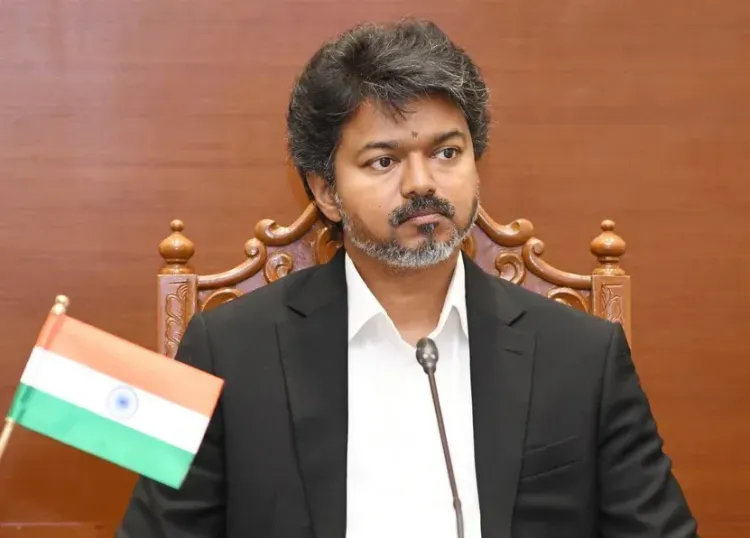
Within weeks of taking office, CM C. Joseph Vijay's TVK government has cancelled over 100 short-term tenders floated between 13 and 22 May across seven major departments — and suspended officials who defied the directive. It is one of the sharpest early administrative signals from a new state government in recent Tamil Nadu history.
Key Takeaways
The Tamil Nadu government cancelled more than 100 short-term tenders issued between 13 May and 22 May 2025 .
Affected departments include PWD , Electricity , Rural Development , Transport , Chennai Corporation , Municipal Administration , and Water Supply .
Joseph Vijay 's TVK government had directed that short-term tenders be used only under unavoidable circumstances.
Officials in Chennai Corporation and the Rural Development Department were placed under suspension for flouting the directive.
Authorities cited 'administrative reasons' for the cancellations; the financial value of affected contracts was not immediately disclosed.
The Tamil Nadu government has cancelled more than 100 short-term tenders issued across several major departments, in a sweeping administrative action ordered by Chief Minister C. Joseph Vijay's newly formed Tamilaga Vettri Kazhagam (TVK) government to enforce stricter procurement standards and improve transparency in public works contracting.
What Triggered the Cancellations
Short-term tenders — issued when urgent or emergency requirements reduce the standard bidding period — had been circulated across departments in recent weeks. The TVK government, upon assuming office, had explicitly directed that such tenders be floated only under unavoidable circumstances. A subsequent review identified tenders issued between 13 May and 22 May that did not meet this threshold, prompting their cancellation.
Authorities cited 'administrative reasons' for the withdrawals, though no immediate details were released regarding the specific projects affected or the total financial value of the cancelled contracts.
Departments Affected
The cancellations span a broad cross-section of state administration. Affected departments include the Rural Development Department, Transport Department, Public Works Department (PWD), Electricity Department, Chennai Corporation, Municipal Administration Department, and the Water Supply Department.
Officials Suspended Over Violations
The tender cancellations are not the only consequence. The government has already taken disciplinary action against officials in the Chennai Corporation and the Rural Development Department who allegedly proceeded with short-term tenders despite standing instructions to the contrary. Those officials were placed under suspension — a signal, according to observers, that the administration intends to enforce compliance rather than issue advisory circulars alone.
Broader Administrative Overhaul
The move is widely seen as part of a larger governance reset by the Vijay-led administration, aimed at tightening scrutiny over public expenditure and ensuring that government contracts go through competitive, transparent bidding. Officials indicated that future procurement activities will face closer monitoring to prevent procedural deviations. Notably, this is among the earliest and most visible administrative interventions by the new government, setting a precedent for how it intends to handle public contracting going forward.
Point of View
But the harder test comes next. Short-term tenders are frequently abused to bypass competitive bidding, yet they also serve a genuine purpose in emergencies — the Vijay administration's blanket review risks creating procurement paralysis in departments that legitimately needed speed. The suspensions add teeth, but without a published framework defining 'unavoidable circumstances,' officials may simply err on the side of inaction. Tamil Nadu's public works backlog is substantial; a reform that replaces one bottleneck with another will not serve citizens any better than the opacity it replaced.
NationPress
26 Sept 2026
Frequently Asked Questions
Why has the Tamil Nadu government cancelled over 100 short-term tenders?
The Tamil Nadu government cancelled more than 100 short-term tenders as part of a procurement reform drive by Chief Minister C. Joseph Vijay's TVK administration, which had directed that such tenders be issued only under unavoidable circumstances. A review of tenders floated between 13 and 22 May found that many did not meet this standard.
Which departments are affected by the tender cancellations?
The cancellations cover the Rural Development Department, Transport Department, Public Works Department, Electricity Department, Chennai Corporation, Municipal Administration Department, and the Water Supply Department.
Were any officials punished for issuing short-term tenders?
Yes. Officials in the Chennai Corporation and the Rural Development Department who allegedly proceeded with short-term tenders despite government instructions were placed under suspension.
What is a short-term tender and why is it controversial?
A short-term tender reduces the standard bidding period to speed up procurement in urgent situations. Critics argue they are often misused to limit competition and favour specific contractors, which is why the TVK government has moved to restrict their use.
What happens next after the cancellations?
Officials have indicated that future procurement will face closer monitoring. The affected works will presumably be re-tendered through the standard competitive process, though timelines and the financial value of the cancelled contracts have not yet been disclosed.