Trump cites 'positive momentum' on US-Iran conflict after Qatar PM talks
Synopsis
Trump struck an unusually optimistic note on the US-Iran conflict after hosting Qatar's PM — but his own Secretary of State said he had 'no progress to report.' With Operation Iron Gate active and Gulf states backing the status quo, the gap between Trump's Truth Social tone and Rubio's on-the-ground read is the real story.
Key Takeaways
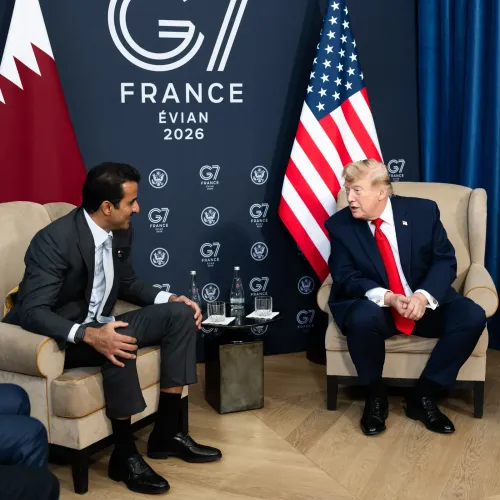
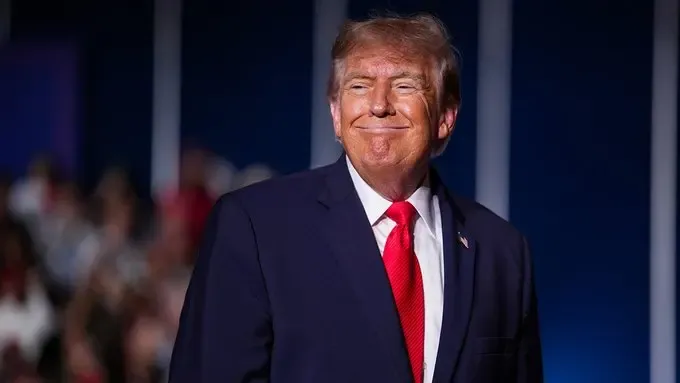
President Trump said on 10 November 2026 that there is 'positive momentum' toward ending the US-Iran conflict following White House talks with Qatari PM Sheikh Mohammed bin Abdulrahman bin Jassim Al Thani .
Trump wrote on Truth Social that Qatar, Saudi Arabia, UAE, Bahrain, Kuwait and other regional states favour maintaining the current US naval blockade and Operation Iron Gate .
All regional partners, per Trump, agree Iran cannot have a nuclear weapon — a position he called 'non-negotiable' ; Iran maintains its nuclear programme is for peaceful purposes.
Trump warned the US is 'locked and loaded' for further military action but said renewed strikes appear 'quite unlikely' at present.
Secretary of State Marco Rubio offered a starkly different read on Sunday: 'I don't have any progress to report' and said a diplomatic breakthrough was not imminent .
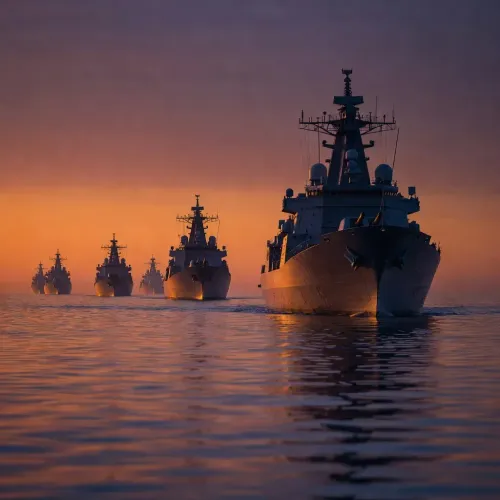
US President Donald Trump on 10 November 2026 said there was 'positive momentum' toward ending the US-Iran conflict following a White House meeting with Qatari Prime Minister and Foreign Minister Sheikh Mohammed bin Abdulrahman bin Jassim Al Thani. The remarks, posted on Trump's Truth Social platform, came amid an active US naval blockade of Iran and the ongoing Operation Iron Gate, which targets Iran's land-based supply routes.
What Trump Said
In his Truth Social post, Trump wrote that Qatar, Saudi Arabia, the United Arab Emirates, Bahrain, Kuwait, and other regional nations favoured maintaining the current naval blockade alongside Operation Iron Gate. All these countries, he wrote, 'would prefer the status quo' and unanimously agreed that Iran cannot possess a nuclear weapon — a position he described as 'non-negotiable.'
Iran has consistently maintained that its nuclear programme is solely for peaceful purposes.
Locked and Loaded, but Unlikely to Strike
Despite the cautiously optimistic framing, Trump included a pointed warning: US forces remain on standby. 'Should there be any change with respect to developments in the Middle East, the United States of America is locked and loaded and ready to go,' he said. He qualified the statement, however, by noting that renewed strikes appeared 'quite unlikely' at this point.
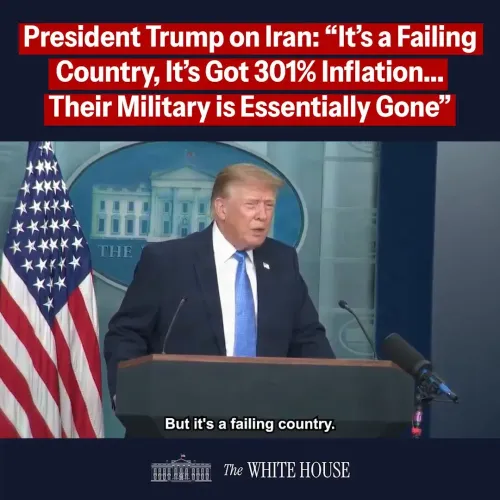
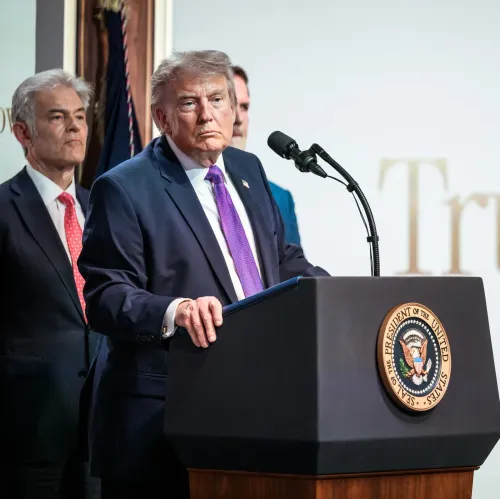
Speaking at a White House press conference on Monday, Trump also remarked that 'Iran, militarily, is effectively over. We're just keeping it the status quo.' He added that military action 'doesn't seem to be a very necessary thing' under current conditions.
Rubio's Sharper Diplomatic Assessment
Not everyone in the administration shared Trump's optimism. US Secretary of State Marco Rubio offered a markedly soberer read on Sunday, speaking to reporters at Homestead Air Reserve Base in Homestead, Florida, before departing for a G7 Foreign Ministers' meeting in France.
'I don't have any progress to report to you,' Rubio said, adding that multiple countries were engaging Iran with 'different ideas' but cautioning: 'I wouldn't say we're on the verge of a breakthrough.'
Notably, Rubio's assessment was sharper than the one he offered a week earlier, when he declined to characterise the progress of talks at all. This suggests diplomatic channels remain active but inconclusive.
Diplomatic Preference, With Caveats
Rubio emphasised that President Trump preferred a diplomatic resolution wherever possible. 'The President would always prefer to solve this and every problem diplomatically. Sometimes that's not possible, unfortunately. But if there's a chance to do it, we'll explore it,' he said.
This comes amid broader Gulf-region alignment on containing Iran — a rare show of regional consensus that could give diplomacy additional structural weight, even as frontline talks have yet to yield concrete results. How quickly that momentum translates into a formal framework will be closely watched by governments across the Middle East and beyond.
Point of View
But Tehran has historically resisted deals that freeze its nuclear leverage. Gulf consensus around the status quo is useful cover for Washington, but consensus is not a deal. The next meaningful signal will come not from Truth Social posts but from whether back-channel talks acquire a formal framework.
NationPress
10 Nov 2026
Frequently Asked Questions
What did Trump say about the US-Iran conflict after meeting Qatar's PM?
Trump said there was 'positive momentum' toward ending the US-Iran conflict following his White House meeting with Qatari Prime Minister Sheikh Mohammed bin Abdulrahman bin Jassim Al Thani. He posted his remarks on Truth Social, noting that Gulf states favour maintaining the current naval blockade and Operation Iron Gate, and that Iran's nuclear ambitions are 'non-negotiable.'
What is Operation Iron Gate?
Operation Iron Gate is a newly launched US operation aimed at restricting Iran's land-based supply routes, complementing the existing US naval blockade of Iran. Trump cited regional support for both measures from Gulf states including Qatar, Saudi Arabia, UAE, Bahrain, and Kuwait.
Why did Secretary of State Rubio contradict Trump's optimism?
Speaking on Sunday before departing for the G7 Foreign Ministers' meeting in France, Rubio said he had 'no progress to report' on Iran diplomacy and that a breakthrough was 'not imminent.' His assessment was notably sharper than his remarks from a week earlier, when he declined to characterise the progress of talks at all.
Is the US planning further military strikes on Iran?
Trump said the possibility of renewed military strikes is 'quite unlikely' at this point, while stressing that US forces remain 'locked and loaded' should circumstances change. He also remarked at a White House press conference that Iran 'militarily is effectively over' and that further action 'doesn't seem to be a very necessary thing.'
What is Iran's position on its nuclear programme?
Iran has repeatedly maintained that its nuclear programme is solely for peaceful purposes. This stands in contrast to the position of the US and Gulf states, which agree — per Trump's account — that Iran cannot be permitted to develop a nuclear weapon.