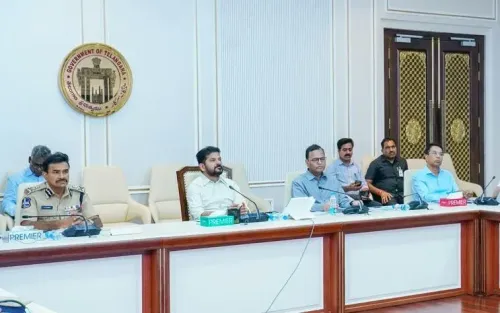
Tamil Nadu CM Orders El Niño Expert Panel for Disaster Prep
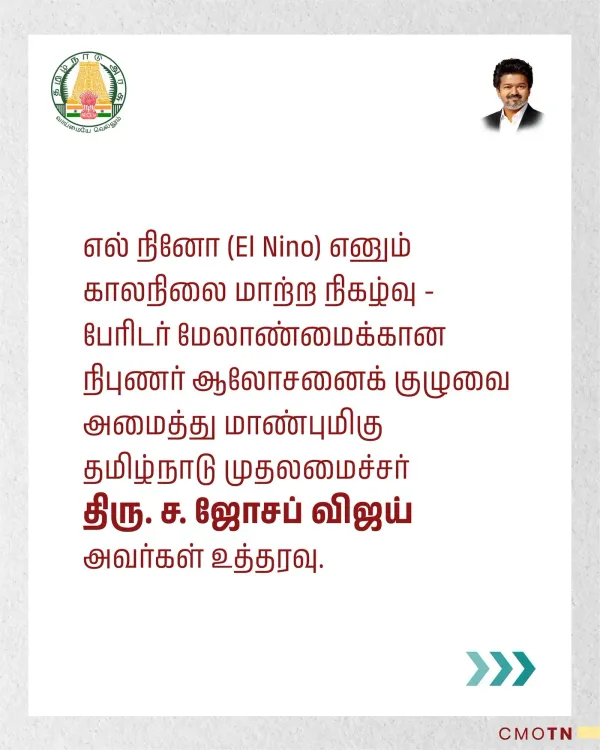
Synopsis
Tamil Nadu Chief Minister C. Joseph Vijay has ordered the formation of an expert advisory committee to manage disaster risks from El Niño, the Pacific climate event that can disrupt the state's monsoon patterns, threatening its farming and coastal communities.
Key Takeaways
Joseph Vijay directed the formation of an El Niño expert advisory committee on 30 July 2026 .
El Niño can suppress the southwest monsoon and amplify the northeast monsoon, creating drought and flood risks across Tamil Nadu.
Tamil Nadu has a precedent of forming expert bodies after major disasters, including the 2004 tsunami and 2015 Chennai floods .
The committee's work aligns with the National Disaster Management Act and state climate action frameworks.
District-level contingency plans are expected to follow ahead of the northeast monsoon season (October–December).
With El Niño's shadow stretching over the Bay of Bengal, Tamil Nadu Chief Minister C. Joseph Vijay has directed the formation of a dedicated expert advisory committee to guide the state's disaster management response to the climate phenomenon — a move that signals Chennai is not waiting for the monsoon to fail before it acts.
What El Niño means for Tamil Nadu's farms and coastlines
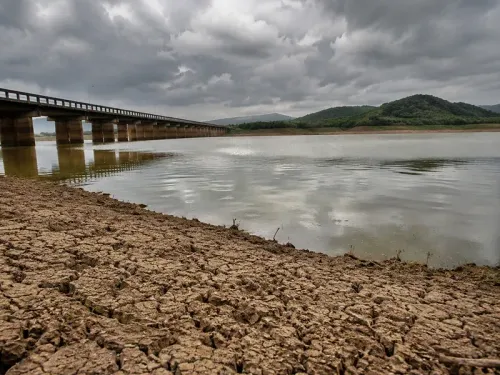
El Niño — a periodic warming of the central and eastern Pacific Ocean — is one of the most disruptive climate signals for southern India. When it intensifies, it can suppress the southwest monsoon, trigger drought across Tamil Nadu's rain-fed agricultural belts, and paradoxically amplify the northeast monsoon that batters the state's coast between October and December. The result: erratic rainfall, stressed crops, and communities on the Coromandel Coast bracing for the unpredictable.
Tamil Nadu's vulnerability is well-documented. The state has faced catastrophic weather events tied to monsoon variability, and its farmers, fishing communities, and delta populations have historically borne the sharpest costs when seasonal patterns break down.
Expert panel: Tamil Nadu's precedent for crisis committees
The Chief Minister's Office announced the order on Thursday, 30 July 2026, directing that a specialised expert advisory group be constituted specifically for El Niño-related disaster management. The move fits a pattern the state has followed after major weather disasters — from the 2004 Indian Ocean tsunami to the 2015 Chennai floods — when Tamil Nadu assembled technical bodies to coordinate response and build longer-term resilience.
Across India, state governments have increasingly leaned on such committees to translate national frameworks — including the National Disaster Management Act and state-level climate action plans — into district-specific contingency strategies. Tamil Nadu's order puts it among the states moving proactively ahead of a potential El Niño episode rather than reacting after the damage is done.
What comes next: district plans and the northeast monsoon clock
The real test of the committee's mandate will come in the details: its composition, the sectors it covers — agriculture, water resources, coastal infrastructure — and whether district-level contingency plans are published before the northeast monsoon arrives. That seasonal window, typically running from October through December, is when Tamil Nadu is most exposed. The advisory panel's recommendations will need to be in officials' hands well before then to matter on the ground.
For farmers watching reservoir levels and fishing communities tracking sea-surface temperatures, the order is a signal that the state is building its early-warning architecture. Whether the committee moves fast enough to convert expert advice into protective action on the ground is the question Tamil Nadu's most vulnerable communities will be watching closely.
Point of View
Whose agricultural and coastal economy is acutely sensitive to monsoon variability, the political calculus is clear: being seen to act early insulates the government from blame if El Niño does bite. The real policy test, however, is whether the committee's recommendations translate into funded, district-level action plans before the northeast monsoon window opens — or whether the panel becomes another procedural gesture that generates a report and little else.
NationPress
30 Jul 2026
Frequently Asked Questions
What is El Niño and how does it affect Tamil Nadu?
El Niño is a periodic warming of the Pacific Ocean that disrupts global weather patterns. For Tamil Nadu, it can weaken the southwest monsoon causing drought, and intensify the northeast monsoon causing floods along the Coromandel Coast between October and December.
Why has Tamil Nadu CM Joseph Vijay formed an El Niño expert committee?
CM C. Joseph Vijay ordered the committee to provide specialised guidance on disaster management in anticipation of El Niño-related weather disruptions, particularly ahead of the northeast monsoon season that heavily impacts Tamil Nadu.
What will the Tamil Nadu El Niño expert advisory committee do?
The committee is expected to advise the state government on disaster preparedness strategies, potentially covering agriculture, water resources, and coastal infrastructure, and to inform district-level contingency plans before the monsoon season.
Has Tamil Nadu formed such expert committees before?
Yes. Tamil Nadu has a history of constituting expert bodies following major disasters, including after the 2004 Indian Ocean tsunami and the 2015 Chennai floods, to coordinate response and build resilience.
When is Tamil Nadu most at risk from El Niño-related weather?
Tamil Nadu is most vulnerable during the northeast monsoon, which typically runs from October to December. El Niño can make this season more erratic, increasing flood risks for coastal and delta communities.