Tamil Nadu gets Centre's nod to cap tur, urad dal stocks amid price surge
Synopsis
Tamil Nadu's food inflation hit 6.81% in September — the worst in India — and tur dal prices have since climbed to ₹153 per kg. The Centre has now cleared stock limits on tur and urad dal, capping wholesalers at 200 tonnes and importers at a 45-day holding window, but left Tamil Nadu's requests for rice and edible oil curbs unanswered.
Key Takeaways
The Centre has authorised Tamil Nadu to impose stock limits on tur dal and urad dal to curb hoarding and price rises.
Tamil Nadu recorded the highest state-level retail inflation in India at 6.81% in September , with food prices up 10.62% .
Current retail prices stand at ₹153.43 per kg for tur dal and ₹139.67 per kg for urad dal.
Wholesalers are capped at 200 tonnes each; retailers at 5 tonnes per variety; importers cannot hold consignments beyond 45 days .
The Centre has not yet approved stock limits on rice or edible oils sought by Tamil Nadu.
The Centre has authorised Tamil Nadu to impose stock limits on tur dal and urad dal, granting the state government's request to curb hoarding and contain a sharp rise in pulse prices. The approval comes on 11 November 2026 as household budgets in the state face mounting pressure from food inflation running well above the national average.
The Price Pressure Behind the Move
Tamil Nadu recorded retail inflation of 6.81% in September, the highest among all Indian states, with food prices surging 10.62% during the same period, according to official figures. Pulses have been a particular flashpoint: the average retail price of tur dal in Tamil Nadu stood at ₹134.23 per kg in September, against a national average of ₹124.41 — a gap of nearly ₹9.82 per kg.
Prices have climbed further since. By October, tur dal was selling at ₹143 per kg and urad dal at ₹128 per kg. Current retail prices have risen to ₹153.43 and ₹139.67 per kg, respectively — a trajectory that prompted the state to seek urgent central intervention.
What the Stock Limits Prescribe
Under the approved restrictions, wholesalers may hold a maximum of 200 tonnes each of tur and urad dal. Retailers and large retail businesses are capped at 5 tonnes per pulse variety. The limits are designed to prevent excessive accumulation by traders, discourage artificial shortages, and ensure adequate market availability.
Separate provisions have been set for pulse mills: permissible stocks will be calculated as the previous three months' average processing capacity or 25% of annual processing capacity, whichever is higher. This formula aims to allow mills to maintain operational supplies without enabling speculative stockpiling.
Importers face an additional restriction: consignments of pulses brought into India cannot be held for more than 45 days after arrival. The rule is intended to accelerate the flow of imported supply into the retail market rather than allowing it to sit in warehouses.
What Was Sought and What Was Approved
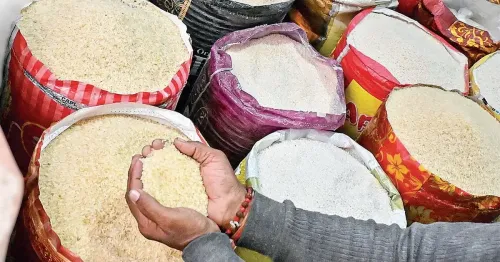
Tamil Nadu had approached the Union Ministry of Consumer Affairs seeking stock limit authorisation on a broader basket — rice, edible oils, onions, and pulses. The Centre, however, has approved restrictions only for tur and urad dal.
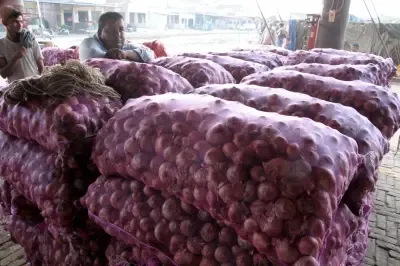
Officials indicated that onion prices have been declining across Tamil Nadu and several other states, rendering restrictions on onion stocks unnecessary at this stage. Approval for stock limits on rice and edible oils has not yet been granted by the Centre. Notably, Tamil Nadu's food inflation at 10.62% in September significantly outpaced the national food price trend, underscoring the state's urgency.
Broader Context
Pulse price volatility is a recurring pressure point in India, particularly ahead of festival seasons and during delayed monsoons that affect domestic crop output. This is not the first time the Centre has invoked the Essential Commodities Act framework to authorise state-level stock limits as an anti-hoarding measure. The selective approval — covering pulses but not rice or oils — reflects a calibrated federal response, balancing state demands against central assessments of commodity-wise market conditions.
How effectively the new limits translate into price relief at the retail counter will depend heavily on enforcement capacity and market surveillance at the state level, with consumers in Tamil Nadu watching closely.
Point of View
Two commodities where state-level pressure is also building. Tamil Nadu's position as the state with India's highest retail inflation in September gives political urgency to the state government's ask, but selective central approvals risk appearing insufficient if food prices remain elevated. The 45-day import holding cap is particularly worth watching: if enforcement is lax, imported dal will continue to be used as a speculative buffer rather than a supply relief valve. India has cycled through stock limit orders on pulses before — the real test, as always, is implementation.
NationPress
11 Nov 2026
Frequently Asked Questions
Why has the Centre imposed stock limits on tur dal and urad dal in Tamil Nadu?
The Centre authorised Tamil Nadu to impose these limits after the state reported the highest retail inflation in India at 6.81% in September, with food prices rising 10.62%. Tur dal prices in Tamil Nadu have climbed to ₹153.43 per kg, well above the national average, prompting anti-hoarding measures.
What are the specific stock limits approved for Tamil Nadu?
Wholesalers can hold up to 200 tonnes each of tur and urad dal. Retailers and large retail businesses are limited to 5 tonnes per variety. Pulse mills may stock the equivalent of three months' average processing capacity or 25% of annual capacity, whichever is higher.
What restriction applies to pulse importers under the new rules?
Importers bringing pulses into India cannot hold consignments for more than 45 days after arrival. The rule is designed to ensure imported supply reaches the retail market promptly rather than being stockpiled.
Did the Centre approve all the stock limits Tamil Nadu requested?
No. Tamil Nadu also sought restrictions on rice, edible oils, and onions, but the Centre approved limits only for tur and urad dal. Restrictions on onions were deemed unnecessary as prices have been declining, while approval for rice and edible oils has not yet been granted.
How much have pulse prices risen in Tamil Nadu recently?
Tur dal prices in Tamil Nadu stood at ₹134.23 per kg in September — ₹9.82 above the national average — before rising to ₹143 in October and ₹153.43 currently. Urad dal has moved from ₹128 in October to ₹139.67 at present retail levels.