Tamil Nadu Tables Agriculture Budget 2026-27 in Assembly
Synopsis
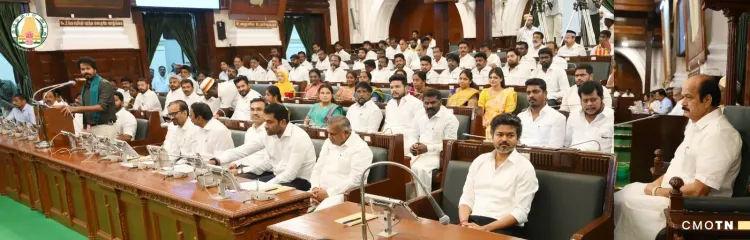
Agriculture and Farmers Welfare Minister R. Vinoth presented Tamil Nadu's dedicated Agriculture Budget for 2026-27 in the state Legislative Assembly on 6 August 2026, setting the fiscal agenda for farming, irrigation, and rural schemes across the state.
Key Takeaways
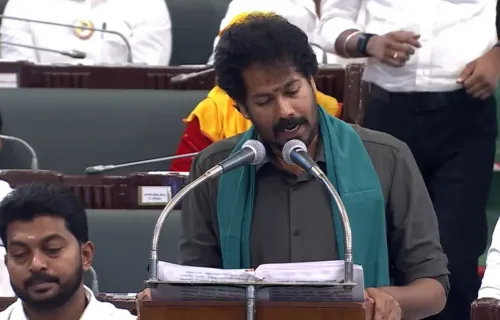
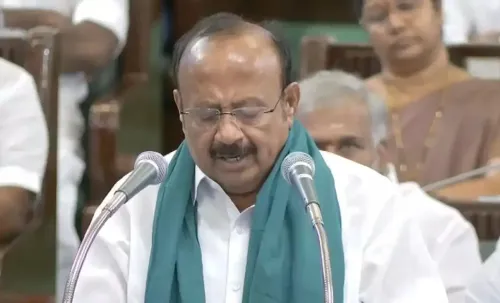
Vinoth , Minister for Agriculture and Farmers Welfare, presented the Tamil Nadu Agriculture Budget for 2026–2027 in the Legislative Assembly on 6 August 2026 .
Tamil Nadu tables a standalone agriculture budget separate from the general budget to allow focused legislative scrutiny of farm-sector spending.
The budget covers allocations for farming subsidies, irrigation, procurement support, and rural infrastructure across Tamil Nadu.
Full scheme-wise breakdowns and new announcements are expected to become public following the formal assembly presentation.
The presentation was made under #CMJosephVijay , reflecting the Chief Minister's political stake in the farm-welfare agenda.
Tamil Nadu's farming sector stepped into the legislative spotlight on Thursday, 6 August 2026, as the state government placed its dedicated agriculture budget before the Tamil Nadu Legislative Assembly — a focused fiscal document that sets the spending agenda for every farmer, every irrigation canal, and every rural scheme across the state for the coming year.
The Chief Minister's Office of Tamil Nadu announced that Thiru. R. Vinoth, the Hon'ble Minister for Agriculture and Farmers Welfare, formally presented the Agriculture Budget of the Government of Tamil Nadu for 2026–2027 in the assembly today. The presentation was made under the hashtag #CMJosephVijay, signalling the Chief Minister's political ownership of the farm-welfare agenda.
Why Tamil Nadu Presents a Standalone Agriculture Budget
Tamil Nadu is among a group of Indian states that tables a separate, dedicated agriculture budget alongside its general budget — a practice designed to give lawmakers and the public a granular, undiluted view of what the state is committing to its farming community. Rather than burying farm allocations inside a sprawling general statement, this format invites focused legislative scrutiny of subsidies, procurement support, irrigation investment, and rural infrastructure spending.
The move reflects a broader national pattern: as agrarian distress and food-security pressures intensify, state governments have found political and administrative value in ringfencing agriculture spending under its own document, making year-on-year comparisons sharper and accountability harder to dodge.
What the Assembly Presentation Sets in Motion
The tabling of the budget in the Tamil Nadu Legislative Assembly is the formal starting gun for legislative debate. Members of the assembly will now scrutinise the allocations, question the minister, and vote on the demands for grants — a process that determines whether proposed schemes for Tamil Nadu farmers and allied sectors actually receive their funding.
The full budget documents — including scheme-wise breakdowns, revised estimates for 2025–26, and fresh announcements — are expected to enter public domain following the presentation, giving farmers' organisations, agri-economists, and district administrations their first clear read of the state's priorities for the crop year ahead.
With Tamil Nadu's agriculture sector encompassing millions of smallholder farmers, a web of irrigation infrastructure, and a politically sensitive procurement machinery, the numbers Minister Vinoth placed before the house today will be parsed carefully — from the Cauvery delta to the rain-fed districts of the south. The real story begins when the documents open.
Point of View
The ruling dispensation is clearly positioning agricultural investment as a flagship governance narrative heading into the next electoral cycle. The real test, however, will come when the detailed allocations are public: whether the numbers match the ambition of a standalone document, or whether the separate budget is largely a repackaging of existing general-budget lines, will determine how seriously the farm community and opposition take it.
NationPress
6 Aug 2026
Frequently Asked Questions
What is the Tamil Nadu Agriculture Budget 2026-27?
It is a dedicated budget presented by the Tamil Nadu government in the state Legislative Assembly, detailing spending allocations for farming, irrigation, farmer welfare schemes, and allied agricultural sectors for the financial year 2026–2027.
Who presented the Tamil Nadu Agriculture Budget in 2026?
Thiru. R. Vinoth, the Minister for Agriculture and Farmers Welfare of Tamil Nadu, presented the Agriculture Budget for 2026-27 in the Tamil Nadu Legislative Assembly on 6 August 2026.
Why does Tamil Nadu have a separate agriculture budget?
Tamil Nadu presents a standalone agriculture budget alongside its general budget to allow focused legislative scrutiny and public transparency on farm-sector spending, making it easier to track subsidies, irrigation investment, and rural scheme allocations year on year.
When was the Tamil Nadu Agriculture Budget 2026-27 presented?
The Agriculture Budget for 2026-27 was presented in the Tamil Nadu Legislative Assembly on Thursday, 6 August 2026.
What happens after the Tamil Nadu Agriculture Budget is tabled?
After the formal presentation, the Legislative Assembly debates the allocations, members question the minister, and demands for grants are voted upon. Full budget documents with scheme-wise breakdowns are also expected to be released publicly.