Tejashwi Yadav alleges BJP forced JD(U) workers to campaign
Synopsis
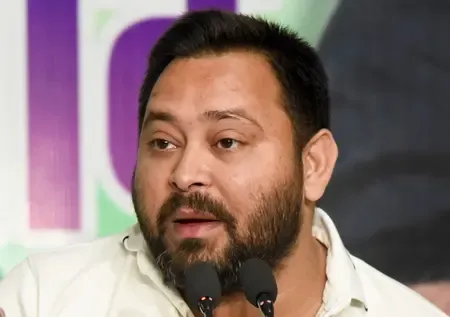
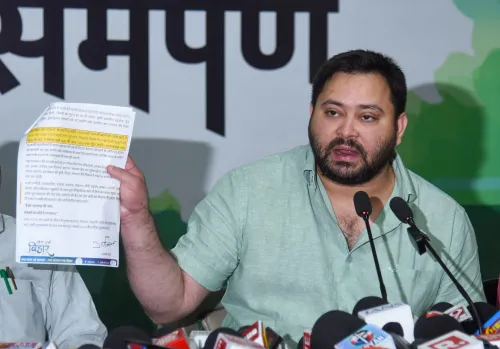
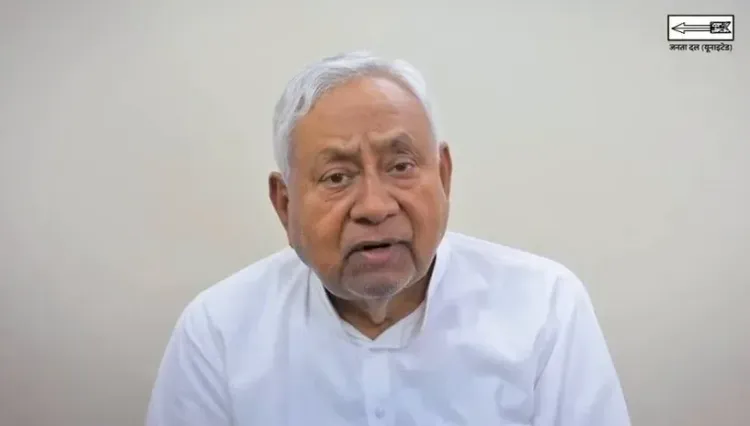
RJD leader Tejashwi Yadav alleged on 28 July 2026 that BJP's political operatives coerced reluctant JD(U) workers into making a campaign video, citing private accounts from JD(U) insiders and calling the act 'zyadti' — coercion.
Key Takeaways
On 28 July 2026 , Tejashwi Yadav posted a sharp attack on X targeting the BJP-JD(U) NDA coalition in Bihar.
He alleged that BJP's operatives — whom he called the 'bhunja gang' — forced unwilling JD(U) workers to record a campaign video.
Tejashwi claimed JD(U) insiders privately told him workers did not want to participate but were compelled to do so.
Nitish Kumar rejoined the BJP-led NDA in January 2024 after his Mahagathbandhan arrangement with RJD collapsed.
The identity of the 'sammananiya' referenced and the specific video could not be independently verified.
No response from JD(U) or BJP Bihar was available at the time of publication.
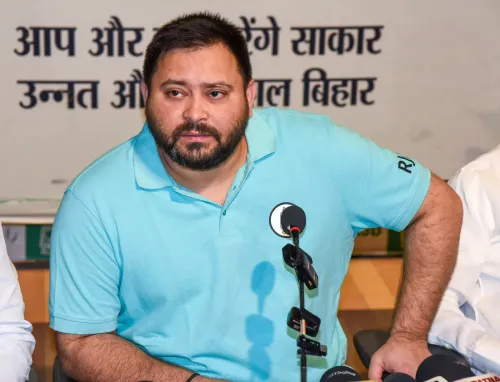
A video circulating on social media has become the latest flashpoint in Bihar's charged political arena — and RJD leader Tejashwi Yadav is using it to drive a wedge straight into the heart of the ruling NDA coalition. On Tuesday, 28 July 2026, the Leader of the Opposition in the Bihar Legislative Assembly posted a scathing attack on X, claiming that BJP had coerced reluctant JD(U) workers into recording a campaign video against their will.
Tejashwi's post, written in Hindi, pulled no punches. 'BJP ki bhunja gang ne kya haalat kar di hai sammananiya ki?' — 'What condition has the BJP's 'Bhunja Gang' reduced the honourable one to?' — he wrote, questioning how 'cruel and selfish' the ruling alliance's operatives could be. He said even the word 'sympathy' felt inadequate to describe the plight of those involved. Most pointedly, he claimed that JD(U) insiders had privately told him that workers did not want to campaign but were compelled to make the video — calling it, in his words, 'yahan bhi zyadti' — 'coercion here too.'
The 'Bhunja Gang' charge and what it signals
The term 'bhunja gang' — a colloquial, somewhat derisive Bihar phrase — is Tejashwi's rhetorical shorthand for what he frames as BJP's strong-arm political machinery inside the coalition. The specific video and the identity of the 'sammananiya' (the 'honourable one') he refers to could not be independently verified, but the political intent is unmistakable: Tejashwi is amplifying what he describes as internal dissent within Nitish Kumar's JD(U), suggesting the alliance is held together by pressure rather than conviction.
This is not an isolated salvo. Bihar politics has been defined for over a decade by the repeated realignments between Nitish Kumar, BJP, and the RJD-led opposition. Nitish rejoined the BJP-led NDA in January 2024 after his short-lived Mahagathbandhan arrangement with RJD collapsed. Opposition leaders have since made a steady practice of spotlighting any sign of friction within the ruling coalition — and Tejashwi, as the most prominent opposition face in the state, has been the most aggressive voice doing so.
Dissent from within — or political theatre?
The claim that JD(U) grassroots workers privately expressed reluctance to campaign is significant if true — it would point to a motivation gap inside a coalition that depends on cadre enthusiasm to win booths. Tejashwi frames it as evidence of coercion at the ground level, a pattern he implies runs through the alliance's operations. Whether this reflects genuine internal strain or is amplified opposition narrative, the charge puts pressure on JD(U) leadership to respond publicly.
Any clarification from Nitish Kumar or JD(U) spokespersons on the video and the circumstances of its making will be closely watched. Silence, in Bihar's hyperactive political climate, tends to be read as confirmation.
If even a fraction of the ground-level disquiet Tejashwi describes is real, the NDA's Bihar machinery has a loyalty problem it cannot afford to ignore.
Point of View
He is attempting to peel away JD(U) sympathy voters and cadre ahead of the next electoral cycle. The 'bhunja gang' framing is rhetorically calculated: it casts BJP not as a partner but as a domineering force that has subordinated Nitish Kumar's organisation. Whether the specific incident holds up to scrutiny matters less politically than the narrative it seeds — that JD(U) workers are restless, and the alliance is held by compulsion rather than consent.
NationPress
28 Jul 2026
Frequently Asked Questions
What did Tejashwi Yadav allege about BJP and JD(U) workers?
Tejashwi Yadav alleged on 28 July 2026 that BJP operatives — whom he called the 'bhunja gang' — forced unwilling JD(U) workers to record a campaign video, citing private accounts from JD(U) insiders who said the workers did not want to participate.
What is the 'bhunja gang' Tejashwi Yadav referred to?
'Bhunja gang' is a colloquial, derisive term Tejashwi Yadav used as rhetorical shorthand for what he characterises as BJP's strong-arm political operatives within the Bihar NDA coalition.
What is the current political situation in Bihar between BJP and JD(U)?
Nitish Kumar's JD(U) rejoined the BJP-led NDA in January 2024 after the Mahagathbandhan arrangement with RJD collapsed. The two parties currently govern Bihar together as the ruling coalition.
Has JD(U) or BJP responded to Tejashwi Yadav's allegations?
No public response from JD(U) or BJP Bihar was available at the time of publication. Political observers say any clarification from Nitish Kumar or JD(U) spokespersons will be closely watched.
Why does Tejashwi Yadav frequently target the BJP-JD(U) alliance?
As Leader of the Opposition in the Bihar Legislative Assembly, Tejashwi Yadav has consistently sought to highlight internal tensions within the ruling NDA coalition, a strategy aimed at eroding the alliance's ground-level cohesion ahead of future elections.